Full text rendered from the published PDF. The PDF is the version of record; if the two differ, the PDF governs.
Introduction: Paracetamol is one of the most commonly used over-the-counter (OTC) medications for managing conditions in paediatric patients.
Objectives: Evaluate paediatric paracetamol dosing by age versus weight, and propose automated solutions for OTC dosing.
Methods: A retrospective study compared weight-based (15mg/kg) to age-based dosing in children 0-13years of age.
Results: A total of 352 paediatric patients were included, with a mean age of 5years, 4.8 months (SD=48 months) and a median weight of 16.9 kg (IQR:10.4 to 25.75).We observed that 71.59% of patients (n=252) are likely to be underdosed when using age-specific dosages rather than their actual weight. Conversely, 27.56% (n=97) could be overdosed, and only 0.85% (n=3) received an accurate dose. The discrepancies between the age-based and weight-based doses ranged from 1 mg to 928.5 mg per dose. We noted a correlation between the patient's weight and the variation in dose between the two different methods of dosing; r(350)=0.82, p<0.001. The regression was significant [F(1,350)=742.18, p<0.001], with 67.2% of the variability in dose difference explained by the patient's weight. The average difference in dose was 6.9 mg for every kilogram of the patient's weight. A linear regression analysis revealed that the patient's age was also a significant predictor of dose difference (F(1,350)=150.12, p<0.0001), with age explaining 29.8% of the variance. On average, the dose of paracetamol differed by 1.5 mg for each additional month of patient age (p<0.001).
Expected impact: To optimise the dosing of OTC medication and enhance safety, we propose the use of supervised machine learning with Saudi growth charts, and the integration of a weight-based dosing calculator into the ‘Sehaty’ app.
Keywords: Artificial Intelligence, Body Weight, Drug Dosage Calculations, Medication Errors, Paracetamol (Acetaminophen), Patient Safety, Pediatrics
Paracetamol, known internationally as acetamino- phen, is one of the most commonly used medica- tions for treating fever and mild to moderate pain in paediatric patients. It is widely recognised for its ef- ficacy, tolerability, and safety profile when admin- istered correctly [1,2]. However, dosing paraceta- mol based on body weight is crucial to avoid ad- verse effects, such as underdosing, which can lead to ineffective treatment, or overdosing, which raises the risk of serious liver toxicity [1,3]. As a drug often used by caregivers at home and fre- quently prescribed in paediatric healthcare settings, the accuracy of its dosing is of paramount im- portance. Incorrect dosage, whether due to reliance on age-based estimates or errors in reading body weight, could contribute to suboptimal outcomes in children [4,5]. In paediatric care, the patient’s body weight is a fundamental factor used by healthcare providers to calculate the correct dosage of many medications, including paracetamol. This weight-based dosing strategy is essential because drug clearance and the volume of distribution in paediatric patients differ from those in adults [2,5]. Any error in determining the actual weight of a paediatric patient could sig- nificantly impact the dosage and effectiveness of the medication they receive [6-8]. The challenge of accurately dosing paediatric pa- tients is not unique to Saudi Arabia; it is a concern worldwide. Several studies have demonstrated the prevalence of errors in paediatric dosing, particu- larly when healthcare providers rely on age-based estimates or inaccurate body weight measurements
[7,9,10]. These studies report discrepancies be- tween the prescribed dose and the actual required dose based on the child’s weight, emphasising the need for individualised calculations that capture ac- curate weight measurements in all paediatric healthcare settings [11-14]. In the case of OTC paracetamol, paediatric patients may receive a dose based on their approximate age or a ‘one-size-fits-all’ weight estimate printed on the medication bottle, rather than an accurate, up- to-date body weight measurement. This discrep- ancy can lead to suboptimal treatment outcomes, particularly in children who are significantly under- weight or overweight for their age [15,16]. In the context of Saudi Arabia, there is limited re- search examining how closely prescribed paraceta- mol dosages align with actual body weight in pae- diatric populations. By comparing the doses of pa- racetamol based on age and general weight esti- mates with the ideal doses calculated according to actual body weight, this study aims to identify any discrepancies that may exist. Highlighting these discrepancies could encourage improvements in prescribing practices, ensuring that children receive the safest and most effective doses of paracetamol.
Study design This study is a retrospective, cross-sectional analy- sis conducted at a tertiary hospital in Saudi Arabia.
Study population and setting The study included a random selection of Saudi Arabian paediatric patients aged 0-12 years. Data was collected over the period from August 2023 to October 2023.
Inclusion criteria Paediatric patients aged 0–12 years, whose body weights were recorded during the treatment period, were included in the study.
Exclusion criteria Patients were excluded if their charts were missing a recorded body weight.
Sample size estimation The sample size was determined using a power analysis to ensure the clinical significance of any identified dose discrepancies. Assuming an effect size of 0.3, a significance level (alpha) of 0.05, and a power of 80%, the study included at least 352 pa- tients. The final sample size depended on data availability and the inclusion of eligible patients within the study period.
Data collection Data was extracted retrospectively from the hospi- tal's electronic health record (EHR) system. The in- formation collected for each patient included their age (in months/years), gender, and body weight (in kilograms), as recorded at the time of their hospital visit.
Calculation of ideal paracetamol dose The ideal paracetamol dose was calculated accord- ing to the standard dosage of 15 mg/kg per dose, administered every 4-6 hours, with a maximum daily dose of 75 mg/kg. Each patient’s actual body weight, as recorded in their health record, was used to calculate their ideal dose. The following formula was applied: Ideal Dose (mg) = Body Weight (kg) × 15 (mg/kg) For patients receiving multiple doses, the total daily dose was calculated and compared with the recom- mended maximum daily dose. We then compared the calculated dose (in milli- grams per dose and total daily dose) with the age- based dosage recommendations provided in the drug leaflets. The comparison was conducted using two different brand-name formulations.
Data analysis Data was analysed using Stata Statistical Software: Release 17. Descriptive statistics were used to sum- marise demographic data, including age, gender, and body weight. We used the Pearson correlation, Fisher's exact test, and linear regression models in our analysis.
Ethical considerations Ethical approval was obtained from the hospital’s Institutional Review Board before the study com- menced. Since this was a retrospective study, in- formed consent was not required from the patients; however, all patient data was anonymised to ensure confidentiality. Only authorised personnel had ac- cess to the data, and the analysis was conducted in accordance with the hospital's data protection poli- cies.
Demographics A total of 352 paediatric patients were included in the analysis. The mean age of the cohort was 5 years and 4.8 months (SD = 48 months), ranging from 3 days to 12 years. Males accounted for 55.9% (n = 197) of the sample. The median body weight was 16.9 kg, with an interquartile range (IQR) of 10.4 kg to 25.75 kg.
Age-specific vs weight-specific dosage We found that 71.59% of patients (n = 252) can be expected to be underdosed on the basis of age-spe- cific dosage compared with that for their actual weight, while 27.56% (n = 97) will be overdosed, and only 0.85% (n = 3) will receive an accurate dose (Table 1). An exploration of the median and maximum daily doses, assuming five doses per day, reveals that the median daily dose based on age is 1200 mg (IQR: 600 mg to 2000 mg), with the highest daily dose being 2400 mg, which remains below the maximum allowable dose. In contrast, the median daily dose based on weight is 1267.5 mg (IQR: 780 mg to 1931 mg), with a maximum daily dose of 1408.5 mg. Although the median age-based daily dose (1200 mg) is only slightly lower than the median weight-based daily dose (1267.5 mg), the majority of patients receive substantially lower doses using the age-based protocol. This discrepancy appears because a few age groups are assigned relatively high doses, skewing the upper end of the range (maximum: 2400 mg), while most patients fall into categories with lower-than-appropriate dosing. The median difference between age-based and weight-based doses is 49.5 mg, with an IQR of 22.5 mg to 98.5 mg, and differences ranging from as lit- tle as 1 mg to as much as 928.5 mg.
Correlation between patient age and dose
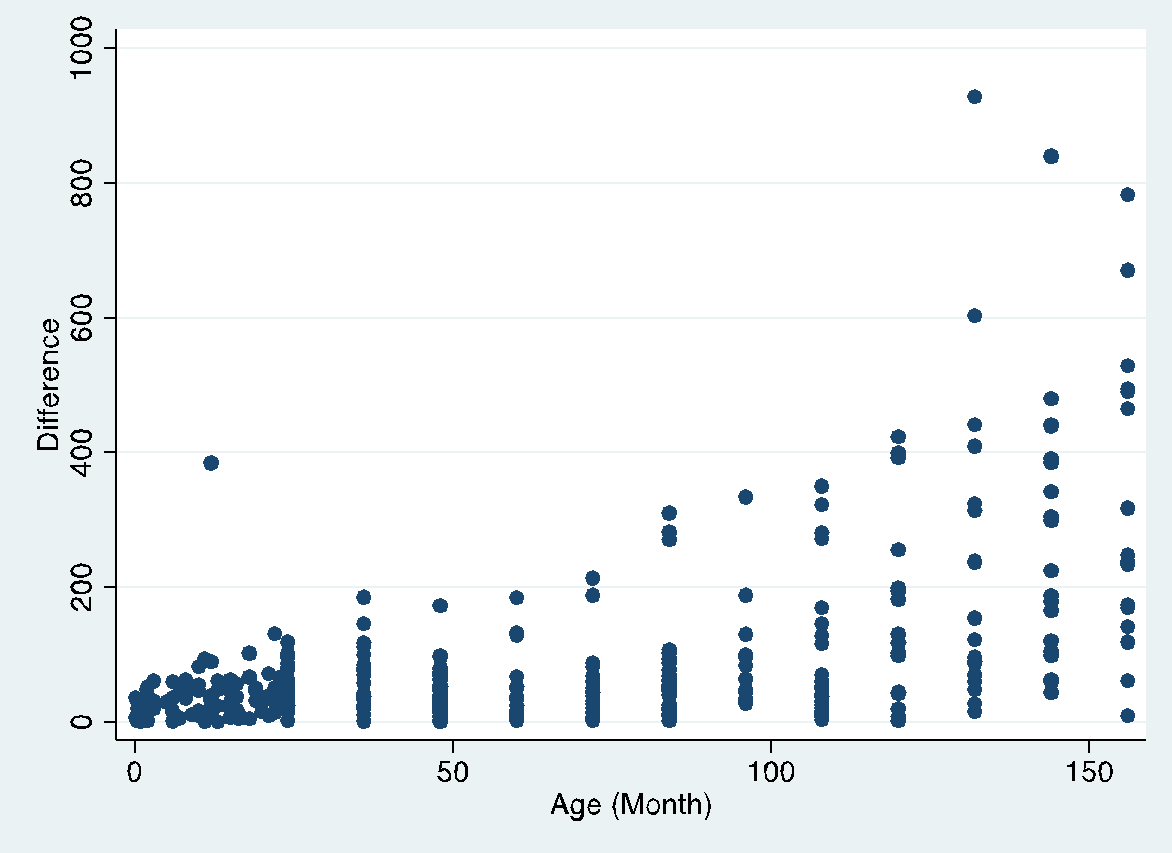
difference The Pearson correlation between the patients’ age and the dose difference reveals a moderate yet sta- tistically significant association, r(350) = 0.55, p < 0.001. A linear regression analysis (Table 2) shows that patient age significantly predicts the difference between age-based and weight-based doses, F(1,350) = 150.12, p < 0.0001, with age explaining 29.8% of the variability in dose difference. On av- erage, the difference in paracetamol dosage differs by 1.5 mg for each additional month of patient age, with this coefficient being highly significant (p < 0.001) (Figure 1). Based on the confidence interval, the slope relating dose difference to patient age is between 1.25 and 1.72 (95% CI). We used the re- gression equation: Dose difference = -1.62 + 1.49 (age).
Correlation between patient weight and dose
difference The Pearson correlation between the patients’ weight and dose difference was r(350) = 0.82, p <
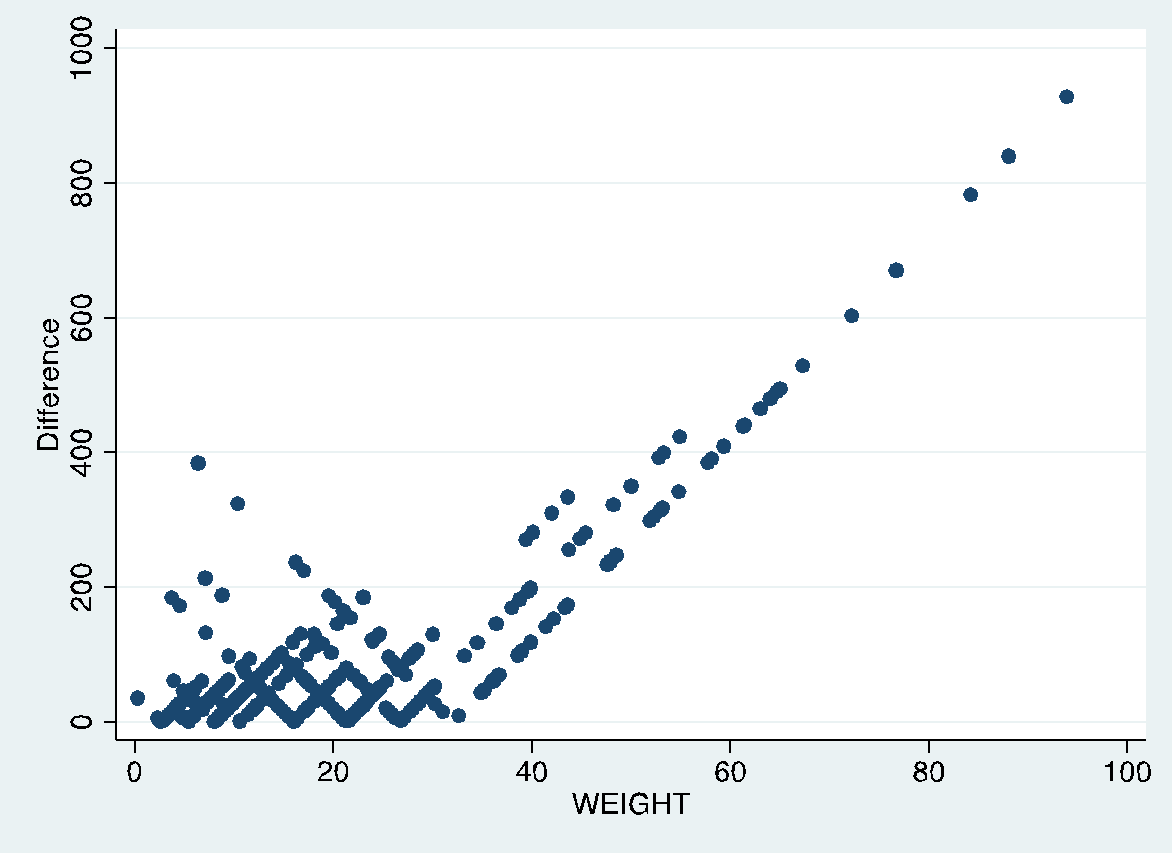
0.001, indicating a strong and statistically signifi- cant association. A linear regression analysis was conducted to assess the extent to which patients’ body weight predicted the dose difference (Table 2). The regression was significant, F(1,350) = 742.18, p < 0.001, with body weight accounting for 67.2% of the variability in dose difference. With a coefficient of 6.86, the average difference in dose is 6.9 mg for each additional kilogram of body weight. This coefficient is also highly significant (p < 0.001) (Figure 2). Based on our confidence interval, the slope relating dose difference to patients’ weight is between 6.36 and 7.35 (95% CI). We used the regression equation: Dose difference = -48.76 + 6.86 (weight).
Correlation between patient gender and dose
difference The Fisher’s exact test did not reveal a significant association between gender and discrepancies in paracetamol dosing (p = 0.112), suggesting that gender does not play a substantial role in dosing ac- curacy.
To our knowledge, this is the first study to explore and compare age-based dosing with weight-based dosing in paediatric patients. Our results showed significantly large discrepancies in these doses, with more than two-thirds of patients underdosed, 27.56% overdosed, and less than 1% dosed cor- rectly. These results highlight shortcomings in pae- diatric medication practices, particularly in settings where weight-based dosing should be prioritised for medication safety. The implications are critical for paediatric healthcare in Saudi Arabia, where there is a scarcity of studies on this topic. In paediatrics, correct dosage of paracetamol is key to both safety and effectiveness. While age-based dosage is simpler and more practical in busy clini- cal settings, it does not account for individual vari- ations in body weight and can lead to under- or overdosing [17]. Weight-based dosage is more pre- cise [18]; nonetheless, weight measurements are not always up to date and age-based guidelines are still used. Alomary et al reported that 29% of med- ication errors in a Saudi hospital were dose related; more than any other type of error [19]. Similarly, Al-Jeraisy et al also reported 22% of errors being dose-related in another Saudi hospital. Paraceta- mol, salbutamol, and amoxicillin were the most common drugs involved in medication errors [20].
Underdosing in paediatric patients, as this study un- covered, can result in inadequate therapeutic effect, especially in cases where pain and fever manage- ment is required [21]. In Saudi Arabia, where there is an emphasis on improving paediatric care, under- dosing may compromise treatment outcomes and increase the number of hospital visits. According to El- Egunsola et al. (2019), the inappropriate dosing of common medications like paracetamol and amoxicillin calls for more refined dosing to avoid therapeutic failure [22]. Although overdosing was observed in less than one-third of our sample, it raises significant con- cerns regarding the risk of hepatotoxicity. A study by Schillie et al. (2009) found that medication er- rors, including overdosing, are common in paediat- ric wards, paracetamol being one of the most com- mon culprits usually leading to emergency depart- ment visits. This is alarming, as overdosing parace- tamol can cause liver failure [23]. The positive correlation between age and dose dif- ference means that age is a significant predictor of dosing errors. As paediatric patients get older, their weight might increase disproportionately to the age-based dosing guidelines, resulting in the dose discrepancy [24]. This was confirmed by our linear regression analysis, in which age accounted for 29.8% of the variation in dose difference. The im- plication is that reliance on age-based dosing be- comes increasingly problematic as children grow older and their weight deviates further from that as- sumed in the drug leaflet. It is noteworthy that age-based prescribing guide- lines do not always take into account variations in body weight such as obesity and malnutrition. In their study in the Gulf Region, Adam et al. (2024) reported an increasing incidence of high body weight among Saudi children, particularly those living in urban areas [25]. In obese children, age- based dosing methods may result in significant un- derdosing and suboptimal therapeutic outcomes when using paracetamol. Weight was found to be a stronger predictor of dose discrepancy (r = 0.82, p < 0.001), accounting for 67.2% of the variation in dosing errors. This means that weight is a better metric to determine correct paracetamol dosage in paediatric patients, as sup- ported by the guidelines that recommend weight- based dosing as the gold standard. This being the case, patients’ weight should be measured regu- larly, and a weight-adjusted dosing formula applied
to minimise errors [26]. Gender differences in drug metabolism have been noted in some studies, especially during puberty, with its associated changes in body composition and metabolism. Nonetheless, we found no correla- tion between gender and paracetamol dose discrep- ancies in our paediatric population. Previous stud- ies, such as that of Mohammed et al. (2012), found minimal difference in the pharmacokinetics of pa- racetamol between boys and girls, which supports our findings [27]. Over the last five decades, artificial intelligence (AI) has made significant strides in health care, driving transformative progress across numerous medical fields [28]. Advances in machine learning (ML) and deep learning (DL) have enabled person- alised medicine, shifting from algorithm-centric ap- proaches to tailored solutions. AI has revolution- ised clinical decision-making, diagnostics, rehabil- itation, surgical processes, and prognostic evalua- tions [29]. Researchers and analysts globally have integrated ML into diverse studies, leveraging its role in big data analysis. Supervised machine learn- ing (SML) techniques, including Naïve Bayes, Lo- gistic Regression, Random Forest, and Support Vector Machine (SVM), are pivotal for generating predictive outcomes from trained datasets [30]. Another machine learning technique is reinforce- ment learning, which is the foundation of deep re- inforcement learning (DRL). It presents an innova- tive strategy for optimising drug dosage regimens by enabling a decision-making agent to learn through interaction with a simulated environment. DRL involves an agent receiving feedback—re- wards or penalties—for its actions and learning a policy to maximise long-term rewards. For drug dosage optimisation, the agent selects appropriate dosages within a simulated patient model that cap- tures dynamic physiological factors, including pharmacokinetics, pharmacodynamics, and poten- tial side effects [31,32]. A customised AI/ML-based dose recommendation system that integrates information from several sources, including safety and efficacy metrics, elec- tronic health records, growth charts for Saudi chil- dren and adolescents, treatment history, and patient input, might be beneficial for patients. The goal of such system is to reduce adverse effects while in- creasing therapeutic efficacy. Already, predicting and modifying doses for precision-based cancer therapy has been demonstrated to be possible with
reinforcement learning systems [33]. Deep rein- forcement machine learning presents a transforma- tive method for personalised medicine by facilitat- ing adaptive optimisation of drug dosages. Success- ful applications of DRL have been highlighted in various therapeutic areas, such as sepsis treatment, cancer chemotherapy, and diabetes management [31]. Although the availability and accessibility of such large databases may present a challenge, the cost of medication errors and their consequences justifies further investment in this area.
To optimise the dosing of over-the-counter (OTC) paracetamol and enhance the safety and accuracy of dispensing, we propose the use of reinforcement or deep reinforcement machine learning algorithms in conjunction with growth charts for Saudi children and adolescents. Additionally, we recommend inte- grating these algorithms into the national health ap- plication, ‘ Sehaty’ . Overall, the implementation of this multifaceted strategy would optimise dosing of OTC medica- tions, based on patients’ body weight and tailored to the medication brands available in Saudi Arabia. Future research is needed into the paediatric dosing of other medications, such as ibuprofen. By follow- ing these recommendations, paediatric hospitals in Saudi Arabia can improve medication safety and therapeutic outcome for their patients.
VI. REFERENCES 1. Kingsley Ogemdi I. A review on the prop- erties and uses of paracetamol. Int J Pharm Chem [Internet]. 2019;5(3):31. Available from: http://www.sciencepublishing- group.com/journal/paperinfo?jour- nalid=330&doi=10.11648/j.ijpc.20190503. 12 2. Prescott LF. Paracetamol: past, present, and future. Am J Ther [Internet]. 2000 Mar;7(2):143–7. Available from: http://www.ncbi.nlm.nih.gov/pub- med/11319582 3. Sharma CV, Mehta V. Paracetamol: mech- anisms and updates. Contin Educ Anaesth Crit Care Pain [Internet]. 2014 Aug;14(4):153–8. Available from: https://linkinghub.elsevier.com/re- trieve/pii/S1743181617300884 4. Moriarty C, Carroll W. Paracetamol: phar- macology, prescribing and controversies.
Arch Dis Child - Educ Pract Ed [Internet]. 2016 Dec;101(6):331–4. Available from: https://ep.bmj.com/lookup/doi/10.1136/arc hdischild-2014-307287 5. Zurlinden TJ, Heard K, Reisfeld B. A novel approach for estimating ingested dose asso- ciated with paracetamol overdose. Br J Clin Pharmacol [Internet]. 2016 Apr 9;81(4):634–45. Available from: https://bpspubs.onlineli- brary.wiley.com/doi/10.1111/bcp.12796 6. Zempsky WT, Bhagat PK, Siddiqui K. Practical challenges – Use of paracetamol in children and youth who are overweight or obese: A narrative review. Pediatr Drugs [Internet]. 2020 Oct 11;22(5):525–34. Available from: https://link.springer.com/10.1007/s40272- 020-00417-z 7. Losek JD. Acetaminophen dose accuracy and pediatric emergency care. Pediatr Emerg Care [Internet]. 2004 May;20(5):285–8. Available from: http://www.ncbi.nlm.nih.gov/pub- med/15123898 8. Wanni Arachchi TI, Gamage MWK, Jaya- singhe SS. Administration of paracetamol to children; do parents adhere to recommen- dations? Gall Med J [Internet]. 2018 Dec 31;23(2):15. Available from: https://gmj.sljol.info/arti- cle/10.4038/gmj.v23i2.7977/ 9. Al Dhaifallah A, Mwanri L, Aljoudi A. Childhood obesity in Saudi Arabia: Oppor- tunities and challenges. Saudi J Obes [Inter- net]. 2015;3(1):2. Available from: https://journals.lww.com/10.4103/2347- 2618.158684 10. Alomar M, Alenazi F, Alruwaili N. Accu- racy of acetaminophen dosing in children by caregivers in Saudi Arabia. Ann Saudi Med [Internet]. 2011 Sep;31(5):513–7. Available from: http://www.annsau- dimed.net/doi/10.4103/0256-4947.84630 11. Bolt R, Yates JM, Mahon J, Bakri I. Evi- dence of frequent dosing errors in paediat- rics and intervention to reduce such pre- scribing errors. J Clin Pharm Ther [Inter- net]. 2014 Feb;39(1):78–83. Available from: https://onlineli- brary.wiley.com/doi/10.1111/jcpt.12114
12. Kyler KE, Wagner J, Hosey-Cojocari C, Watt K, Shakhnovich V. Drug dose selec- tion in pediatric obesity: Available infor- mation for the most commonly prescribed drugs to children. Pediatr Drugs [Internet]. 2019 Oct 20;21(5):357–69. Available from: http://link.springer.com/10.1007/s40272- 019-00352-8 13. Hammad SS, Berry DC. The child obesity epidemic in Saudi Arabia: A review of the literature. J Transcult Nurs [Internet]. 2017 Sep 21;28(5):505–15. Available from: https://jour- nals.sagepub.com/doi/10.1177/104365961 6668398 14. Costelloe C, Montgomery AA, Redmond NM, Fletcher M, Hollinghurst S, Peters TJ, et al. Medicine dosing by weight in the home: can parents accurately weigh pre- school children? A method comparison study. Arch Dis Child [Internet]. 2011 Dec 1;96(12):1187–90. Available from: https://adc.bmj.com/lookup/doi/10.1136/ar chdischild-2011-300600 15. Freo U, Ruocco C, Valerio A, Scagnol I, Ni- soli E. Paracetamol: A review of guideline recommendations. J Clin Med [Internet]. 2021 Jul 31;10(15):3420. Available from: https://www.mdpi.com/2077- 0383/10/15/3420 16. Clark R, Fisher JE, Sketris IS, Johnston GM. Population prevalence of high dose pa- racetamol in dispensed paracetamol/opioid prescription combinations: an observational study. BMC Clin Pharmacol [Internet]. 2012 Dec 18;12(1):11. Available from: https://link.springer.com/10.1186/1472- 6904-12-11 17. Barras M, Legg A. Drug dosing in obese adults. Aust Prescr [Internet]. 2017 Oct 3;40(5):189–93. Available from: https://australianprescriber.tg.org.au/arti- cles/drug-dosing-in-obese-adults.html 18. Zhou Q, Pan S, Zhu L, Chen M, Xia P. Weight-based dosing in medication use: what should we know? Patient Prefer Ad- herence [Internet]. 2016 Apr;549. Available from: https://www.dovepress.com/weight- based-dosing-in-medication-use-what- should-we-know-peer-reviewed-article- PPA
19. Alomary S, Alasmari F, Aljarallah M, Al- luhidan L, Maswadi E, AlMajed H. Preva- lence and types of medication errors at King Abdullah Specialized Children Hospital, Riyadh, Saudi Arabia. Int J Adv Res [Inter- net]. 2016 Dec 31;4(12):1470–8. Available from: http://www.journalijar.com/arti- cle/14104/prevalence-and-types-of-medi- cation-errors-at-king-abdullah-specialized- children-hospital,-riyadh,-saudi-arabia./ 20. Al-Jeraisy MI, Alanazi MQ, Abolfotouh MA. Medication prescribing errors in a pe- diatric inpatient tertiary care setting in Saudi Arabia. BMC Res Notes [Internet]. 2011 Dec 14;4(1):294. Available from: https://bmcresnotes.biomedcentral.com/ar- ticles/10.1186/1756-0500-4-294 21. Goldman RD, Scolnik D. Underdosing of acetaminophen by parents and emergency department utilization. Pediatr Emerg Care [Internet]. 2004 Feb;20(2):89–93. Availa- ble from: http://jour- nals.lww.com/00006565-200402000- 00003 22. Egunsola O, Ali S, Al-Dossari DS, Al- najrani RH. A retrospective study of pediat- ric medication errors in Saudi Arabia. Hosp Pharm [Internet]. 2021 Jun 16;56(3):172–7. Available from: https://jour- nals.sagepub.com/doi/10.1177/001857871 9882318 23. Schillie SF, Shehab N, Thomas KE, Bud- nitz DS. Medication overdoses leading to emergency department visits among chil- dren. Am J Prev Med [Internet]. 2009 Sep;37(3):181–7. Available from: https://linkinghub.elsevier.com/re- trieve/pii/S0749379709003894 24. Gaeta F, Conti V, Pepe A, Vajro P, Fil- ippelli A, Mandato C. Drug dosing in chil- dren with obesity: a narrative updated re- view. Ital J Pediatr [Internet]. 2022 Sep 8;48(1):168. Available from: https://ijponline.biomedcentral.com/arti- cles/10.1186/s13052-022-01361-z 25. Adam TR, Hamed AM, Saad M Moham- med H, Elryahi Elsayed Elshareef T, Mushaeb H, Nafel A Al Harbi A, et al. Prev- alence of childhood obesity among children and adolescents in Saudi Arabia: A system- atic review. Cureus [Internet]. 2024 Sep 24;
Available from: https://www.cu- reus.com/articles/295234-prevalence-of- childhood-obesity-among-children-and-ad- olescents-in-saudi-arabia-a-systematic-re- view 26. Wells M, Henry B, Goldstein L. Weight es- timation for drug dose calculations in the prehospital setting – A systematic review. Prehosp Disaster Med [Internet]. 2023 Aug 13;38(4):471–84. Available from: https://www.cambridge.org/core/prod- uct/identi- fier/S1049023X23006027/type/journal_ar- ticle 27. Mohammed BS, Engelhardt T, Cameron GA, Cameron L, Hawksworth GM, Hawwa AF, et al. Population pharmacokinetics of single-dose intravenous paracetamol in children. Br J Anaesth [Internet]. 2012 May;108(5):823–9. Available from: https://linkinghub.elsevier.com/re- trieve/pii/S0007091217322328 28. Bohr A, Memarzadeh K. The rise of artifi- cial intelligence in healthcare applications. Artificial Intelligence in Healthcare. 2020:25–60. doi: 10.1016/B978-0-12- 818438-7.00002-2. Epub 2020 Jun 26. PMCID: PMC7325854. 29. Davenport T, Kalakota R. The potential for artificial intelligence in healthcare. Future Healthc J. 2019;6(2):94-8. 30. Suhaimi NAD, Abas H. A systematic liter- ature review on supervised machine learn- ing algorithms. PERINTIS eJournal. 2020;10(1):1–24. 31. Garcia DE. Deep reinforcement learning for adaptive drug dosage optimization: Utilizes deep reinforcement learning to optimize
drug dosage based on patient response. Journal of AI-Assisted Scientific Discov- ery. 2024 May 25;4(1):64–77. 32. Poweleit EA, Vinks AA, Mizuno T. Artifi- cial intelligence and machine learning ap- proaches to facilitate therapeutic drug man- agement and model-informed precision dosing. Ther Drug Monit. 2023 Apr 1;45(2):143-150. doi: 10.1097/FTD.0000000000001078. Epub 2023 Feb 3. PMID: 36750470; PMCID: PMC10378651. 33. Johnson M, Patel M, Phipps A, van der Schaar M, Boulton D, Gibbs M. The poten- tial and pitfalls of artificial intelligence in clinical pharmacology. CPT Pharmacomet- rics Syst Pharmacol. 2023;12(3):279-84.
| Dosing Category | Number of Patients | Percentage (%) |
|---|---|---|
| (N) | ||
| Underdosed | 252 | 71.59 |
| Overdosed | 97 | 27.56 |
| Accurately dosed | 3 | 0.85 |
| Total | 352 | 100 |
| Predictor Varia- | Coefficient | 95% Confidence | In- R² | F-statistic | P-value |
|---|---|---|---|---|---|
| ble | (β) | terval | |||
| Age (months) | 1.5 mg | 1.25 – 1.72 | 0.298 | 150.12 | < 0.001 |
| Weight (kg) | 6.9 mg | 6.36 – 7.35 | 0.672 | 742.18 | < 0.001 |