Full text rendered from the published PDF. The PDF is the version of record; if the two differ, the PDF governs.
Background: Out-of-pocket payments for healthcare services hinders the attainment of universal health coverage.
Objectives: To assess the current level of knowledge, perception, and willingness to enrol in a health insurance scheme among uninsured persons in Nigeria.
Methods: This was a descriptive cross-sectional study conducted among residents of Uyo, a city in southern Nigeria, who had not enrolled in any health insurance scheme
Results: About 14.3% (n = 72) of the study participants visited healthcare facilities at least once a week to address medical conditions for either themselves or their dependents. Although 335 (66.5%) of our respondents had heard of health insurance schemes, only 92 (18.3%) claimed to know how they work. Moreover, about 42.3% (n = 213) of our respondent perceived health insurance schemes as being expensive, while 102 (20.2%) considered it a waste of resources. Only 25.4% (n = 128) of the study participants were willing to subscribe to a health insurance scheme.
Conclusion: Knowledge of the concept of health insurance as well as awareness of the existence of affordable insurance plans is poor in a significant proportion of the population studied. Many respondents had a poor perception regarding health insurance schemes with the majority unwilling to enrol in one.
Keywords: Health Insurance, Knowledge, Out-of-Pocket Expenditure, Perception, Willingness To Enroll
Out-of-pocket payments for healthcare services is common in Nigeria with millions of citizens becoming impoverished each year due to this mode of payment for healthcare delivery [1, 2]. A report by the Nigerian National Health Financing Policy suggests that in about four percent of households in the country, more than half of the total expenditure is on healthcare services, while about twelve percent of households spend approximately a quarter of their total expenditure on the same [3]. Out-of-pocket payment for these services hinders the attainment of universal health coverage and may negatively affect the health seeking behaviour of citizens. Since the mode of payment for healthcare services has been identified as a determinant for attaining universal health coverage [4], various health insurance models have been developed to reduce the costs of healthcare delivery [5, 6, 7]. Healthcare delivery services are widely considered to be basic and essential, and thus should be provided to citizens by the government [8, 9]. In Nigeria, the national health insurance scheme was introduced by the federal government in a bid to improve access and reduce the cost of healthcare delivery in the country. Enrolment into the scheme is however voluntary for persons not employed by the federal civil service who constitute a vast majority of the Nigerian population. Previous studies show low enrolment into the scheme, particularly among the informal sector labour force [10, 11]. Because out-of-pocket payment is the predominant healthcare financing mechanism in Nigeria, access to healthcare services is greatly hindered for poor households and individuals with low financial purchasing power. To ameliorate this disturbing reality, various schemes have been proposed, including prepayment and community based insurance schemes [8, 12 -14]. Community based health insurance schemes offer subsidised healthcare services and bridge the gap between access to available healthcare resources and the lack of funds among people in poor and vulnerable communities. Unfortunately, a lack of
appropriate sensitisation and poor awareness of the benefits among most vulnerable populations hinders enrolment into such schemes [8]. Previous studies in other regions of Nigeria have reported varying levels of willingness to subscribe to health insurance schemes [8, 15 - 17]. However, some of these studies were undertaken more than a decade ago and it can be assumed that the trend may have changed with time. This descriptive cross-sectional study was thus aimed at assessing the current level of knowledge, perception, and willingness to enrol in a health insurance scheme among uninsured persons in Nigeria.
This was a descriptive cross-sectional study among persons who had not enrolled in any health insurance scheme (uninsured persons). Uninsured residents of Uyo, a city in southern Nigeria, who expressed willingness to participate in study were recruited. They were then interviewed using a suitably designed survey instrument. The main aim of the survey was to assess their level of awareness, perception of, and willingness to enrol in a health insurance scheme.
Survey instrument The survey instrument was designed and pre- piloted by the researchers. It consisted of three (3) sections that assessed data on the respondents’ socio-demographic details/utilization of healthcare resources, knowledge of health insurance, perception of healthcare insurance, and their willingness to enrol in and pay for a health insurance scheme.
Participants’ recruitment/Eligibility criteria All adults of 18 years and older, residing in Uyo, who had not subscribed to any health insurance scheme, formed the sampling frame for the study. Only those who provided written informed consent to participate were recruited into the study.
Sample size A sample size calculation was determined with the aid of the Raosoft online sample size calculator wherein the margin of error, confidence interval and response distribution were set at 5%, 95% and 50% respectively. The estimated adult population of Uyo LGA is placed at 1,329,000 persons [18]. The calculated minimum sample size for uninsured residents of Uyo metropolis using the Raosoft online sample size calculator was 385 uninsured
persons. However, for this study we interviewed 504 respondents. Data analysis Data analysis was conducted using the IBM Statistical Products and Services Solution (SPSS) version-25.0 software. The obtained data was summarised using descriptive statistics with frequencies and percentages used as appropriate.
Ethical clearance Ethical approval was obtained from the Health Research Ethics Committee of the Akwa Ibom state Ministry of Health (approval reference number: AKHREC/21/06/23/157). In addition, informed consent was obtained from each participant before recruitment into the study.
Socio-demographic details The majority of our respondents were aged between 18 – 24 years (322; 65.9%). One hundred and seventy-six (34.6%) were self-employed, while 58.3% (294) had attained a tertiary level of education. The respondents’ socio-demographic details are presented in Table 1.
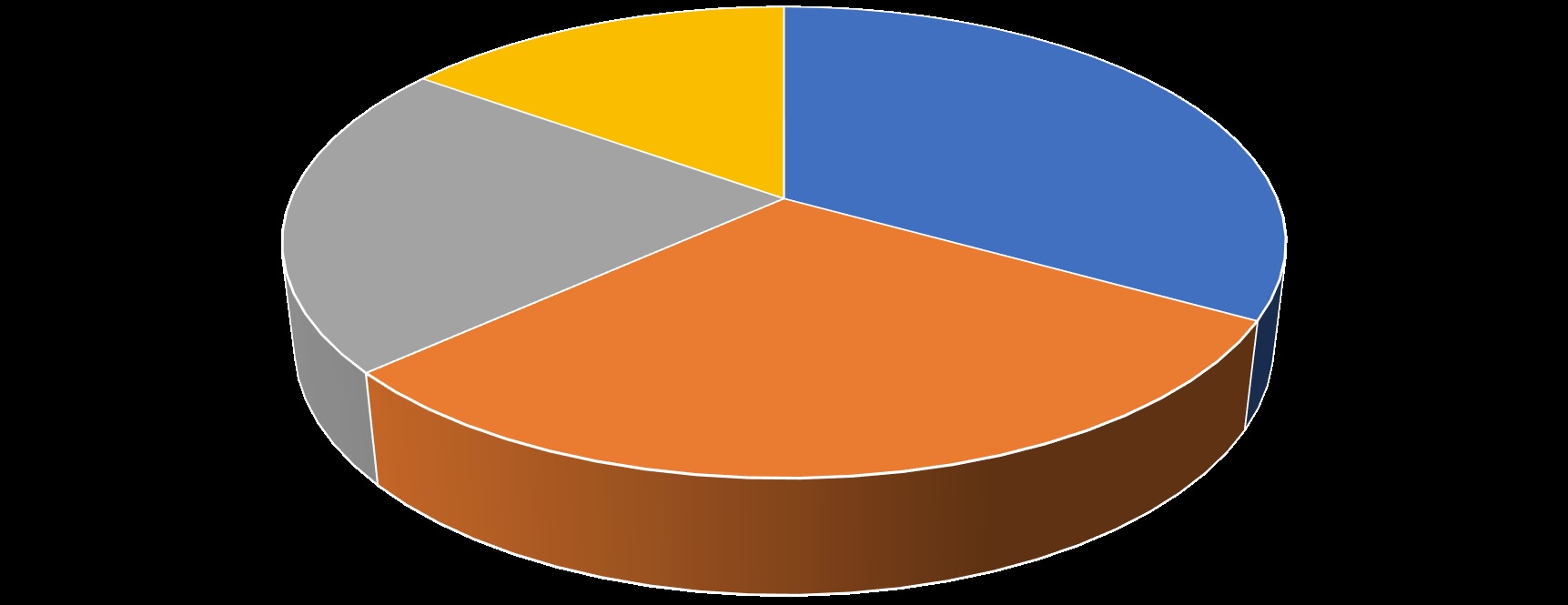
Utilisation of healthcare resources Figures 1 - 3 depict respondents’ utilisation of healthcare resources. Figure 1 shows the frequency of visit to a healthcare facility, while the average amount spent per visit and the average amount spent on the purchase of medicines by respondents are shown in Figures 2 and 3 respectively. About 14.3% (n = 72) of the study participants visited healthcare facilities at least once a week to address medical conditions for either themselves or their dependents, with a majority (n = 144; 28.6%) spending between N3,000 -5,999 (Nigerian Naira) per visit.
Knowledge/awareness of health insurance
schemes Our results showed that although 335 (66.5%) of our respondents had heard of health insurance schemes, only 92 (18.3%) claimed to know how they work. Moreover, about 61.9% (n = 312) of respondents were not aware of the existence of an affordable health insurance plan for low-income earners in Nigeria. The respondents’ knowledge and awareness of health insurance is shown in Table 2.
Perception of health insurance schemes About 42.3% (n = 213) of respondents perceived health insurance schemes as being expensive, while
20.2% (n =102) considered them a waste of resources. Table 3 presents the respondents’ perception of health insurance schemes.
Willingness to enrol in health insurance schemes Our respondents’ willingness to enrol in health insurance schemes and the amount they were willing to pay in monthly subscriptions is presented in Table 4. Our results showed that only 25.4% (n = 128) of participants were willing to subscribe to a health insurance scheme.
The Nigerian healthcare system is reportedly characterised by poor funding and inequitable access to healthcare resources [8]. Policy makers in the healthcare industry are thus encumbered by issues pertaining to healthcare financing, strengthening the healthcare system and improving access to healthcare services [17]. We found a high level of utilisation of healthcare resources among our study participants, with more than one-tenth of respondents reporting that they visit a healthcare facility at least once a week, either for themselves or with their dependents. This study was conducted among the uninsured population; thus, our respondents made out-of-pocket payments to meet their healthcare needs. This mode of payment for healthcare services has been described as retrogressive as it exposes vulnerable households to financial risk, denying them equitable access to quality healthcare and eventually promoting poor health-seeking behaviours [17, 19]. Although the majority of our respondents had heard of health insurance, only one-quarter of them were aware of how they work and almost two-thirds were not aware of the existence of affordable health insurance plans for the country’s low-income earners. A previous study by Ejughemre et al among ambulatory patients of a tertiary healthcare facility in Delta state – Nigeria found a good knowledge of health insurance among the study population with the majority of the participants having the right understanding of what health insurance is. Their study also showed that the media, both electronic and print, was a major source of knowledge about health insurance [17]. A similar study on the knowledge of community-based health insurance among residents of selected rural communities in Abuja, Nigeria, found a high level of awareness among the respondents, attributable to persistent sensitisation and awareness campaigns in these communities [20]. On the other hand, Adedeji et al,
in their study among households in the Nigerian capital, found a very low level of awareness of community health insurance programs [8]. A similar finding was reported from Uganda where a low level of awareness was found even among insured persons [21]. The study by Adedeji et al also found that among those who were aware of community health insurance, the radio was a major source of information [8]. It is thus evident that health promotion activities targeted at sensitising the public on health insurance would improve knowledge, as inadequate training and sensitisation have been identified as major factors contributing to poor knowledge of such programmes [22, 23]. Moreover, poor knowledge of health insurance may affect enrolment in health insurance schemes. For instance, in Pakistan, investigators have found strong resistance to health insurance programmes as a result of a poor understanding of the scheme [24]. A significant proportion of our respondents had a poor perception of health insurance schemes. For instance, more than one-third believed that the schemes were expensive, while about a quarter did not consider it necessary to enrol in a scheme. Furthermore, almost half of the respondents did not agree that paying for healthcare delivery services via an insurance programme was cheaper than paying out-of pocket, while about a quarter believed that young and healthy people, as well as those who rarely become ill do not need to enrol in a health insurance scheme. Results from a study among health professionals in public health facilities in north-west Ethiopia found a poor and unfavourable attitude towards health insurance schemes among the participants [24]. Similar studies in South Africa, Ghana and Nigeria also reported unfavourable attitudes towards, and poor perceptions of, health insurance programmes among the populations studied [25 – 27]. The study by Ejughemre et al found varying perceptions of health insurance schemes with a general feeling of 'uncertainty' among their respondents [17]. We found that two-thirds of our respondents were unwilling to enrol into any health insurance scheme. Studies have suggested that knowledge and perception influences willingness to enrol and benefit from health insurance packages [17]. A similar study among residents of a selected community in Rivers state, Nigeria, reported that over half of respondents were not willing to enrol in a social health insurance programme [1]. Among the reasons identified by the investigators for this
lack of willingness were poor health-seeking behaviours, lack of interest in health insurance, lack of trust in the management of funds by insurance scheme administrators and the patronage of traditional and alternative medicine [1]. They also found that employment status, monthly income, educational level and age influenced the respondents’ willingness to enrol in a social health insurance scheme. Other researchers have reported various factors associated with the willingness to subscribe to health insurance schemes. Identified factors include marital status, ethnicity, socioeconomic status, gender, place of residence and certain community attributes including peer pressure, attitudes and health beliefs [11, 28 – 30]. Only about one-eighth of our respondents who expressed willingness to enrol in a health insurance scheme were willing to pay up to 5,000 Nigerian Naira as monthly premium for such plan. Varying levels of willingness to enrol in and pay for health insurance schemes have been reported by different investigators. For instance, a study among residents in the southeastern region of Nigeria found such willingness to be between 3.6% and 38% [15]. Another study among artisans in the southwestern region of Nigeria reported 82.4% willingness to pay [16], while similar studies in Bangladesh and Ethiopia reported 86.7% and 78% willingness to pay respectively [31, 32]. Health insurance is a means of improving the utilisation of healthcare resources and protecting households against the risk of poverty caused by out-of-pocket expenditure. Moreover, it is widely considered a viable means of attaining universal healthcare coverage in low-and-middle -income countries; particularly in Nigeria where poverty and poor access to healthcare services remain daunting challenges [33 – 36].
Knowledge of the concept of health insurance and awareness of the existence of affordable insurance plans is poor in a significant proportion of the population studied. Many of the respondents had a poor perception regarding health insurance schemes, with a majority being unwilling to enrol in a health insurance scheme. The implementation of a comprehensive awareness campaign, designed to dispel misconceptions and enlighten the population about the workings and benefits of health insurance, would increase enrolment, improve access to
healthcare services, and reduce out-of-pocket expenditure on healthcare resources.
The results of this study may not be a true reflection of the entire population of uninsured persons in Nigeria as it is limited in generalisability. We relied on self-reported data from respondents, which may be subject to social desirability bias. Furthermore, there may be a risk of selection bias in the sampling as patients who were willing to participate in the study may differ from those who chose not to participate.
Ethical approval and consent to participate The Helsinki Declaration was adhered to in this study, and ethical approval was obtained from the Health Research Ethics Committee of the Akwa Ibom State Ministry of Health. In addition, informed consent was obtained from the respondents.
Consent for publication Not applicable.
Availability of data and materials The datasets used and analysed during this study are available from the corresponding author on reasonable request.
Competing interest The authors declare no competing interests.
The authors did not receive funding for this study.
The authors extend their appreciation to all the respondents who participated in the study.
UIE conceived and designed the study; UIE, AS, JU, BU, IN and VM all contributed to the questionnaire design, data collection, analysis and interpretation. UIE wrote the manuscript and reviewed it critically for important intellectual content. All authors read and approved the submitted manuscript.
| Socio-demographic | Frequency | Percentage |
|---|---|---|
| parameters | ||
| Gender | ||
| Male | 140 | 27.8 |
| Female | 344 | 68.3 |
| Prefer not to say | 20 | 3.9 |
| Age range (years) | ||
| 18 – 24 | 322 | 65.9 |
| 25 – 34 | 39 | 7.7 |
| 35 – 44 | 52 | 10.3 |
| 45 – 54 | 40 | 7.9 |
| ≥ 55 | 41 | 8.1 |
| Religion | ||
| Christianity | 441 | 87.5 |
| Islam | 51 | 10.1 |
| Traditional | 6 | 1.2 |
| worshipper | ||
| Others | 6 | 1.2 |
| Employment status | ||
| Unemployed | 204 | 40.5 |
| Self-employed | 176 | 34.9 |
| Civil servant | 72 | 14.3 |
| Private sector | 30 | 6.0 |
| worker | ||
| Retired | 22 | 4.4 |
| Highest educational | level | |
| Nor formal | 37 | 7.3 |
| education | ||
| Primary education | 28 | 5.6 |
| Secondary | 145 | 28.8 |
| education | ||
| Tertiary education | 294 | 58.3 |
| Marital status | ||
| Single | 322 | 63.9 |
| Married | 141 | 22.6 |
| Divorced | 15 | 9.7 |
| Separated | 21 | 4.2 |
| Prefer not to say | 5 | 0.9 |
| Number of children/dependents | ||
| None | 366 | 66.7 |
| 1 – 3 | 114 | 22.6 |
| 4 – 6 | 49 | 9.7 |
| > 6 | 4 | 0.8 |
| Average monthly income | (Naira) | |
| No income | 198 | 39.3 |
| ≤30,000 | 189 | 37.5 |
| 31,000 – 60,000 | 39 | 7.7 |
| 61,000 – 90,000 | 31 | 6.2 |
| E-mail: unyimeeshiet@uniuyo.edu.ng |
| Sn | Questions Frequency Percenta |
|---|---|
| ge | |
| 1. | Have you ever heard of health insurance? |
| Yes 335 66.5 | |
| No 169 33.5 | |
| 2. | Do you know how health insurance works? |
| Yes 92 18.3 | |
| No 412 81.7 | |
| 3. | Are you aware that there are affordable health |
| insurance plans for low-income earners in | |
| Nigeria? | |
| Yes 192 38.1 | |
| No 312 61.9 | |
| 4. | Which body regulates health insurance in |
| Nigeria? | |
| Federal Ministry of 223 44.2 | |
| Health | |
| National Health 212 42.1 | |
| Insurance Authority* | |
| National Insurance and 49 9.7 | |
| Pension Agency | |
| Central Bank of 9 1.8 | |
| Nigeria | |
| None of the above 11 2.2 | |
| 5. | Enrollees/subscribers to health insurance |
| periodically pay a stipulated premium for their | |
| health insurance plan | |
| True* 408 81.0 | |
| False 83 16.4 | |
| Do not know 13 2,6 | |
| 6. | Health maintenance organisations cover all or |
| part of the medical bills of enrollees/subscribers | |
| of their schemes | |
| True* 233 46.2 | |
| False 73 14.5 | |
| Do not know 198 39.3 | |
| 7. | Enrollees/subscribers of health maintenance |
| organisations (HMOs) schemes can only get | |
| healthcare coverage at accredited health facilities | |
| approved by their HMOs | |
| True* 214 42.5 | |
| False 62 12.3 | |
| Do not know 228 45.2 | |
| 8. | Micro health insurance is characterised by |
| cheaper premiums (fees) and focuses more on | |
| primary healthcare needs | |
| True* 185 36.7 | |
| False 76 15.1 | |
| Do not know 243 48.2 | |
| 9. | Health insurance in Nigeria is for government |
| workers (civil servants) only | |
| True 94 18.7 | |
| False* 257 51.0 | |
| Do not know 153 30.4 | |
| *Correct | option |
| Sn | Questions Frequenc Percentage |
|---|---|
| y | |
| 1. | Health insurance is expensive |
| True 213 42.3 | |
| False 219 57.7 | |
| 2. | Health insurance is a waste of resources |
| True 102 20.2 | |
| False 402 79.8 | |
| 3. | It is necessary for people to enroll in a health |
| insurance scheme | |
| True 384 76.2 | |
| False 120 23.8 | |
| 4. | Health insurance is for wealthy people only |
| True 135 26.8 | |
| False 369 73.2 | |
| 5. | Young and healthy people have no need for health |
| insurance | |
| True 121 24.0 | |
| False 383 76.0 | |
| 6. | People who rarely fall ill do not need health |
| insurance | |
| True 126 25.0 | |
| False 378 75.0 | |
| 7. | Paying for health insurance is cheaper than out of |
| pocket payment for healthcare services | |
| True 247 49.0 | |
| False 257 51.0 | |
| 8. | The process of accessing healthcare services via |
| health insurance is tedious | |
| True 248 49.2 | |
| False 256 50.8 | |
| 9. | Health insurance companies, like other types of |
| insurance companies, cannot be trusted | |
| True 126 25.0 | |
| False 379 75.0 |
| Sn | Questions Frequency Percentage |
|---|---|
| 1. | Are you willing to enrol in a health insurance scheme |
| Yes 128 25.4 | |
| No 376 74.6 | |
| 2. | If Yes, which category of health insurance provider |
| would you prefer? | |
| Government (e.g., 78 60.9 | |
| NHIA) | |
| Privately owned 50 39.1 | |
| insurance companies | |
| 3. | If yes, how would you prefer to pay for your health |
| insurance plan? | |
| Monthly deductions from 59 46.1 | |
| my salary by my | |
| employer | |
| Monthly deductions from 28 21.9 | |
| my savings account | |
| Medicine, Law & Public | Health Vol 5, No 3. 2025 p658 |
| Direct payment to an 41 32.0 | |
| agent/staff of the | |
| insurance company | |
| 4. | What is the maximum amount of money you are |
| willing to pay monthly for a health insurance plan? | |
| N1,000 (Naira) monthly 47 36.7 | |
| N2,000 (Naira) monthly 32 25.0 | |
| N3,000 (Naira) monthly 25 19.5 | |
| N4,000 (Naira) monthly 8 6.3 | |
| N5,000 (Naira) and 16 12.5 | |
| above monthly | |
| 162 | |
| 200 | 78 |
| 113 79 | |
| 150 | At least once in 3 months |
| 100 | 72 At least twice in 3 months |
| At least twice in a month | |
| 50 | At least once in a month |
| At least once a week | |
| 0 | |
| How often do you | visit a healthcare facility (including a community pharmacy) for |
| any medical | condition either for yourself or for your dependents? |
| Figure.1. | Frequency of visit to a healthcare facility. |
| How much do | you spend on the average per healthcare facility Visit? |
| 76, 15% | |
| 167, 33% | |
| 109, 22% | |
| 152, 30% | |
| <N3,000 (Naira) | N3,000 - N4,999 (Naira) N5,000 - N8,000 (Naira) >N8,000 (Naira |
| Medicine, Law & Public | Health Vol 5, No 3. 2025 p659 |
| How much do | you spend on average per month on drug purchases for yourself and |
| dependents (if applicable) at the pharmacy? | |
| 3% 5% | |
| 7% | |
| 36% | |
| 20% | |
| 29% | |
| < N3,000 (Naira) | N3,000 – N5,999 (Naira) N6,000 – N8,999 (Naira) |
| N9 000 – N11 | 999 (Naira) N12 000 – N15 000 (Naira) > N15 000 (Naira) |