Full text rendered from the published PDF. The PDF is the version of record; if the two differ, the PDF governs.
BACKGROUND The role of magnesium in patients with acute chronic obstructive pulmonary disease (COPD) exacerbation remains to be determined.
AIM We aim to explore the effect of magnesium on COPD exacerbation, as well as its impact on pulmonary function tests and on hospital admissions for acute exacerbation in the emergency department.
METHODS This is a systematic review and meta-analysis that included a search of the keywords "magnesium" and "COPD" on PubMed, Google Scholar, Cochrane databases, and Gray literature (ClinicalTrials.gov and World Health Organization International Clinical Trials Registry Platform) from 1963 to May 2021.
RESULTS The use of IV magnesium reduced the risk ratio for admission RR= 0.85 (95% CI 0.62 to 1.17). The combined risk ratio for admission increased to 0.95 when we added nebulised magnesium sulphate (95% CI 0.85 to 1.07), p >0.05. The mean score for improvement after IV magnesium was higher (M=16.75, SD=5.11) than the mean score before its administration (M=8.74, SD=8.85), t(4)=-2.57, p =0.031. Thus, the use of IV magnesium sulphate results in a 91.64% improvement in the pulmonary function test.
CONCLUSION IV magnesium sulphate improves the pulmonary function test of patients with acute COPD exacerbation in the ED, and possibly reduces the admission rate.
Keywords: Magnesium for COPD, COPD exacerbation
Magnesium was first used as a bronchodilator in 1936- 1940 by Rossello and Pia, and Haury [1, 2]. A calcium antagonist that inhibits smooth-muscle contraction was the postulated mechanism [3]; the bronchodilatory effect was also attributed to interference with parasympathetic stimulation and potentiating the effect of β 2-agonists [4, 5]. Other proposed mechanisms include blocking histamine release from mast cells [6] and inhibiting acetylcholine release [7], as well as its sedative action [8].
Extensive studies have explored the efficacy of magnesium in asthma exacerbation. Those studies revealed improvement in lung function tests [9], reducing the need for hospital admission and mechanical ventilation [10,11]. Nonetheless, the effect of magnesium on COPD needs further elucidation. Magnesium’s bronchodilatory effects have been advocated for acute exacerbation of COPD [12]. Furthermore, it has been noted that pulmonary function might improve in the
Nafisah are with Hala Alzaid, Fay Aldossari, Sharafaldeen Bin Emergency Department, King Fahad Medical City, Saudi Arabia, e- mail: Halaa.z@hotmail.com, e-mail: dr.faay@gmail.com, e-mail: dr.sharafaldeen@yahoo.com
Fay Aldossari is the corresponding author.
short term with the use of IV magnesium [13]. The use of nebulised magnesium, on the other hand, has revealed mixed results – hampering a solid conclusion [14, 15]. Thus, the dose, the route, and when to administer magnesium remain unclear. This study aims to explore the effect of magnesium on COPD exacerbation; we also aim to explore its impact on pulmonary function tests and on hospital admissions for acute exacerbation in the emergency department.
Search strategy: We searched PubMed, Google Scholar, Cochrane databases, and Gray literature (ClinicalTrials.gov and World Health Or- ganization International Clinical Trials Registry Platform). We also explored the reference lists of included articles, and any systematic reviews and meta-analyses identified therein. We searched the keywords "magnesium" and "COPD", from 1963 to May 2021.
Selection criteria: Our inclusion criteria were all articles that measured the effect of magnesium sulphate on patients with COPD. We excluded non-English articles that lacked translation; articles investigating the effect of magnesium on patients not in exac- erbation; articles involving the use of magnesium beyond the ED course of stay (e.g., after admission); and finally, studies in which patients received adjunct management that deviates from the current standard of care, i.e. inhaled bronchodilator, anticholinergic, oxygen and possible antibiotic.
Data extraction, quality assessment, and qualitative synthe- sis:
The studies’ eligibility for inclusion was examined by two independent researchers; a third researcher was approached in the event of any disagreement regarding a study’s inclusion.
We used the RoB 2 Cochrane risk-of-bias tools for ran- domised controlled trials to assess the studies’ bias [16]. Data analysis was conducted with the use Review Manager Web [17], using a random-effects model, on the assumption that the studies included would be weighted more equally in cases of possible heterogeneity [18]. We also used a paired t- test to measure the mean effect of magnesium sulphate on the pulmonary function test. The analysis was recorded in accordance with the Preferred Reporting Items for a Review and Meta-analysis of Individual Participant Data [19]. The study approved by the IRB committee with an IRB log number of 21-259.
Outcomes: The primary outcome was the effect of magnesium sulphate on admission rates in patients with acute COPD exacerbation. The secondary outcome was the effect of magnesium sulphate on the pulmonary function test.
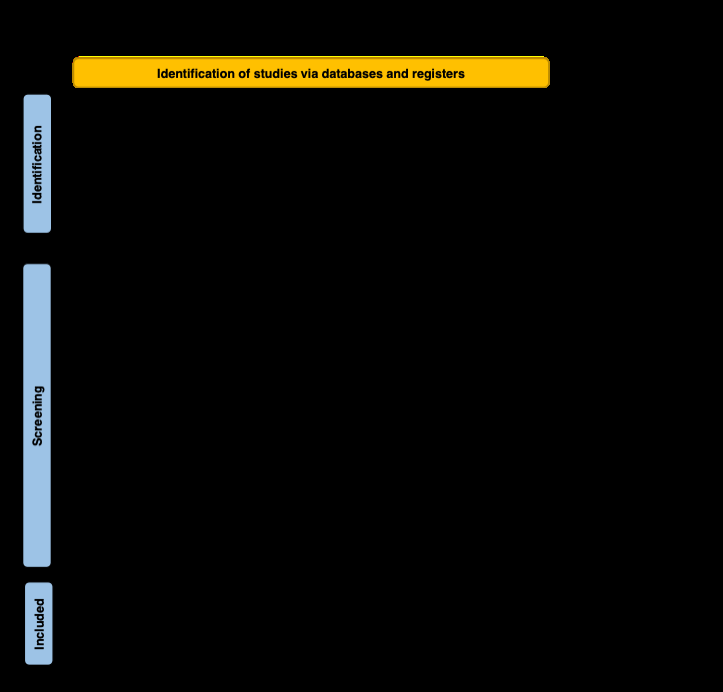
Study selection: 19,100 articles were identified, as illustrated in the Prisma chart (Figure 1). We were unable to retrieve one article, and six had no translation. We also excluded two articles targeting COPD patients not in exacerbation, and two articles in which intervention was provided after the patients were admitted, including a trail which deviated from usual practice [20]. The three included randomised controlled trials are illustrated in Table 1; Table 2 describes the risk of bias in those studies. Two of the included studies used intravenous magnesium sulphate, while one used nebulised magnesium sulphate; there was a total of 211 patients across the three studies (97 cases comprising 45.97%, and 114 in the control group; 54.03%). The three studies reported a primary outcome of improved peak expiratory flow (PEF), forced expiratory volume (FEV1) and forced vital capacity (FVC), with a secondary outcome of admission to the hospital.
Demographic characteristics: Table 3. illustrates the demographic characteristics of the population in the included studies. The patients included in the studies were of similar mean age, while there were fewer females in the intervention group. In addition, the heart rate, respiratory rate and serum magnesium levels were similar between the two groups. However, due to the reporting in- consistencies, other variables – including history of smoking, oral steroid use, at-home use of oxygen and other pertinent medical history – could not be assessed.
The effect of magnesium administration on the admission rate:
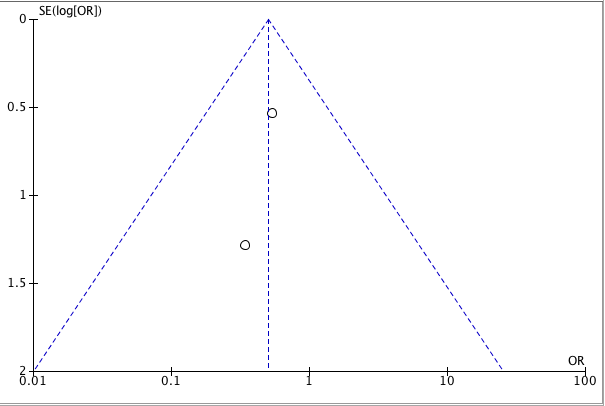
Two studies examined the effect of IV magnesium sulphate on the admission rate, with 49 patients in the intervention group and 53 in the control group. A funnel plot revealed no evidence of publication bias, as illustrated in Figure 2. A forest plot revealed no evidence of heterogeneity across the two trials (I 2 =17%, τ 2 = 0.01, p>0.05). The combined risk ratio for admission was 0.85 (95% CI 0.62 to 1.17). The forest plot is illustrated in Figure 3.
Combining the nebulised magnesium sulphate with the IV magnesium sulphate studies did not result in significant heterogeneity (I 2 =2%, τ 2 = 0.00, p>0.05), as illustrated in Figure 4. However, the combined risk ratio for admission increased to 0.95 compared with that of only IV magnesium sulphate (95% CI 0.85 to 1.07).
The effect of magnesium administration on the pulmonary function test:
The effect of IV magnesium sulphate was measured using PEF (measured in L/min) in one of the studies [12], while the second study [13] used FVC (measured in mL), as shown in Figures 5 and 6, respectively.
The effect of nebulised magnesium sulphate was measured using FEV1 (measured in mL) [14], as shown in Figure 7. The use of different units of measurement in the three studies precluded a meta-analysis.
Due to the different outcome measures, we calculated the percentage difference in improvement between the intervention group and the placebo group. We then explored the effect of IV magnesium sulphate using a pre-and post-analysis, standardising the unit of measurement to percent change. We noted a significant difference; the mean score for improvement after IV magnesium was higher (M=16.75, SD=5.11) than the mean score before its administration (M=8.74, SD=8.85), t(4)=-2.57, p=0.031. Thus, the use of IV magnesium sulphate results in a 91.64% improvement in the pulmonary function test.
The effectiveness of magnesium has been investigated ex- tensively in patients with bronchial asthma, but not for acute COPD exacerbation, despite a similar advocated mechanism of action [21, 22]. Our analysis builds on previous studies that failed to demonstrate a reduction in admission rates and revealed minimal improvement on the pulmonary function test [23]. When using IV magnesium sulphate, the admission rate might have been reduced by 38%, or increased to 17%, with an overall estimate toward reduced admission. When we included nebulized magnesium sulphate, the estimate was toward reduced admission by 15% with possible increased by 7%; however, the total estimates showed a RR of 0.95 which is less than for IV magnesium sulphate alone. Although the results were not statistically significant and type II error might prevail.
A previous analysis reported an increased risk of readmis- sion in patients with lower magnesium levels [24]. Since the patients in this review had normal serum magnesium levels, we argue that the positive impact of magnesium on the admission rate is also related to its bronchodilatory effect, rather than only to raising serum levels. Perhaps the most important determinant for admission is respiratory distress, which is best addressed by bronchodilatory medications [25]. Further studies are needed to support or refute such a claim.
Furthermore, we noted an improvement in pulmonary func- tion tests with the use of IV magnesium sulphate. This improvement was noted in PEF and FVC. These findings align with a previous analysis which found that magnesium posi- tively affected respiratory muscle strength and hyperinflation, even in stable COPD patients [26].
It is prudent to assert that we demonstrated a positive effect of magnesium on the pulmonary function tests of patients with normal magnesium levels. Although the improvement in pulmonary function tests has previously been attributed to the correction of hypomagnesaemia [1], nonetheless, we demonstrated an improvement despite normal serum magne- sium levels.
Congruent with a previous systematic review [23], the use of nebulised magnesium does not reduce the admission rate or improve the pulmonary function tests. On the contrary,
we noted that the admission rate increased with the use of nebulised magnesium. However, based on our strict inclusion criteria, we were only able to include one study using nebu- lised magnesium. This meta-analysis should thus not provide any recommendation on the use of nebulised magnesium in acute COPD exacerbation.
The dose of IV magnesium sulphate that best demonstrates the positive effect varies between 1.2 g, and 3 g. Therefore, it might not be erroneous to infer that the positive effect lies between 1.2 - 3 g. However, further studies are required to determine the exact dose.
The included articles generally demonstrated low bias. However, several limitations need to be considered. First, we
could not infer about the effect of magnesium in patients requiring non-invasive positive-pressure ventilation (NIPPV). Second, the exclusion of those requiring NIPPV might threaten generalisability. Furthermore, uncooperative patients were ex- cluded from two studies; this leaves the question of whether the excluded segment suffered more severe disease than those included. It thus remains unclear as to whether the benevolent effect can be attributed to a specific patient segment.
Overall, we advocate providing IV magnesium sulphate for patients with COPD exacerbation to improve their pulmonary function test and possibly reduce the admission rate. With regard to nebulised magnesium sulphate, however, this analysis was unable to provide a clear recommendation on its use for acute COPD exacerbation.
45 min
30 min
120 min
60 min
After bronchodilator
90 min
60 min
30 min
0. 4.5 9. 13.5 18. 22.5
0. 7.5 15. 22.5 30.
| Intervention/ | Dose and route | Sample size | ||
|---|---|---|---|---|
| Study name Design | Exclusion criteria | control | (intervention/ | (intervention/ |
| control) | control) | |||
| Skorodin et RCT | Younger than 35 | IV magnesium | 1.2 g in 150 mL | 36/36 |
| al. (1995) | years; fever (> | sulphate/ normal | normal saline over | |
| 37.9°C); | saline (after 20 min | 20 min. (three | ||
| hypotension | of nebulised | patients received 3 | ||
| (systolic BP < 100 | albuterol) | g) / 2.4 mL saline as | ||
| mmHg); history of | a placebo in 150 mL | |||
| renal disease; | normal saline | |||
| presence of | ||||
| pneumonia | ||||
| Mukerji et RCT | Uncooperative | IV magnesium | 2 g magnesium | 13/17 |
| al. (2015) | patients, requiring | sulphate/ normal | sulphate in normal | |
| PPV; pneumothorax | saline | saline over 15 min / | ||
| or hypotension | 20 mL normal saline | |||
| Edwards et RCT | Uncooperative | Nebulised | 2.5 ml isotonic | 52/64 |
| al. (2013) | patients; younger | magnesium | magnesium (151 | |
| than 35 years; | sulphate/ nebulised | mg) 3 times at 30- | ||
| requiring PPV; | isotonic saline | min intervals for one | ||
| hypotension, | day / 2.5 ml normal | |||
| pneumothorax, or | saline | |||
| pregnancy. |
| Study name | Result | Time ED or of bronchodilator) intervention (to Mild/moderate severe exacerbation or NIPPV or excluded included |
|---|---|---|
| Skorodin et al. | PEF increased from | Bronchodilator used in first ? ? |
| (1995) | 136.7±69.7 L/min to | 20 min, followed by |
| 162.3±76.6 L/min at 30 | intervention | |
| min; | ||
| then to 161.3±78.7 L/min | ||
| at 45 min. | ||
| No difference in | ||
| dyspnoea score, | ||
| admission rate, ED visit | ||
| within two weeks | ||
| Mukerji et al. | FEV improved after 60 | Bronchodilator used in first Severe exacerbation Excluded |
| (2015) | min and 120 min (no | 20 min, followed by |
| difference in need for | intervention | |
| PPV; admission rate | ||
| remained unchanged) | ||
| Edwards et al. | No difference in FEV, | Bronchodilator used in first ? Excluded |
| (2013) | admission rate, need for | 20 min, followed by |
| PPV | intervention |
| Inclusion | Sequence generation | Allocation concealment Blinding participants personnel of and | Blinding outcome assessor | of Incomplete outcome data | Selective outcome reporting | Other sources of bias |
|---|---|---|---|---|---|---|
| Skorodin al. (1995) et | + | + ? | ? | + | - | + |
| Mukerji al. (2015) et | + | + + | + | + | - | + |
| Edwards al. (2013) et | + | + + | + | + | - | + |
| + Low risk of bias; | – High risk of bias; ? Unclear | |||||
| Table 3. Demographic characteristics of the | population | in the included studies | ||||
| Demographic Magnesium sulphate | Placebo | |||||
| Age (Mean) 70.7 (SD=10.42) | 69.63 (SD=0.53) | |||||
| Total n=97 | n=114 | |||||
| Gender | ||||||
| Male n=73 (75.2%) | n=76 (66.7%) | |||||
| Female n=24 (24.7%) | n= 38 (33.3%) | |||||
| Heart rate 95.4 (beats/min) | 99.2 (beats/min) | |||||
| Respiratory rate 21.2 (breaths/min) | 22.4 (breaths/min) | |||||
| Serum level (mean) magnesium 0.87 (mmol/L) | 0.88 (mmol/L) |
| Demographic | Magnesium sulphate | Placebo |
|---|---|---|
| Age (Mean) | 70.7 (SD=10.42) | 69.63 (SD=0.53) |
| Total | n=97 | n=114 |
| Gender | ||
| Male | n=73 (75.2%) | n=76 (66.7%) |
| Female | n=24 (24.7%) | n= 38 (33.3%) |
| Heart rate | 95.4 (beats/min) | 99.2 (beats/min) |
| Respiratory rate | 21.2 (breaths/min) | 22.4 (breaths/min) |
| Serum level (mean) magnesium | 0.87 (mmol/L) | 0.88 (mmol/L) |