Full text rendered from the published PDF. The PDF is the version of record; if the two differ, the PDF governs.
Background: Digital health applications have emerged as transformative tools within healthcare systems globally. This study investigates the perceptions, adoption, perceived benefits and challenges, and factors involved in the selection of digital health apps among the residents of Riyadh city, Saudi Arabia.
Methodology: A cross-sectional study was conducted using a validated, self-administered online questionnaire targeting residents of Riyadh aged 18 years and older. A total of 444 participants were recruited through convenience sampling via social media platforms.
Results: Among the respondents, 90% reported using digital health applications, with Sehhaty being the most commonly used. Over 75% rated these applications as effective in improving quality of life (QoL). Key benefits included improved healthcare access, appointment booking, health awareness, and time efficiency. Fitness tracking was the most used app category (57.2%). Despite positive perceptions, 22% reported challenges, including technical difficulties and limited app compatibility. Ease of use was the most important factor (92.1%) when choosing a health app.
Conclusion: Digital health applications have been widely adopted in Riyadh and are perceived to enhance QoL through improved access, convenience, and personal health management. The findings highlight strong user satisfaction and a growing interest in preventive care. Expanding digital health features, enhancing awareness, and integrating AI-based tools are recommended to further support health outcomes and national digital health goals.
Keywords: Attitudes, Health Knowledge, Mobile Applications, Practice, Quality of Life, Saudia Arabia, Telemedicine
Digital health refers to the use of digital technolo- gies to improve health and healthcare services. It includes tools such as mobile applications and tel- emedicine, which are designed to support better health outcomes and healthcare delivery. As these technologies increasingly integrate into individu- als’ daily lives and healthcare experiences, their relevance to broader health concepts becomes more apparent. Quality of life (QoL) is defined by the World Health Organization (WHO) as “an individ- ual’s perception of their position in life in the con- text of the culture and value systems in which they live and to their goals, expectations, standards and concerns” [1,2]. Recognising the significance of enhancing QoL, Saudi Arabia launched the Quality of Life Program (QOLP) in 2018 as part of its Vi- sion 2030 initiative. This program aims to improve liveability and lifestyle, foster economic growth, and expand recreational, cultural, and healthcare opportunities [3]. A key component of this national transformation is the integration of digital health technologies, which play a crucial role in enhanc- ing healthcare accessibility and efficiency. The Saudi Ministry of Health has actively promoted digital health solutions, aligning with Vision 2030’s goal of developing a technologically ad- vanced healthcare system [4]. In recent years, Saudi Arabia has seen an increase in the adoption of digital health applications, including Sehhaty, Tawakkalna, Mawid, and Wasfaty . These platforms have transformed healthcare delivery by providing virtual consultations, telehealth services, remote
patient monitoring, appointment scheduling, health tracking, and other related digital health services [4]. One of the country’s most widely used health apps is Sehhaty , serving over 31 million users, en- abling 51 million appointments, and offering in- stant virtual consultations [5]. The widespread adoption of these applications has significantly im- proved access to healthcare and reduced the need for physical hospital visits. They have also im- proved physical activity and function in individuals with chronic conditions [6]. The COVID-19 pandemic served as a turning point for digital health globally, and particularly in Saudi Arabia, accelerating the adoption of various digital healthcare solutions [7]. One of the most notable advancements in Saudi Arabia was the launch of the Seha Virtual Hospital, the largest of its kind globally, connecting 130 traditional hospitals to provide remote healthcare services [8]. On a global scale, too, the significance of digital health technol- ogies has been increasingly recognised. For in- stance, the World Health Organization’s Global Strategy on Digital Health highlights the strategic role of digital technologies in accelerating progress towards the health-related Sustainable Develop- ment Goals (SDGs) and achieving Universal Health Coverage (UHC). It emphasises that the in- novative use of digital tools such as artificial intel- ligence (AI), remote monitoring, big data analytics, and mobile platforms is essential to improve diag- nosis, treatment decisions, self-management of care, and overall health outcomes [9]. The State of Digital Health 2023 report revealed that digital health solutions are now widely adopted across 67 countries, with major investments in telemedicine, wearable health devices, and AI-powered diagnos- tics [10]. Despite the rapid expansion of digital health, however, challenges persist. While digital health apps have demonstrated trans- formative potential to improve healthcare accessi- bility and patient engagement, there remains a sig- nificant gap in research specifically examining the associated perceptions, benefits and challenges. To date, limited studies have explored the intersection of digital health and QoL in Saudi Arabia, leaving room for further investigation. This study has two primary objectives: (i) to assess the perceptions, us- age patterns, and measurable benefits and chal- lenges of digital health technologies, and (ii) to pro- vide evidence-based recommendations for policy- makers, healthcare professionals, and technology
developers to optimise digital health solutions for improved health outcomes and user experiences.
Study Design, Study Population, and Sampling To ensure accurate and reliable data collection for this study, this cross-sectional study employed a convenience sampling method and an online ques- tionnaire that was developed and validated for the study. The target population was Riyadh residents aged 18 years and over. Riyadh being selected for its central role in digital health adoption, advanced healthcare infrastructure, and diverse population. As the capital and most densely populated city in Saudi Arabia, Riyadh provides a relevant setting for examining digital health usage.
Data Collection and Survey Instrument A self-administered, online questionnaire was used to collect data between March 13 and April 23, 2024, its development based on the current state of digital health in Saudi Arabia and supported by rel- evant literature reviews. It was reviewed and ap- proved by experts employed in public health set- tings or serving as university faculty members in the community health department. The question- naire assessed the perceptions, adoption, and per- ceived benefits and challenges of digital health ap- plications in Saudi Arabia. A convenience sam- pling method was employed to facilitate easy ac- cess to the target population, and the survey was distributed through popular social media platforms, including WhatsApp, LinkedIn, and X (formerly Twitter). The instrument was designed to capture comprehensive data across multiple domains rele- vant to digital health usage and its perceived ef- fects. The questionnaire consisted of four main sections: sociodemographic characteristics, use of digital health apps, participants’ evaluation of digital health apps, and perceived benefits and challenges. The first section collected demographic infor- mation including the participants’ gender, age, na- tionality, and employment status. The second sec- tion examined the use of digital health apps, inquir- ing whether participants had used such apps and, if so, which types they used most frequently. The apps considered included fitness tracking apps, vir- tual clinic apps, medication reminder apps, sleep quality monitoring apps, mental health booster apps, and nutrition monitoring apps. To assess user perceptions and experiences, the third section
measured participants' evaluation of digital health apps across three dimensions: effectiveness, diffi- culty, and perceived support. These aspects were rated using a five-point Likert scale. For effective- ness, participants rated how well the apps improved their quality of life, ranging from 'Not effective at all' (1) to 'Always effective' (5). Difficulty was as- sessed according to participants’ perceived ease difficulty or ease of use, with responses ranging from 'I always find it difficult' (1) to 'I have no dif- ficulty at all' (5). Lastly, perceived support for dig- ital health apps provided in Saudi Arabia was rated from 'Not supportive at all' (1) to 'Very supportive' (5). The fourth section addressed the perceived benefits and challenges associated with digital health apps. Participants identified various bene- fits, including improved fitness levels, increased health awareness, stress reduction, better adherence to dietary plans, time efficiency, and enhanced ac- cess to healthcare services. Conversely, challenges such as usage difficulties, time constraints, tech- nical issues, lack of app interconnectivity, and de- vice compatibility problems were also reported. Furthermore, we assessed the participants’ level of agreement with various statements about digital health apps to gain deeper insights into their per- ceptions and future intentions regarding these tech- nologies. The statements covered aspects such as the perceived contribution of digital health apps to healthcare improvement, their ability to meet users' needs, and participants' willingness to continue us- ing and recommending them in the future.
Inclusion and Exclusion Criteria Participants included in this study were required to be at least 18 years of age and residents of Riyadh, Saudi Arabia. Individuals who did not provide in- formed consent were excluded. After applying these criteria, four participants were excluded, re- sulting in a final sample size of 444 participants.
Validity and Reliability To enhance the validity of our survey tool, we con- ducted a pilot test involving 27 participants who were subsequently excluded from the main study. The pilot study helped to identify any ambiguities in the survey’s content or issues with functionality that may affect its relevance and accuracy. This ap- proach confirmed the suitability of the tool for col- lecting the data required. Additionally, Cronbach’s α was calculated to assess reliability, demonstrat- ing strong internal consistency with a score of 0.83.
Data Analysis
Data analysis and visualisation were conducted us- ing JMP PRO 18 and Microsoft Excel. The study focused on providing a descriptive overview of par- ticipants’ responses, aiming to summarise key pat- terns and trends without examining statistical asso- ciations between variables.
Ethical Considerations Ethical approval was obtained from the Institu- tional Review Board (IRB) with approval number 25-418, and the study adhered to the ethical princi- ples outlined in the Declaration of Helsinki. Partic- ipation was voluntary, and informed consent was obtained electronically before participants could proceed with the survey. The survey was conducted anonymously to ensure confidentiality and mini- mise social desirability bias. Participants were also informed that they could withdraw at any time without consequences. All data were stored se- curely, accessible only to authorised researchers, ensuring confidentiality and anonymity.
Sociodemographic Characteristics A sample of 444 participants was selected for the study. The sample included an almost-equal distri- bution of men and women, with women comprising 52.93% (n = 235) of the total number. Most partic- ipants were between 18 and 25 years old (59.91%, n = 266), while the smallest age group was those older than 60 years (2.03%, n = 9). Most partici- pants were Saudi citizens (95.72%, n = 425), with students representing the largest occupational group (51.58%, n = 229), followed by employees (28.38%, n = 126). Table 1 presents the partici- pants’ sociodemographic characteristics.
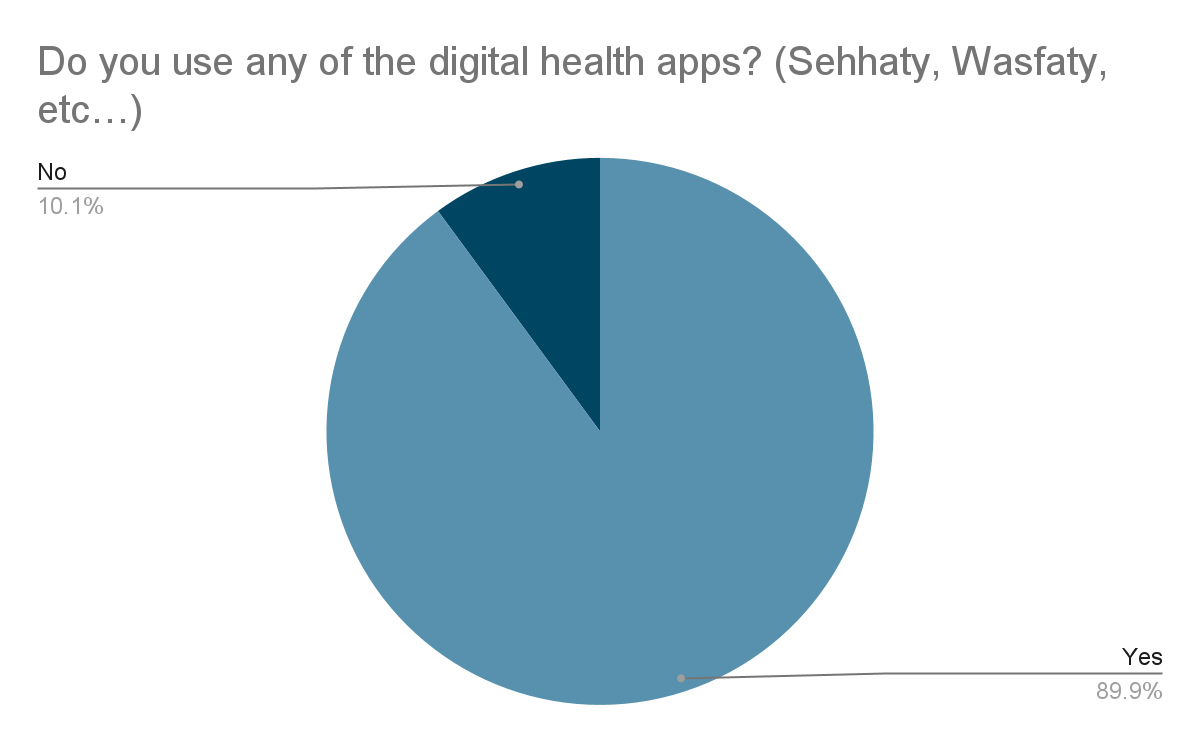
Use and Rating of Digital Health Apps Table 2 illustrates the participants' ratings of digital health apps across three dimensions—effective- ness, difficulty, and support. The highest ratings were observed in the categories of effectiveness (52.48% rated 5, n = 233) and support (72.52% rated 5, n = 322). Regarding difficulty, most partic- ipants reported having no difficulty at all (42.12%, n = 187), followed by ‘I have no difficulty’ (22.30%, n = 99) and ‘neutral’ (20.27%, n=90). Figure 4 shows that most participants (89.9%, n = 399) reported using digital health apps, while only 10.1% (n=45) reported not using any. Agreement with Digital Health Statements Participants expressed varying levels of agreement with statements related to digital health apps, as
shown in Table 3. The highest level of strong agree- ment was with the statement, ‘I will use digital health apps in the future,’ indicated by 71.17% (n=316) of respondents. This was followed by 67.57% (n=300) who indicated that they would rec- ommend health apps to friends and family. The greatest disagreement was seen in response to the statement, ‘I use digital health applications’ with 13.51% (n=60) disagreeing and 7.88% (n=35) strongly disagreeing. Meanwhile, only 36.49% (n=162) strongly agreed and 18.47% (n=82) agreed that they had noticed an improvement in their qual- ity of life after using healthcare apps.
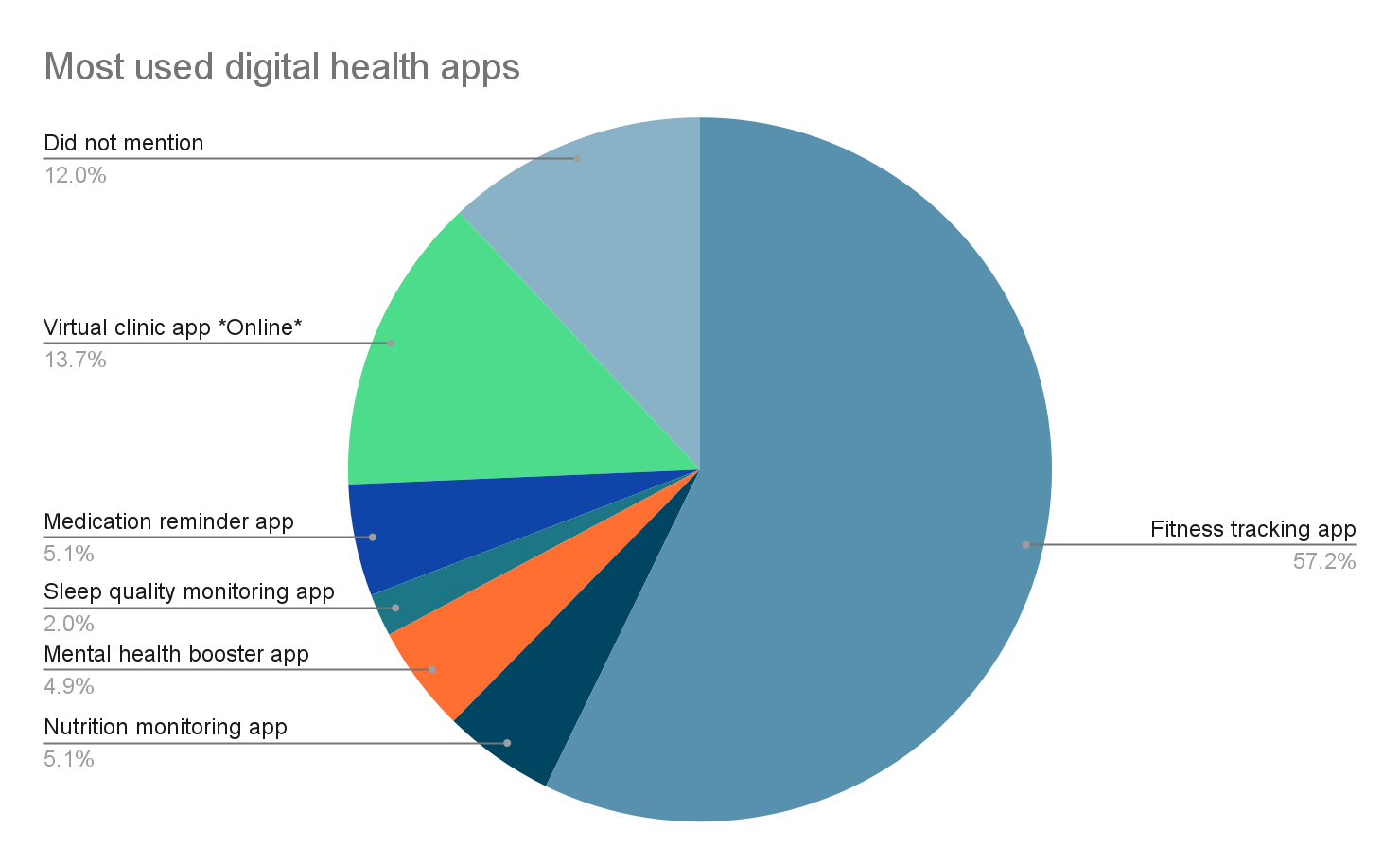
Most Used Digital Health Apps The most-used digital health apps among partici- pants are illustrated in Figure 1. Fitness tracking apps were the most commonly reported (57.2%, n = 254), followed by virtual clinic apps (13.7%, n = 61). Sleep quality monitoring apps were the least used, with only 2% (n=9) of participants reporting their use.
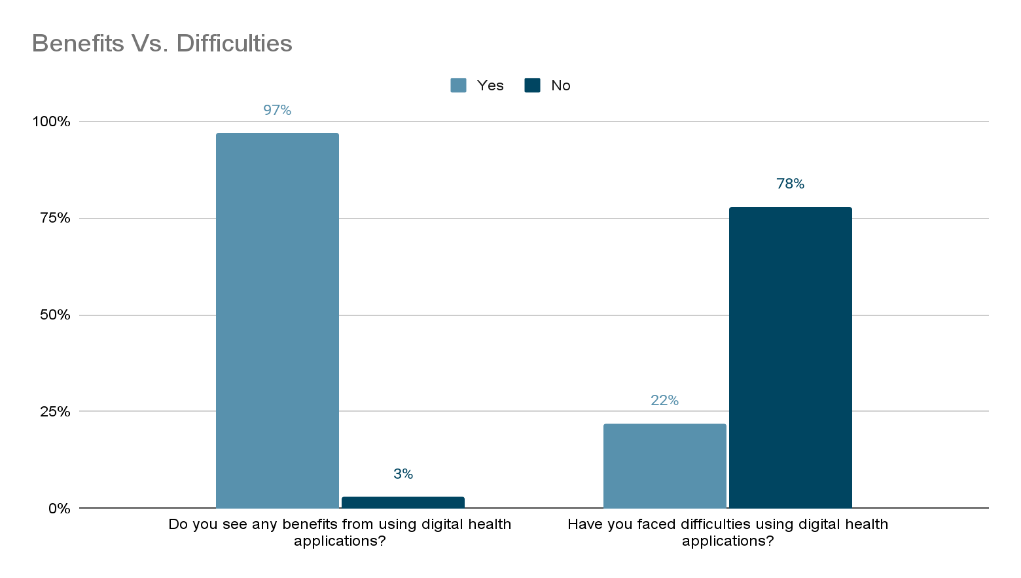
Perceived Benefits and Challenges Participants' perceptions of the benefits and diffi- culties associated with digital health apps are shown in Figure 2. The majority (97%, n = 431) experienced benefits, while 78% (n=346) stated that they did not face difficulties when using digital health apps. Conversely, 22% (n=98) reported ex- periencing challenges. The specific benefits and challenges perceived by participants are detailed in Table 4. The most fre- quently reported benefit was easy appointment booking (17.90%, n = 314), while medication re- minders were the least reported benefit (0.57%, n = 10). Most participants (77.93%, n = 346) indicated that they did not face any challenges, with diffi- culty of use being the most commonly cited issue (9.91%, n = 44).
Important Factors When Choosing Digital Health
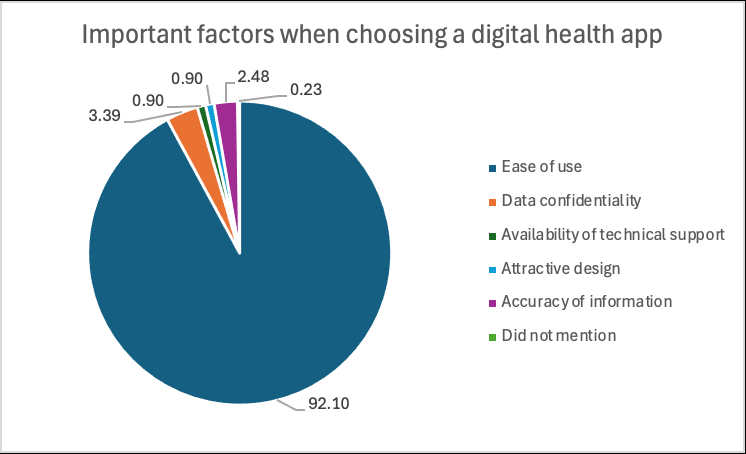
Apps The most important factors considered by partici- pants when selecting digital health apps are pre- sented in Figure 3. Ease of use was identified as the most important factor (92.10%, n = 409), while availability of technical support and attractive de- sign were the least important, both reported by only 0.90% (n=4) of participants.
This study investigated the perceptions, adoption,
benefits and challenges, and factors considered in the selection of digital health applications in Saudi Arabia. The widespread adoption of digital health is evident, as demonstrated by the high usage rates, highlighting its increasing role in enhancing overall well-being. Our research indicates a 90% (n=499) adoption rate, with over 75% (n=335) of partici- pants asserting that digital health apps improve quality of life. These findings align with previous research highlighting the value of digital health in supporting healthcare services. For instance, Mo- hamed et al. reported that 58.8% (total n = 323) of participants perceived digital health as a valuable resource for patient care [11]. Additionally, AlAli et al. [12] reported that approximately 53.4% (n = 393) of participants expressed general awareness of digital health applications. The widespread adop- tion of digital health apps in Saudi Arabia is largely driven by government-led initiatives. For instance, during the COVID-19 pandemic, Alharbi and Al- mufarij found that Tawakkalna (96.0%) and Tabaud (68.6%) (total n = 878) were the most widely used applications, reflecting the urgent need for contact tracing and pandemic management tools [13]. More recently, however, digital health priorities have shifted from emergency pandemic response to broader, long-term health service deliv- ery. Unlike Tawakkalna and Tabaud, which were designed for crisis response, Sehhaty and similar platforms such as Mawid , Seha Virtual Hospital, and Wasfaty now focus on appointment booking, telemedicine, and medication prescriptions, in line with the digital transformation goals of Saudi Ara- bia’s Vision 2030. This reflects the growing desire among Saudi citizens to utilise digital health apps to improve their health and well-being. One of the key benefits identified in this study was the role of digital health apps in promoting physical activity, with improved fitness levels identified as the primary benefit of using health apps (48.7%, n = 216). There is a crucial role for digital health in this domain, particularly as Saudi Arabia faces ris- ing obesity rates. There has been significant adop- tion of fitness tracking apps, with a usage rate of 57.2% (n = 254) in the present study. This data im- plies that users are actively engaging with tools to monitor their fitness and activity levels. A study by Al-Ansari et al revealed that approximately 80% (total n = 195) of users believed that their fitness app could enhance their awareness of their physical activity [14], while further evidence suggests that
digital health technologies can significantly im- prove obesity management and promote overall well-being [15]. Another key impact of digital health on QoL is its role in improving general health outcomes. In this study, 63% (n = 281) of participants agreed that these apps helped to improve their general health. This broadly positive perception of digital health services aligns with the increasing reliance on dig- ital health for self-care and health management. Similarly, Mohamed et al. found that 70.9% (total n = 323) of participants agreed that digital health apps could be used effectively to monitor patients with chronic diseases, further supporting their util- ity in improving health in general [11]. Likewise, on a global scale, previous research has demon- strated positive outcomes associated with digital health interventions across various health condi- tions. Boulley et al. reported improved well-being among breast cancer survivors using digital health interventions [16], while Howarth found that digi- tal health interventions contributed to better health- related outcomes among workplace employees [17]. Furthermore, systematic reviews have con- firmed that digital health interventions may provide clinical benefits in managing musculoskeletal con- ditions and significantly improve HbA1c among diabetes patients, compared with the usual care [18,19]. The consistent positive outcomes reported in different diseases by various studies, alongside the high level of agreement observed in this re- search, highlight the expanding role of digital health applications across diverse medical condi- tions. Ease of access to healthcare services was another prominent benefit reported by our participants, where many users appreciated the convenience of booking appointments and accessing services digi- tally. This aligns with a previous study in which participants reported that the digital health app Seha enhanced their ability to obtain healthcare ser- vices and enhanced service delivery [20]. These findings suggest that digital health applications en- hance convenience and accessibility, ultimately in- creasing the likelihood of individuals taking proac- tive steps towards managing their health. A signif- icant factor contributing to the adoption of digital health is its user-friendly quality. In this research, 77.9% (n = 346) of participants reported experienc- ing no challenges, and 65% (n = 286) encountered no difficulties while using digital health apps. This is in agreement with the results of another study,
which also indicated that 65% (total n = 736) of re- spondents faced no obstacles when utilising medi- cal apps on their devices [12]. In this study, around 60% (n = 266) of participants were aged between 18 and 25, implying that a digitally proficient de- mographic may experience fewer challenges in em- bracing and using digital health solutions. Moreo- ver, 51% of the Saudi population is under 29 years old, suggesting that the general population is un- likely to face significant hurdles in adopting digital health technologies [21]. This study confirms that digital health apps can en- hance quality of life by improving healthcare ac- cess, self-care, and disease management. High adoption rates in Saudi Arabia, driven by govern- ment initiatives and digital literacy, reflect a grow- ing reliance on these technologies. Key benefits in- clude easier appointment booking, time efficiency, and improved healthcare accessibility. Digital health represents the future of healthcare and well- being, particularly with the integration of artificial intelligence (AI) and emerging digital health tech- nologies; as advancements continue, it has the po- tential to significantly reduce the burden of chronic diseases by improving early detection and continu- ous monitoring. While this study provides valuable insights into the quality-of-life benefits of digital health apps, cer- tain limitations should be acknowledged. One key limitation is the limited regional scope: as the study focuses only on Riyadh, it may be difficult to gen- eralise the findings to other rural or urban areas of Saudi Arabia. Another limitation is the overrepre- sentation of younger participants (18–25 years), students (51.6%), and Saudi nationals (95.7%), which may limit the generalisability of the findings to more diverse populations. Similarly, the occupa- tional background of participants is skewed, with 51% being students, which may influence percep- tions and usage patterns. Moreover, the use of con- venience sampling limits the ability to generalise the findings to the broader Saudi population, as the sample may not fully represent individuals with different levels of digital health literacy or healthcare access, as an online survey was used (in- dicating that everyone who participated had a mo- bile phone). Furthermore, the study’s cross-sec- tional design (utilising a survey instrument) re- stricts the ability to determine causal relationships between digital health application usage and im- provements in quality of life. Finally, the reliance
on self-reported data might introduce potential bi- ases, such as recall bias and response bias, which may affect the accuracy of participants’ responses.
Recommendations and Implications for Future
Research The majority of participants in this study reported no difficulties using digital health apps; however, a small percentage (22%) reported challenges. To gain deeper insights into the factors contributing to these difficulties, further research might be con- ducted to identify specific barriers. Understanding these obstacles would allow for the development of more targeted solutions to improve accessibility and user experience. Therefore, a recommendation for future research is to adopt qualitative methods, such as interviews or focus groups, to gain deeper insights into community perspectives and to ex- plore the underlying relationships between digital health use and quality of life. The participants expressed a need for increased knowledge and awareness regarding health-related topics. To address this, the Sehhaty app could in- corporate more features with a specific focus on ex- panding health awareness, and following a person- alised approach could significantly enhance its im- pact. For instance, a feature that delivers condition- specific educational content based on a user's med- ical history would enable individuals to access rel- evant health information tailored to their specific needs. This enhancement would not only improve user engagement but also empower individuals with knowledge about their health conditions, pro- moting proactive health management and informed decision-making. Additionally, a comprehensive dashboard accessible to both patients and healthcare providers could facilitate improved fol- low-up, medication adherence, and treatment opti- misation.
This study demonstrates the significant role of dig- ital health apps in enhancing quality of life among residents of Riyadh, Saudi Arabia. The high adop- tion rate and positive perceptions of digital health highlight its potential for improving healthcare ac- cessibility, efficiency, and self-management of health. Key findings include substantial user satis- faction regarding ease of use, effectiveness in health improvement, and convenient healthcare ac- cess. However, challenges such as awareness gaps and usability issues remain among a minority of us-
ers, indicating areas for further improvement. Fu- ture efforts should focus on personalised health ed- ucation features within popular platforms such as Sehhaty , to maximise benefits. Overall, digital health technologies represent essential tools for empowering individuals and improving health out- comes in Saudi Arabia.
The data sets used in this study are available from the corresponding author and will be provided upon reasonable request.
The authors declare no conflict of interest.
VIII. REFERENCES 1. World Health Organization. The World Health Organization Quality of Life (WHOQOL) [In- ternet]. Rev. 1. Geneva: World Health Organiza- tion; 2012 [cited 2025 Mar 14]. Available from: https://www.who.int/tools/whoqol 2. World Health Organization. Digital health [In- ternet]. 2024 [cited 2025 Jun 13]. Available from: https://www.who.int/europe/health-top- ics/digital-health 3. Vision 2030 Program. Quality of Life Program [Internet]. 2024 [cited 2025 Mar 15]. Available from: https://www.vision2030.gov.sa/en/ex- plore/programs/quality-of-life-program 4. Saudi Ministry of Health. Ministry of Health Digital Strategy Framework and Roadmap [In- ternet]. 2020 [cited 2025 Jun 13]. Available from: https://www.moh.gov.sa/Minis- try/vro/eHealth/Documents/MoH-Digital- Health-Strategy-Update.pdf 5. Health Sector Transformation Program. Health Sector Transformation Report 2024 [Internet]. 2024 [cited 2025 Jun 13]. Available from: https://www.vision2030.gov.sa/me- dia/h0yb5d03/health-sector-transformation-re- port-2024.pdf 6. Zangger G, Bricca A, Liaghat B, Juhl CB, Mortensen SR, Andersen RM, et al. Benefits and harms of digital health interventions promoting physical activity in people with chronic condi- tions: Systematic review and meta-analysis. Journal of Medical Internet Research [Internet]. 2023 Jul 6 [cited 2025 Jun 13];25:e46439. Available from: https://doi.org/10.2196/46439 7. Abdulaziz AA, Algosaibi AM, Alquhaibi AS, Alali FN, Almutawaa MS, Roomi MA, et al.
Digital healthcare innovation and development in Saudi Arabia during and beyond COVID-19. Science, Technology and Society [Internet]. 2023 Jun 30;28(3):370–86. Available from: https://doi.org/10.1177/09717218231178229 8. Ministry of Health SA. Minister of Health, Min- ister of Communications and DGA Governor In- augurate ‘Sehha Virtual Hospital’ [Internet]. 2022 [cited 2025 Jun 13]. Available from: https://www.moh.gov.sa/en/Ministry/Media- Center/News/Pages/News-2022-02-28- 003.aspx 9. Digital Health and Innovation (DHI). Global Strategy on Digital Health 2020–2025 [Inter- net]. World Health Organization, editor. World Health Organization; 2021 [cited 2025 Jun 14]. Available from: https://www.who.int/publica- tions/i/item/9789240020924 10. Digital Health Index. The State of Digital Health 2023 [Internet]. 2023 [cited 2025 Jun 13]. Avail- able from: https://digitalhealthin- dex.squarespace.com/s/State-of-Digital- Health_2023.pdf 11. Mohamed AH, Ghonim M, Somaili M, Abdel- mola A, Haqawi IYA, Shmakhi YMN, et al. Pa- tients’ perception towards digital health services in Saudi Arabia: A cross-sectional study. Medi- cine [Internet]. 2023 Dec 15 [cited 2025 Jun 13];102(50):e36389. Available from: https://doi.org/10.1097/MD.000000000003638 9 12. AlAli N, AlKhudairy Y, AlSafadi K, Abduljab- bar B, Aljerian N, Albeshry AM, et al. The usage of digital health mobile-based applications among Saudi population. Healthcare (Basel, Switzerland) [Internet]. 2023 May 12 [cited 2025 Jun 13];11(10). Available from: https://www.ncbi.nlm.nih.gov/pmc/arti- cles/PMC10218251/ 13. Almufarij A, Alharbi A. Perceptions of using mobile health apps (mHealth) during Covid-19 pandemic in Saudi Arabia: A cross-sectional study. Journal of Health Informatics in Devel- oping Countries [Internet]. 2022 Mar 27;16(1). Available from: https://www.jhidc.org/in- dex.php/jhidc/article/view/352 14. Ansari F, Alfayez A, Alsalman D, Alanezi F, Alhodaib H, Al-Rayes D, et al. Using mobile health applications to enhance physical activity in Saudi Arabia: a cross-sectional study on us- ers’ perceptions. International Health [Internet]. 2022 Mar 25 [cited 2025 Jun 13];15. Available from: https://www.researchgate.net/publication/
359576057_Using_mobile_health_applica- tions_to_enhance_physical_activ- ity_in_Saudi_Arabia_a_cross-sec- tional_study_on_users’_perceptions 15. Hinchliffe N, Capehorn MS, Bewick M, Feenie J. The potential role of digital health in obesity care. Advances in Therapy [Internet]. 2022;39(10):4397–412. Available from: https://doi.org/10.1007/s12325-022-02265-4 16. Escriva Boulley G, Leroy T, Bernetière C, Paquienseguy F, Desfriches-Doria O, Préau M. Digital health interventions to help living with cancer: A systematic review of participants’ en- gagement and psychosocial effects. Psycho-On- cology [Internet]. 2018 Dec 1;27(12):2677–86. Available from: https://doi.org/10.1002/pon.4867 17. Howarth A, Quesada J, Silva J, Judycki S, Mills PR. The impact of digital health interventions on health-related outcomes in the workplace: A sys- tematic review. Digital Health [Internet]. 2018 Jan 1;4:2055207618770861. Available from: https://doi.org/10.1177/2055207618770861 18. Hewitt S, Sephton R, Yeowell G. The effective- ness of digital health interventions in the man- agement of musculoskeletal conditions: System- atic literature review. J Med Internet Res [Inter- net]. 2020;22(6):e15617. Available from: https://www.jmir.org/2020/6/e15617 19. Stevens S, Gallagher S, Andrews T, Ashall- Payne L, Humphreys L, Leigh S. The effective- ness of digital health technologies for patients with diabetes mellitus: A systematic review. Frontiers in Clinical Diabetes and Healthcare [Internet]. 2022;Volume 3-2022. Available from: https://www.frontiersin.org/journals/clin- ical-diabetes-and-healthcare/arti- cles/10.3389/fcdhc.2022.936752 20. Aldhahir AM, Alqahtani JS, Althobiani MA, Al- ghamdi SM, Alanazi AF, Alnaim N, et al. Cur- rent knowledge, satisfaction, and use of E-health mobile application (Seha) among the general population of Saudi Arabia: A cross-sectional study. Journal of Multidisciplinary Healthcare [Internet]. 2022 Apr [cited 2025 Jun 13];Volume 15:667–78. Available from: https://doi.org/10.2147/JMDH.S355093 21. General Authority for Statistics (GASTAT). Population Structure Report [Internet]. 2024 [cited 2025 Jun 13]. Available from: https://www.stats.gov.sa
| N | % | |
|---|---|---|
| GENDER | ||
| Female | 235 | 52.93 |
| % | ||
| Male | 209 | 47.07 |
| % | ||
| AGE (YEARS) | ||
| 18-25 | 266 | 59.91 |
| % | ||
| 26-35 | 59 | 13.29 |
| % | ||
| 36-45 | 55 | 12.39 |
| % | ||
| 46-60 | 55 | 12.39 |
| % | ||
| Over 60 | 9 | 2.03% |
| NATIONALITY | ||
| Saudi | 425 | 95.72 |
| % | ||
| Other | 19 | 4.28% |
| OCCUPATIONAL | STATUS | |
| Student | 229 | 51.58 |
| % | ||
| Employee | 126 | 28.38 |
| % | ||
| Unemployed | 52 | 11.71 |
| % | ||
| Retired | 25 | 5.63% |
| Self-employed | 12 | 2.70% |
| Question | N | % |
|---|---|---|
| How effective do you think digital health applications | are in improving | quality of life? |
| 5 - Always effective | 233 | 52.48% |
| 4 - Effective | 102 | 22.97% |
| 3 - Neutral | 85 | 19.14% |
| 2 - Not effective | 16 | 3.60% |
| 1 - Not effective at all | 8 | 1.80% |
| How would you rate the use of digital health applications | in terms | of difficulty? |
| 5 - I have no difficulty at all | 187 | 42.12% |
| 4 - I have no difficulty | 99 | 22.30% |
| of Medicine, Law & Public Health Vol 5, No 4. 2025 | p735 | |
| 3 - Neutral | 90 | 20.27% |
| 2 - I find it difficult | 40 | 9.01% |
| 1 - I always find it difficult | 28 | 6.31% |
| How would you rate the support for digital health | applications in Saudi | Arabia? |
| 5 - Very supportive | 322 | 72.52% |
| 4 - Supportive | 69 | 15.54% |
| 3 - Neutral | 35 | 7.88% |
| 2 - Not supportive | 10 | 2.25% |
| 1 - Not supportive at all | 8 | 1.80% |
| 5 | 4 | 3 | 2 | 1 | ||||||
|---|---|---|---|---|---|---|---|---|---|---|
| Strongly | Agree | Neutral | Disagree | Strongly | ||||||
| Question | agree | disagree | ||||||||
| N | % | N | % | N | % | N | % | N | % | |
| I use digital health apps. | 15 | 35.81 | 6 | 14.19 | 1 | 28.60 | 6 | 13.51 | 3 | 7.88 |
| 9 | % | 3 | % | 2 | % | 0 | % | 5 | % | |
| 7 | ||||||||||
| Digital health apps help improve the | 26 | 60.14 | 9 | 21.40 | 5 | 11.71 | 1 | 4.28 | 1 | 2.48 |
| quality of healthcare in Saudi Arabia. | 7 | % | 5 | % | 2 | % | 9 | % | 1 | % |
| Digital health apps meet my needs. | 21 | 47.30 | 1 | 23.20 | 8 | 18.92 | 3 | 8.78 | 8 | 1.80 |
| 0 | % | 0 | % | 4 | % | 9 | % | % | ||
| 3 | ||||||||||
| I will use digital health apps in the fu- | 31 | 71.17 | 6 | 15.09 | 4 | 9.46 | 1 | 2.48 | 8 | 1.80 |
| ture. | 6 | % | 7 | % | 2 | % | 1 | % | % | |
| I will recommend health apps to my | 30 | 67.57 | 6 | 15.09 | 5 | 11.71 | 1 | 2.93 | 1 | 2.70 |
| friends and family. | 0 | % | 7 | % | 2 | % | 3 | % | 2 | % |
| Digital health apps have contributed to | 17 | 40.32 | 1 | 22.97 | 9 | 22.07 | 4 | 9.68 | 2 | 4.95 |
| improving my health in general. | 9 | % | 0 | % | 8 | % | 3 | % | 2 | % |
| 2 | ||||||||||
| Digital health apps have helped im- | 17 | 39.41 | 9 | 21.17 | 9 | 22.30 | 4 | 11.04 | 2 | 6.08 |
| prove my decisions. | 5 | % | 4 | % | 9 | % | 9 | % | 7 | % |
| I have noticed an improvement in my | 16 | 36.49 | 8 | 18.47 | 1 | 26.80 | 4 | 10.59 | 3 | 7.66 |
| quality of life after using healthcare | 2 | % | 2 | % | 1 | % | 7 | % | 4 | % |
| apps. | 9 | |||||||||
| Digital health apps have contributed to | 16 | 38.06 | 9 | 22.07 | 1 | 25.90 | 3 | 7.20 | 3 | 6.76 |
| improving the quality of my life. | 9 | % | 8 | % | 1 | % | 2 | % | 0 | % |
| 5 |
| Answers | N | % |
|---|---|---|
| What benefits have you noticed from using | digital health | apps? |
| Improved fitness level | 216 | 12.31% |
| Improved sleep quality | 117 | 6.67% |
| Medicine, Law & Public Health Vol 5, No 4. 2025 | p736 | |
| Increased health awareness | 270 | 15.39% |
| Reduced stress and anxiety | 137 | 7.81% |
| Following diet | 144 | 8.21% |
| Medication reminder | 10 | 0.57% |
| Saving time and effort | 270 | 15.39% |
| Easy appointment booking | 314 | 17.90% |
| Easy access to healthcare | 260 | 14.82% |
| Did not mention | 16 | 0.91% |
| Total | 1754 | 100.00% |
| What challenges have you faced while using | digital health | app? |
| Difficulty of use | 44 | 9.91% |
| Time constraints | 16 | 3.60% |
| Technical problems | 27 | 6.08% |
| Lack of interconnection between applications | 3 | 0.68% |
| Lack of updates | 4 | 0.90% |
| Compatibility issues with devices | 4 | 0.90% |
| None | 346 | 77.93% |
| Total | 444 | 100.00% |
| questions, participants could select more than one option. The totals | reflect the | number of responses, not the number of |
| participants. | ||
| Medicine, Law & Public Health Vol 5, No 4. 2025 | p737 |