Full text rendered from the published PDF. The PDF is the version of record; if the two differ, the PDF governs.
Women with a history of gestational diabetes mellitus (GDM) face a significantly increased risk of developing type 2 diabetes mellitus (T2DM), yet postpartum follow-up in Saudi Arabia remains to be improved. Timely screening and education are crucial to prevent disease progression and reduce national health burdens. This paper proposes an integrated care pathway to optimize postpartum management of GDM and reduce progression to T2DM. We recommend embedding NISAA+ within the Sehhaty application to automatically identify women with GDM, enabling home and clinic-based glucose monitoring with automated reminders for rescreening at 1–3 year intervals. We propose the establishment of a coordinated multidisciplinary model linking primary care and diabetes clinics with health educators, dietitians, and psychologists, with continuity supported within NISAA+. We also advocate for structured breastfeeding support, through lactation counseling, workplace advocacy, and digital tracking, as a cost-effective preventive strategy against type 2 diabetes progression. Lastly, we recommend synchronizing maternal postpartum diabetes screening with infant wellness visits at 6 weeks, 1 year, and 3 years to improve screening adherence and enable early detection of dysglycemia. This integrated approach would combine digital health infrastructure, multidisciplinary expertise, and synchronized monitoring to optimize maternal metabolic outcomes and reduce long-term diabetes risk.
Keywords: Breast Feeding, Diabetes Mellitus Type 2, Diabetes Screening, Diabetes Gestational, Health Education, Postpartum Period, Telemedicine
Gestational diabetes (GDM) can have long-term health consequences, including an increased risk for cardiovascular conditions, as well as gynaecological and breast cancers [1,2]. Women over 40, those with a high body mass index, or with a family history of diabetes are particularly at risk [3]. GDM develops in women without pre- existing diabetes, typically around the 24 th week of pregnancy [4], and studies have found that women with a history of GDM had a 3.7-fold higher risk of developing prediabetes [5] and were also 11 times more likely to develop type 2 diabetes (T2D) than those with no history of GDM [6]. The risk of developing T2D after GDM increases over time, reaching about 19.72% in 10 years and 58% in 50 years [7]. Continuous postpartum follow-up for women with a history of GDM is essential for both mothers and the health care system. The long-term health implications for mothers and infants are equally concerning. A meta-analysis including over 77 million participants found that women with GDM had a 46% increased risk of developing cardiovascular disease. It also showed that their children had a 23% higher risk of developing cardiovascular disease later in life [8]. Improving women’s understanding of GDM and its associated complications plays a vital role in minimising the risk of future health issues, particularly the development of T2D. A growing body of evidence from various regions in Saudi Arabia indicates that women’s awareness of GDM remains a cause for concern. In Riyadh [9], 64.5% of pregnant women had limited or no understanding of the complications of GDM. Similarly, in Jeddah [10], over three-quarters of women (total n=505) showed poor knowledge, with social media cited as their primary information source. In Al-Baha [11], 68.1% of surveyed women exhibited low awareness of GDM. Although a study in Al-Qassim reported that most women had moderate to excellent knowledge, 20.1% still demonstrated poor awareness, relying primarily on mass media and family or friends for information [12]. In Najran [13], 71% of pregnant women were unaware of GDM’s maternal impact. Nationally, nearly 70% of women were reported to have only fair or poor knowledge [14]. Beyond awareness, adherence to postpartum glucose testing remains critically low
across the Kingdom. Of 642 cases reviewed, only 130 women completed postpartum screening for T2D, while hundreds either missed their appointments or never scheduled them [15]. Another study found that 43% of women failed to adhere to follow-up appointments [16], while in Jeddah [17], 80% of women received no postpartum glucose testing at all. Several studies have indicated that women often maintain or gain additional weight after childbirth. In Riyadh [18], around 35% of mothers retained more than 7 kilograms postpartum. Similarly, a study conducted in Jeddah reported an average weight gain of 9 kilograms within a few months after delivery [19]. This paper proposes a new initiative, NISAA+, to be integrated into the Sehhaty application (app), with the aim of highlighting recommendations to improve postpartum follow-up and prevent progression to T2D among women with a history of GDM. The recommendations aim to guide public health policymakers in implementing effective strategies. Sehhaty , launched by the Saudi Ministry of Health, is one of the Kingdom’s most widely used digital health apps, with over 31 million registered users [20], and provides access to a range of healthcare services including appointment scheduling, test results, prescriptions, and vaccination records [21]. As almost every individual in Saudi Arabia is registered on Sehhaty and linked to a primary care provider through the national health system, this platform offers a powerful opportunity for structured follow-up care. RECOMMENDATIONS
Embed a hybrid digital and community-based model (NISAA+) for postpartum health engagement and diabetes prevention NISAA+ is a digital health initiative that stands for National Integrated Saudi Awareness and Action. The word “Nisaa” also means “women” in Arabic, symbolising the initiative’s focus on supporting Saudi women’s health and empowerment. This initiative, developed by the authors, aims to bridge the gap in postpartum follow-up care for women with a history of GDM in Saudi Arabia. It would serve as a comprehensive and culturally tailored platform dedicated to empowering women who have
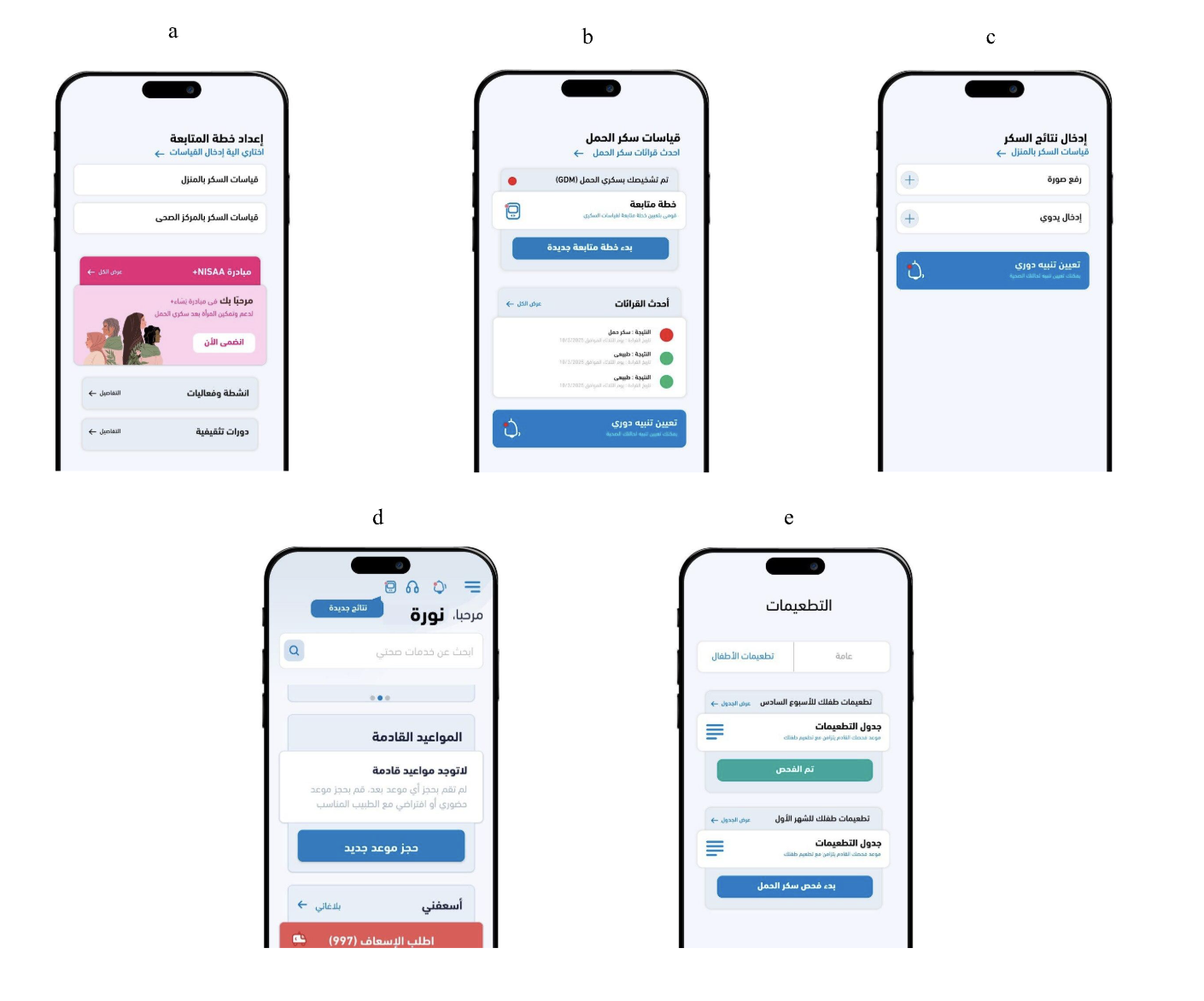
experienced GDM to prevent the development of type 2 diabetes mellitus (T2DM) in the years following childbirth. The NISAA+ Initiative would operate both digitally, within the Sehhaty app, and in person, creating ongoing opportunities for women to remain engaged in their postnatal health journey. It would bring together healthcare professionals, health educators, and participants through structured physical activity sessions, health education events, group support meetings, and follow-up communication. Whether delivered through community centres or virtual platforms, the program would ensure that women are not only informed about their health risks but are also actively supported in sustaining healthy behaviours. Emotional well-being would also be addressed, recognising that motivation, social connection, and being heard are critical to long- term success. The proposed initiative is presented in Figure 1(a). Utilise NISAA+, within Sehhaty, to flag (identify) women diagnosed with GDM, triggering immediate and long-term follow-up under primary care, coordinated with health educators It is recommended that every woman diagnosed with GDM be automatically flagged in NISAA+ (within Sehhaty ) upon diagnosis, as depicted in Figure 1(b). This flag would prompt immediate and long-term follow-up, monitored by the patient’s assigned primary care physician, in coordination with health educators and other healthcare providers. Figure 1(c) illustrates that women should be monitored through either home- based glucose testing or visits to any primary healthcare center. Enable glucose screening records in Sehhaty/ NISAA+ (home testing or clinic testing) to ensure continuity and support clinical decisions Results from glucose screenings, whether done at home or in a clinic, should be logged in NISAA+, by patients or healthcare providers ensuring long- term follow-up results are gathered for clinical decision-making. Automate reminders through Sehhaty/ NISAA+ for ongoing diabetes screening every 1–3 years NISAA+ should also provide automated reminders for ongoing screening every 1–3 years
(or as advised by healthcare professionals), as shown in Figure 2(d), in line with international diabetes prevention guidelines from the American Diabetes Association [22]. Integrating NISAA+ into Sehhaty would enhance patient engagement, support continuity of care, and significantly reduce the long-term risk of T2D among women with a history of GDM. Provide multidisciplinary support for the management of GDM after delivery A multidisciplinary approach has proven effective in healthcare across numerous fields. Bringing together specialists from diverse backgrounds can lead to better, more coordinated health outcomes [23]. We recommend, as shown in Figure 2, an integrated approach that includes health educators, a dietitian, and a psychologist. The mother patient would be referred immediately after delivery to a diabetes clinic and followed up. All specialists would be linked to NISAA+, via Sehhaty , to continue follow-up. Promote breastfeeding as a preventive measure Breastfeeding has been shown to reduce the risk of T2DM. A cohort study found that higher breastfeeding intensity and longer duration were associated with a significantly lower incidence of diabetes after GDM [27]. In Saudi Arabia, breastfeeding rates remain low. One study found that only 15.5% of infants aged below 6 months were exclusively breastfed, and only 19.6% of infants aged more than 1 year continued breastfeeding [28], while another reported that Caesarean section deliveries are linked to shorter durations of exclusive breastfeeding [29]. A third study identified that workplace conditions posed a significant barrier to breastfeeding among mothers in Saudi Arabia [30]. Women with a history of GDM should receive structured follow-up by physicians and health educators via NISAA+ to ensure they are supported in initiating and continuing breastfeeding. Guidance should be personalised and include lactation counselling, workplace advocacy, and digital tracking tools. Promoting breastfeeding in this context is not only a priority for maternal and child health, but also a proven, cost-effective diabetes prevention strategy that could be promoted via the NISAA+ initiative.
GDM may increase the risk of postpartum
depression [24]. As such, the mother's
mental health should be assessed to ensure that this does not affect her interest
in herself or her child, especially at this
sensitive stage.
Dietitian [26]
Changes in dietary behavior may impact the risk of T2DM. Thus, the inclusion of
a dietitian is necessary to assist the mother in building a healthy nutrition plan and maintaining a healthy weight.
The inclusion of a health educator is integral to
preventing T2DM, as they aid the mother in raising her awareness, practising breastfeeding,
and with adequate screening.
Implement postpartum screening and link it with infant health check-up visits Numerous studies, as discussed earlier, highlight poor adherence to postpartum screening. One possible factor is the separation of maternal and child healthcare appointments, which creates challenges and decreases follow-up compliance. Integrating maternal care with child health visits has been identified as an effective approach to enhance healthcare access and engagement. The Mother–Infant Dyad postpartum primary care program demonstrated improvements in both T2D screening rates and postpartum visit attendance [31]. In light of this, we recommend embedding maternal diabetes follow-up into the existing schedule of infant wellness visits (e.g., at 6 weeks, 1 year, and 3 years), as illustrated in Figure 1(e). This strategy would help improve adherence to postpartum T2DM screening, support early management, and reduce the long-term risk of developing T2D in mothers. The concept screens above demonstrate the proposed integration of GDM follow-up and the NISAA+ initiative into the Sehhaty app. These mock-up designs show how Sehhaty could support postpartum women with GDM through personalised reminders, glucose monitoring logs, educational content, and appointment scheduling. Adding these features may enhance postpartum follow-up adherence, improve early T2DM detection, and promote better maternal health outcomes.
It is essential to consider the implementation barriers associated with these recommendations, as their success depends largely on the readiness of the health system and the level of public awareness. A major implementation barrier is the low awareness of GDM among women. Addressing this gap requires targeted health education and multidisciplinary approaches to improve understanding of GDM, its complications, and the importance of postpartum follow-up. Enhancing awareness can improve adherence and reduce the risk of developing T2D. Another barrier is the lack of designated lactation rooms and breastfeeding-friendly environments in
many workplaces and universities. A study in Saudi Arabia found that the main barriers to exclusive breastfeeding were returning to work early (69.5%) and lack of workplace support (66%) [32]. Without supportive infrastructure, postpartum women, especially working and studying mothers, struggle to maintain breastfeeding, despite its known benefits in reducing T2D risk. Policy-level action is needed to ensure institutions provide appropriate facilities and flexibility for maternal care. Additionally, the shortage of health educators in maternal health services limits the system’s capacity to deliver targeted education and behavioural support. Health educators play a vital role in raising awareness, encouraging follow-up, and empowering mothers to take preventive steps, making their involvement essential to the success of any national initiative. Although combining mother and child appointments in the same visit may improve mothers’ adherence to their screening, issues such as clinic availability, physician accessibility, and overbooked schedules can hinder effective implementation. Coordinated efforts are essential to support such implementation. CONCLUSION
NISAA+ is a digital health initiative, designed by the authors, that aims to bridge the gap in postpartum follow-up care for women with a history of GDM to reduce the development of T2D in Saudi Arabia. Despite available guidelines, gaps persist in screening, education, and system-level coordination. Addressing these shortcomings requires a multifaceted approach involving integration of maternal and child health services, digital health platforms like Sehhaty , and culturally tailored interventions such as the NISAA+ initiative. Emphasising health education, lactation support, coordinated appointments, and digital reminders may enhance long-term follow-up adherence. The implementation of these strategies can contribute to the early detection and prevention of T2DM, reduce long-term healthcare burdens, and improve women’s health outcomes across Saudi Arabia. ACKNOWLEDGMENTS We thank Mahfouz Abdullah Almathna for his contribution in designing Figure 1.
APPENDIX This table presents an English explanation of the original Arabic Figure 1.
Figure Concept / What the Figure Represents a Entry page of the NISAA+ initiative in the Sehhaty app.
b The initial step following GDM diagnosis, where the follow-up plan is initiated.
c Input screen , enabling users to enter postpartum blood sugar results manually or by attaching a file/image.
d User dashboard (mother’s profile) displaying upcoming postpartum appointments.
e Vaccination management module , showing postpartum maternal screening and infant immunization follow-up with vaccination status and scheduling.