Full text rendered from the published PDF. The PDF is the version of record; if the two differ, the PDF governs.
Background: Primary care and community-based settings often face time limitations that make detailed, repeatable geriatric assessment difficult. There is a need for a practical, clinic-oriented tool that supports longitudinal tracking while remaining easy to interpret, transparent, and straightforward to use in routine workflows.
Aims: This paper introduces NLGHI, a desktop-based application designed to support structured multi-domain data entry, automated composite scoring, longitudinal visualization, rapid report generation, and basic administrative functions within a single system.
Methods: The application was developed in Python using a Qt-based interface, with established libraries such as NumPy and Matplotlib supporting computation and visualization. It records impairment levels across 27 predefined clinical and social domains and calculates a normalized composite score for each visit based on fixed weightings. Data are stored locally in JSON format to allow portability and direct inspection without dependence on external systems. Additional components include a symptom-lexicon module for advisory input and a patient workspace that supports notes, attachments, follow-ups, and timeline exports.
Results: Implementation produces consistent scoring outputs and clear visual summaries, including trend graphs, across visits. Reports can be generated quickly, and patient records remain auditable within a single workstation. Basic validation checks help identify inconsistencies during data entry, while dashboards allow clinicians to review longitudinal changes without requiring server infrastructure.
Conclusion : NLGHI offers a transparent and adaptable approach to geriatric data capture in small-scale clinical environments. It is intended to complement, rather than replace, established tools such as the Clinical Frailty Scale, Charlson and Elixhauser indices, and the Katz ADL, providing a practical option for ongoing monitoring in primary care and community settings.
Primary care and community-based settings often face time limitations that make detailed, repeatable geriatric assessment difficult. There is a need for a practical, clinic-oriented tool that supports longitudinal tracking while remaining easy to interpret, transparent, and straightforward to use in routine workflows. Aims: This paper introduces NLGHI, a desktop-based application designed to support structured multi- domain data entry, automated composite scoring, longitudinal visualization, rapid report generation, and basic administrative functions within a single system. Methods: The application was developed in Python using a Qt-based interface, with established libraries such as NumPy and Matplotlib supporting computation and visualization. It records impairment levels across 27 predefined clinical and social domains and calculates a normalized composite score for each visit based on fixed weightings. Data are stored locally in JSON format to allow portability and direct inspection without dependence on external systems. Additional components include a symptom-lexicon module for advisory input and a patient workspace that supports notes, attachments, follow-ups, and timeline exports. Results: Implementation produces consistent scoring outputs and clear visual summaries, including trend graphs, across visits. Reports can be generated quickly, and patient records remain auditable within a single workstation. Basic validation checks help identify inconsistencies during data entry, while dashboards allow clinicians to review longitudinal changes without requiring server infrastructure. Conclusion : NLGHI offers a transparent and adaptable approach to geriatric data capture in small-scale clinical environments. It is intended to complement, rather than replace, established tools such as the Clinical Frailty Scale, Charlson and Elixhauser indices, and the Katz ADL, providing a practical option for ongoing monitoring in primary care and community settings.
Received: 2025-09-14 | Accepted: 2026-03-19 | Published: 2026-04-13 DOI: 10.52609/jmlph.v6i2.266 *Corresponding author: niazmirza111@gmail.com
Population ageing in Atlantic Canada and else- where continues to increase the clinical and ad- ministrative demands on primary care physicians, nurse practitioners, and allied health teams [1]. In settings without enterprise electronic medical rec- ords (EMR) or where EMR customization is con- strained, the burden of capturing structured, longi- tudinal geriatric information often devolves to ad hoc spreadsheets or free-text notes. Such pattern complicates trend detection, auditability, and standardized communication across caregivers. The Newfoundland and Labrador Geriatric Health Index (NLGHI) was conceived as a desktop appli- cation to support (i) consistent capture of impair- ment intensities across multiple geriatric domains; (ii) automatic computation of a normalized com- posite index suitable for at-a-glance interpretation; (iii) longitudinal visualization to display change; and (iv) export of concise summaries for docu- mentation and hand-off. The implementation em- phasizes transparency by ensuring plain local stor- age, human-readable exports, and a minimal de- pendency chain leveraging well-documented li- braries for operational components and graphics [2–4]. JavaScript Object Notation (JSON) was chosen to ease local backup and to enable inspec- tion without proprietary tooling [5]. Numerical and visualization routines are implemented with mature packages from the scientific Python pro- gramming ecosystem, which are both widely cited and actively maintained [2–4]. The primary design goal was not to supplant vali- dated geriatric scales used in research or specialist clinics. Instead, NLGHI was built to complement routine visits by recording impairment intensities in a manner that can be repeated and audited, thereby simplifying temporal comparisons and care coordination. The tool’s conceptual position- ing relative to established measures such as the Clinical Frailty Scale (CFS) [6], Charlson Comor- bidity Index (CCI) [7], Elixhauser comorbidity in- dicators [8], and the Katz Index of Independence in Activities of Daily Living (ADL) [9] is dis- cussed below. METHODS
Related Work Several indices are widely employed in geriatric practice and outcomes research. The Clinical
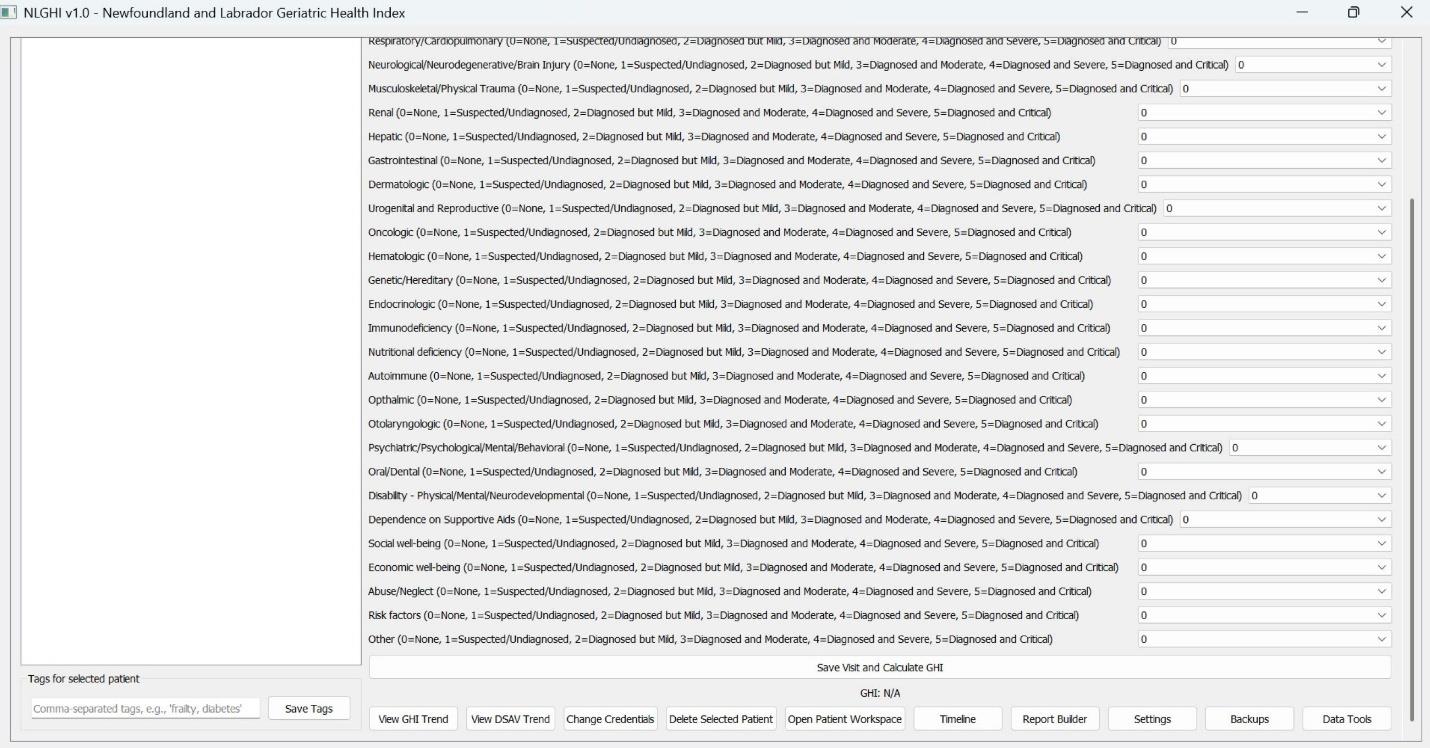
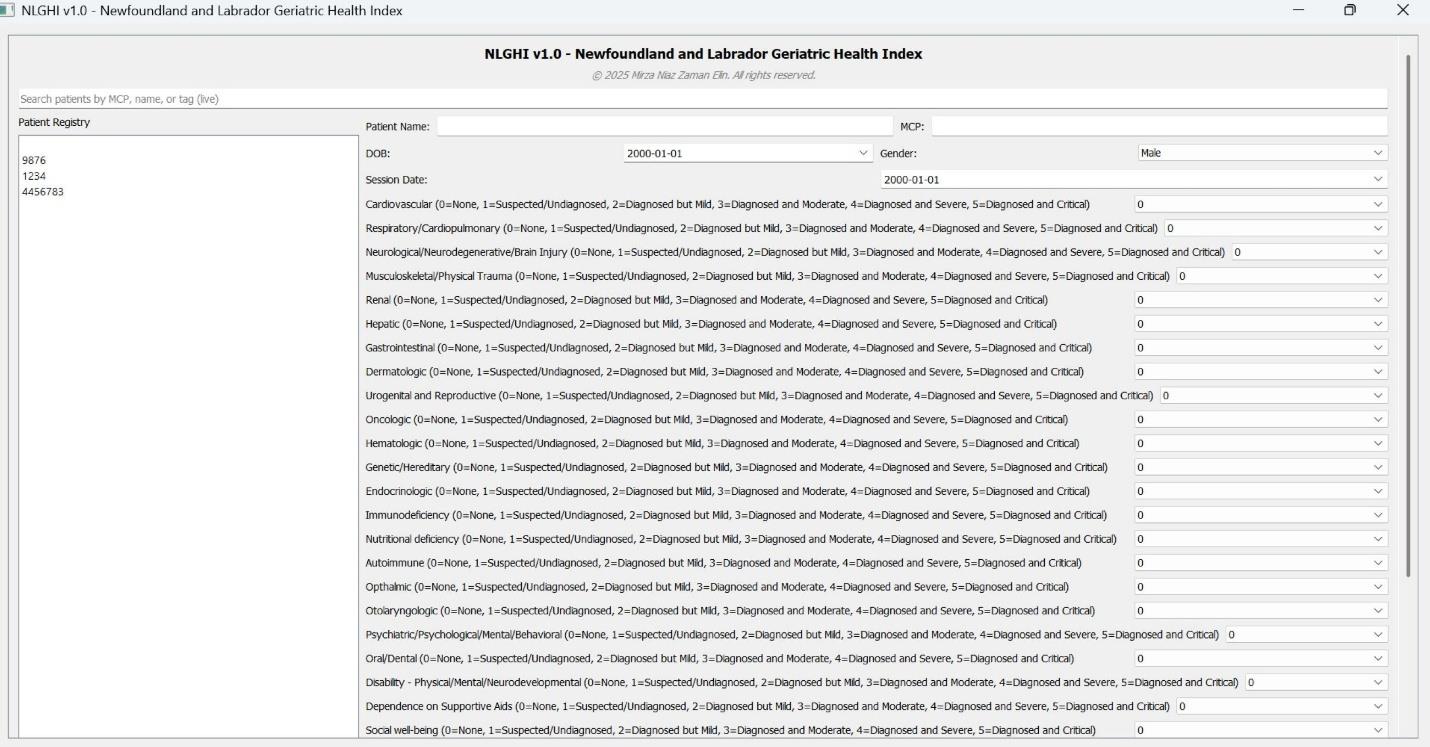
Frailty Scale (CFS) provides an ordinal classifica- tion of frailty and has been shown to predict mor- tality and institutionalization [6]. The Charlson Comorbidity Index (CCI) assigns weighted scores to comorbid conditions to predict mortality risk [7]. The Elixhauser comorbidity set comprises in- dicators derived from administrative data and has been adapted to yield a single numeric score in later work [8]. Functional status is often summa- rized using the Katz ADL, which captures inde- pendence in basic activities of daily living [9]. These instruments serve distinct purposes and contexts; consequently, heterogeneous instru- ments are often combined in comprehensive geri- atric assessment. NLGHI does not attempt to reproduce the psycho- metrics or longitudinal validation of those instru- ments. Instead, a practical objective guided the de- sign: a clinic-adapted, low-friction recording plat- form that imposes consistent structure across mul- tiple biomedical and social domains, returns a nor- malized composite, and allows quick inspection of trajectories. Comparison with established measures is therefore conceptual: While the NLGHI score provides a granular internal metric for impairment intensity and distribution, the CFS, CCI/Elixhauser, and Katz ADL indices offer es- tablished benchmarks for external clinical validity. Any cross-walking between NLGHI and those in- struments would require targeted empirical work. Overview of the Application: Scope and workflow The NLGHI application supports a physician- or clinic-operated workflow in which a patient is identified by a medical care plan (MCP) number, and visit-level impairment intensities are selected for 27 predefined domains encompassing cardio- vascular, respiratory, neurological, musculoskele- tal/physical trauma, renal, hepatic, gastrointestinal, dermatological, urogenital/reproductive, oncolog- ical, haematological, genetic, endocrine, immuno- deficiency, nutritional deficiency, autoimmune, ophthalmic, otolaryngological, psychiatric/psy- chological/mental/behavioural, oral/dental, disa- bility, dependence on supportive aids, social well- being, economic well-being, abuse/neglect, risk factors, and a general symptoms bin [Figures 1, 2]. These health domains should not be viewed as
fixed metrics; they are context-dependent and de- signed to be selected according to the specific ob- jectives of statistical studies. The corresponding
weightings are based on severity levels, where 5 indicates the greatest possible severity and 1 indi- cates the lowest [Table 1].
Implementation stack The application is written in Python and imple- mented with the Qt widget toolkit for the graphical interface. Numerical arrays and plotting are pro- vided by NumPy and Matplotlib, respectively, which are standard within the scientific Python ecosystem [2–4]. Data are stored in JSON format in a single file (default nlghi_patient_data.json), and settings, credentials (username/password), and audit logs are stored in separate local files for modularity [5]. The deliberate choice of JSON as the storage layer enables human readability, ad hoc backup, and non-proprietary migration. Intended use and disclaimers The application is intended for advisory and docu- mentation support. The presence of a symptom analyser is now common in clinical software, but NLGHI’s lexicon-based module is intentionally conservative; its outputs are descriptive and not in- tended to constitute decision support. Data Model and Scoring: Patient record structure Each patient is indexed by MCP, including their demographics, visit records, history entries, notes, future references, attachments, and saved symp- tom snapshots. The record format is compact and human-readable. A typical visit record contains:
(A) Timestamp (save event time); (B) Session date (visit date);
(C) Impairments: 27-length integer vector on
a 0–5 scale; (D) DSAVs: 27-length integer vector com-
puted as severity × domain weighting; (E) GHI: normalized scalar score (sum of
DSAVs divided by 27). A modular structure is maintained across history, notes, and attachments to facilitate exports (plain text, markdown, CSV for records). A small audit log captures major operations. Domain weightings and normalization The 27 domains are assigned integer weightings representing relative burden or salience. The DSAV vector is calculated component-wise as the product of impairment level and domain weighting, and the GHI is computed as a normal- ized sum of DSAVs divided by 27, producing a scalar that increases with overall impairment bur- den. The computation is straightforward and com- putationally lightweight; it is emphasized that no clinical threshold measurement or risk prediction model is embedded in the score. The composite is intended for within-system tracking and quick communication across team members, not as a substitute for validated prognostic indices. Consistency checks A Data Tools dialog performs internal validation by verifying vector lengths (27 domains), re-com- puting GHI from stored DSAVs, and flagging mismatches. The existence of automated checks
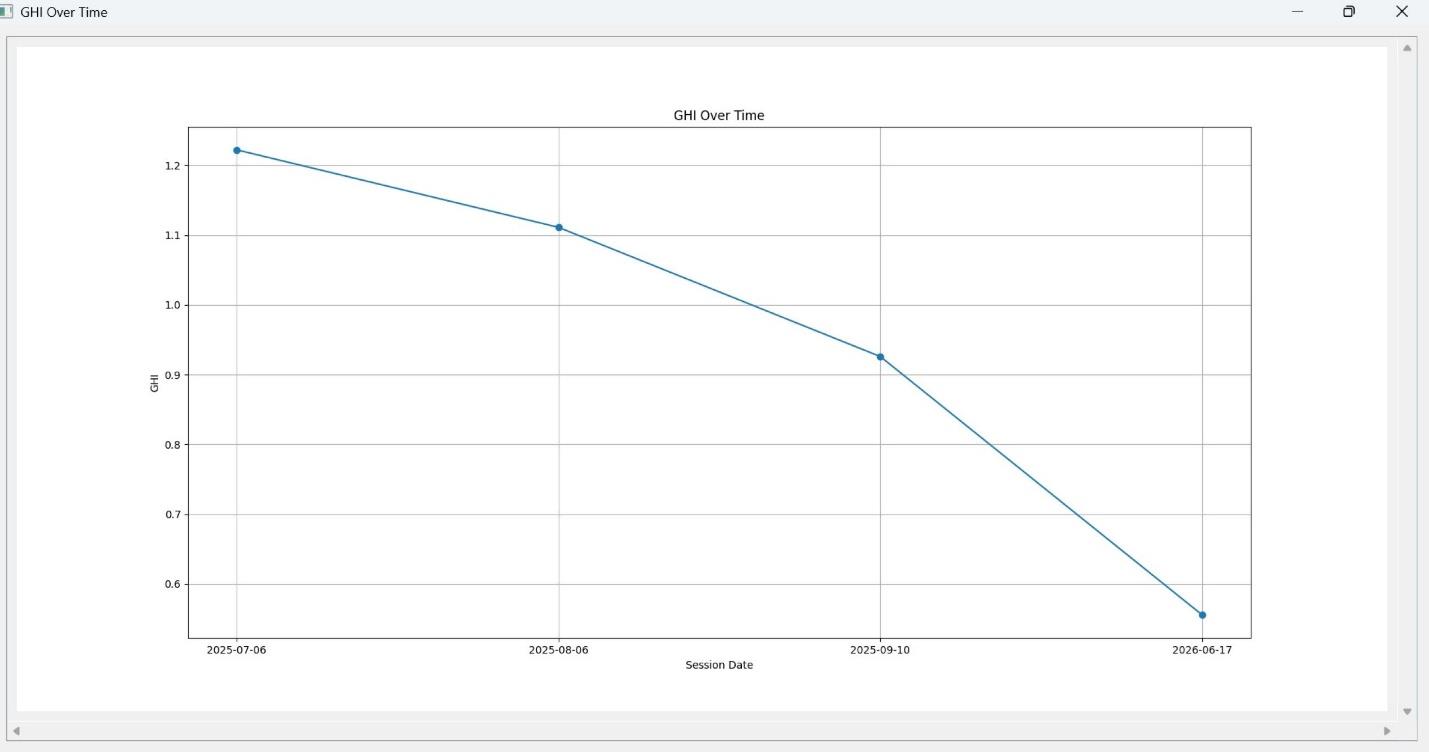
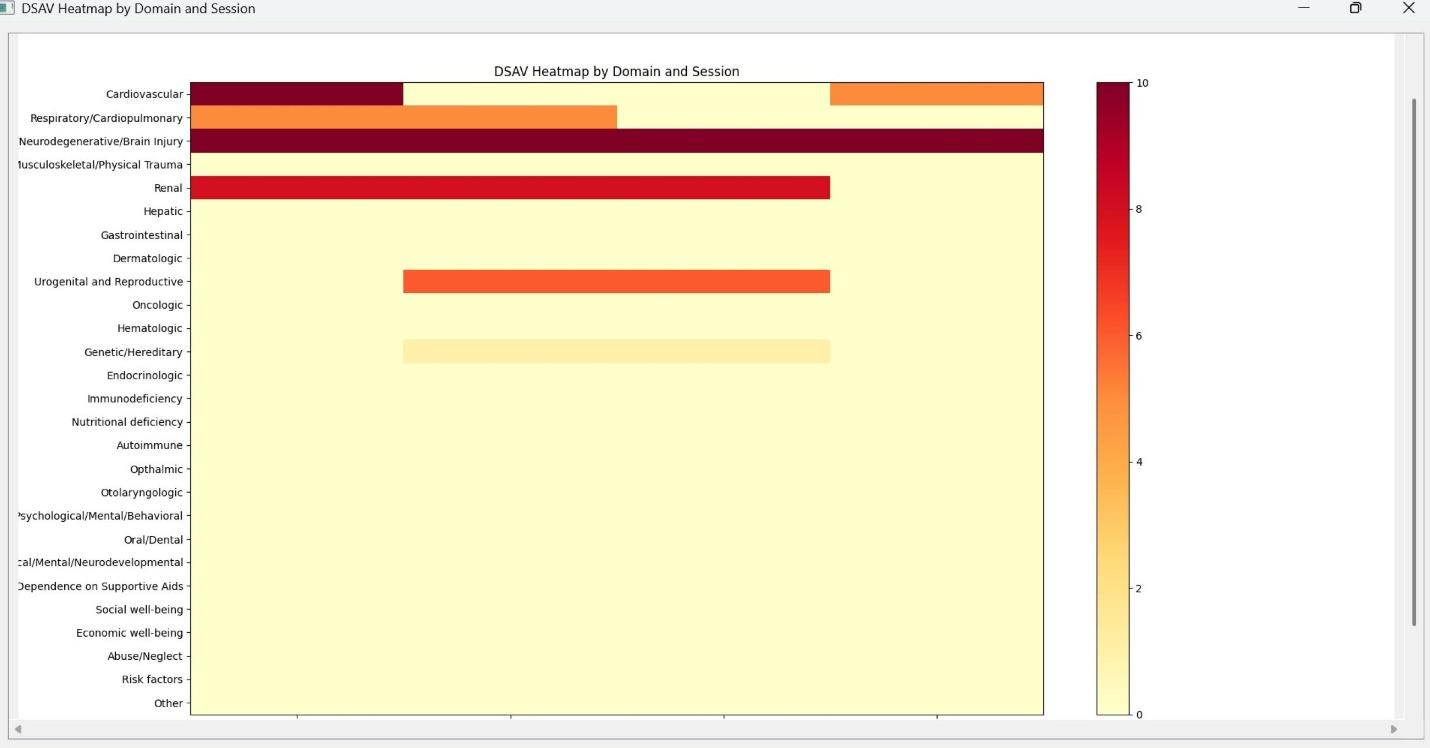
reduces the risk of data drift if domain definitions evolve or if edits occur outside the graphical user interface (GUI). A summary of findings (e.g., number of patients, number of issues) is presented in a read-only pane to facilitate routine housekeep- ing. User Interface and Core Functions: Patient registry and search The left-hand pane provides a live-filtered registry by MCP, name, or tag. Tagging supports ad hoc cohort organization (e.g., “frailty,” “diabetes,” “home visit”) and can be updated in-place. The fil- ter is case-insensitive and scans both identifiers and tags. This functionality supports quick re- trieval when the registry becomes large. Visit capture and score display A structured form presents the 27 domains with a clear ordinal scale for impairment. On saving, DSAVs are computed and the GHI is displayed immediately. The choice of an ordinal scale en- courages conservative, category-level judgments appropriate for time-limited visits. The GHI’s re- producibility derives from fixed domain defini- tions and weightings; drift is minimized by con- sistent labelling. Longitudinal visualization Two visualizations are embedded. First, a GHI line chart displays evolution over session dates. Second, a DSAV heatmap displays domain-by- session DSAV magnitudes, facilitating pattern recognition across visits (e.g., progressive in- creases in cardiopulmonary and renal DSAVs). The heat-map leverages matrix plotting with col- our-bars and tick labelling handled by Matplotlib routines [4]. Patient workspace A separate workspace supports: (A) History entries with timestamps and editable
bodies; (B) Symptom checker: a lexicon-based analyser
that extracts matched keywords and proposes domain votes; (C) Notes with an option to attach to the latest
visit; (D) Future references (e.g., follow-ups) with due
dates and status; (E) Attachments (file paths), with open/delete
controls.
A timeline dialog compiles events chronologically and exports a Markdown summary. A report builder produces concise textual summaries (latest visit or lifetime). Authentication, settings, and audit A lightweight login is included. On initial launch, the system skips the login screen to allow users to establish their first set of administrative creden- tials. Settings cover theme, backup behaviour, backup retention, and export directory. An audit helper writes time-stamped entries to a log, record- ing salient operations (e.g., writes, backups, re- stores). The objective is basic accountability in small-clinic environments.
Symptom Lexicon and Advisory Suggestions: Construction A simple dictionary of symptom phrases is mapped to one or more domains. The analyser lowercases input text and scans for phrase inclu- sion, accumulating votes by domain and returning matched keywords and a ranked suggestion list. The module is intentionally conservative—an ad- visory feature for documentation and triage time- saving, rather than a diagnostic engine. Rationale and limitations Lexicon-based matching was chosen for predicta- bility and the ability to analyse and interpret do- main-specific data in a clinical setting, avoiding the opacity of black-box models. The trade-off is limited recall/precision in free text; however, false positives are transparent because matched phrases are shown. A natural extension would involve synonym sets and a tokenizer to manage punctua- tion and spacing more robustly. Such extensions should remain explainable and should preserve the current transparency. Data Management, Provenance, and Safety Storage and formats
Patient data are stored in a single JSON file; set- tings, credentials, and audit logs are stored sepa- rately. This separation supports least privilege for operational tasks and simplifies backup work- flows. The choice of JSON aligns with portability and with long-term accessibility considerations; the format is standardized via RFC 8259 with a persistent identifier [5]. Backup and restore
An automatic pre-write backup is performed by default, with a retention limit. A backup dialog permits manual creation and restoration, and the audit log records these operations. Backup files are time-stamped, enabling quick rollbacks in the event of data corruption or accidental edits. Security considerations Credentials are stored in a local JSON file with no cryptographic hardening by design; deployment is therefore intended for single-workstation, small- team environments without shared network expo- sure. On multi-user systems or where regulatory constraints apply, an external secret store and disk encryption are recommended; these are deploy- ment considerations outside the scope of the v1.0 codebase. Export and interoperation Exports include plain text and Markdown sum- maries, and CSV for records. Human-readable ex- ports allow quick stitching into letters or EMR in- boxes. Attachments are stored by reference (file paths) to avoid bloat and to preserve file owner- ship. RESULTS
Positioning Among Established Geriatric- Measures
The normalized NLGHI score—derived from do- main-weighted impairment levels—should be in- terpreted as a program-internal burden index for quick longitudinal comparison. It is not calibrated against CFS [6], CCI [7], Elixhauser [8], or Katz ADL [9]; the evidence base for those instruments is extensive and tied to specific outcomes such as mortality, readmission, and functional independ- ence. If cross-instrument alignment is desired (for example, mapping high NLGHI to CFS ≥ 5), em- pirical calibration would be required using a co- hort with parallel measurement. Such work would need institutional review board (IRB) oversight and prospective or retrospective data with linkage across instruments. The present system has been designed to coexist with established scales in practice. A typical work- flow could involve completion of Katz ADL or CFS during a comprehensive visit, while NLGHI captures a multi-domain snapshot during the same visit and on follow-ups, yielding a trend line for in- house monitoring. Conceptually, CCI/Elixhauser
focus on comorbidity burden, while NLGHI cap- tures a broader pattern that includes social and sup- port factors. The combination can support case conferences in community geriatrics without im- posing analytic overhead. Validation Utilities and Quality Assurance Internal validation is provided in the Data Tools dialog. This utility checks that impairment and DSAV vectors have the correct length (27), re- computes GHI, and flags mismatches beyond a tight tolerance. These safeguards address two risks: (i) domain-set evolution without synchro- nized code changes, and (ii) manual edits to JSON. A structured message is displayed to guide correc- tive actions. Exported reports include precisely what was recorded at the time of generation, and the audit log provides a minimal chain of custody within a single-workstation environment. DISCUSSION Design Rationale: Lightweight and Local-First Small practices often cannot absorb the opera- tional complexity of client–server deployments. Accordingly, a local-first architecture was chosen, with a single executable and local data files. This stance trades multi-user concurrency for simplic- ity, speed, and reduced failure modes. Transparency and Analysis Capabilities A principal constraint was that every stored field should be interpretable by a clinician with modest technical skill; hence the use of plain JSON and human-readable exports. The symptom analyser reveals its matched phrases and domain vote counts; the GHI calculation is a single line and is re-computable by inspection. Such design should reduce resistance in settings where proprietary for- mats raise concerns. Familiar Dependencies Reliance on NumPy and Matplotlib reflects a pref- erence for libraries with established governance, extensive documentation, and stable application programming interfaces (APIs) [2–4]. These choices simplify maintenance and allow con- sistent behaviour across platforms. Example Use Cases: Routine follow-up A patient previously flagged with moderate cardi- opulmonary impairment presents for a follow-up. New DSAV entries are recorded, and the updated GHI is compared to the prior trend; the DSAV
heat-map reveals incremental increases across res- piratory and cardiovascular rows. Notes and future references are updated to reflect medication ad- justments and a planned pulmonary rehabilitation referral. The report builder compiles a summary for the family physician and home-care coordina- tor. Example Use Cases: Case review meeting For a complex patient requiring multidisciplinary input, the timeline export is generated for a case conference. DSAV heat-maps over three visits il- lustrate stabilization except for social and eco- nomic stressors, leading to non-clinical interven- tions (home support, income assistance). Attach- ments (e.g., home safety assessment) remain ac- cessible via file path. Example Use Cases: Data hygiene Before quarterly reporting, the Data Tools dialog is run to ensure no DSAV or impairment vector mismatches exist. Any flagged entries are cor- rected and re-saved. Backups are made and older ones pruned automatically to the configured reten- tion. Audit entries provide a record of these opera- tions. Ethical, Privacy, and Safety Considerations The application stores personally identifiable in- formation and is therefore subject to local privacy regulations. Disk encryption and strict device ac- cess control are recommended. Because the symp- tom analyser is lexicon-based and advisory, no clinical decision support claims are made. The GHI has not been validated as a prognostic instru- ment and should not be used to allocate or deny services. If research use is intended, ethical review and consent procedures should be followed to align with best practices. Feasibility The domains and weightings are customizable; in clinical settings they are purposed for use in base- line establishment and longitudinal health out- come monitoring. Therefore, accuracy, sensitivity, and specificity validation is only possible in the context of practical applications in real clinical set- tings. However, as a data collection, analysis, and longitudinal outcome monitoring framework, the model remains relevant as far as is feasibility is concerned. Limitations
The application is a single-node system and does not support synchronization across devices. Au- thentication is lightweight and not suitable for ad- versarial environments. The symptom analyser is limited to phrase inclusion, and therefore does not handle spelling variants and complex negations. The 27-domain scheme and weightings reflect ex- pert-informed pragmatism, not a formally derived metric. Visualization is focused on DSAV heat- maps and GHI lines; additional charts (e.g., radar plots) were excluded to maintain simplicity. There is no native import from EMR systems; however, the plain JSON structure enables ad hoc scripting if needed. Future Work Priority enhancements include: (i) negation han- dling and simple lemmatization in the symptom analyser; (ii) a pluggable storage layer to support SQLite while preserving JSON export; (iii) op- tional role-based access for small teams; (iv) co- hort views (aggregate statistics across tagged pa- tients); (v) structured interoperability (e.g., FHIR resources for observations) with careful scoping; and (vi) exploratory cross-walking studies to relate NLGHI trajectories to CFS strata, CCI or Elix- hauser burden, or functional decline as measured by ADL scales, subject to research approvals [6– 9].
NLGHI v1.0 provides a transparent, local-first ap- proach to capturing and tracking multi-domain geriatric impairment in community and primary care settings. Its strength lies in structured repeti- tion—the same 27-domain form, the same DSAV computation, the same normalized GHI—ena- bling meaningful within-patient trend interpreta- tion without complex analytics. The software’s re- liance on mature scientific libraries and standard- ized formats aligns with reproducibility and long- term maintainability. Although not a substitute for validated frailty or comorbidity instruments, NLGHI can operate alongside them to support care planning, communication, and audit-ready documentation. REFERENCES
1. Nightingale G, Burhenn PS, Puts M, Stolz-Baskett P, Haase KR, Sattar S, et al.
Integrating nurses and allied health pro- fessionals in the care of older adults with cancer: a report from the International So- ciety of Geriatric Oncology Nursing and Allied Health Interest Group. J Geriatr Oncol . 2020;11(2):187-190. doi:10.1016/j.jgo.2019.06.012. 2. Harris CR, Millman KJ, van der Walt SJ, Gommers R, Virtanen P, Cournapeau D, et al. Array programming with NumPy. Nature. 2020;585:357-362. doi:10.1038/s41586-020-2649-2. 3. Virtanen P, Gommers R, Oliphant TE, Haberland M, Reddy T, Cournapeau D, et al. SciPy 1.0: fundamental algorithms for scientific computing in Python. Nat Meth- ods. 2020;17(3):261-272. doi:10.1038/s41592-019-0686-2. 4. Hunter JD. Matplotlib: a 2D graphics en- vironment. Comput Sci Eng . 2007;9(3):90-95. doi:10.1109/MCSE.2007.55. 5. Bray T. The JavaScript object notation (JSON) data interchange format. RFC 8259. RFC Editor; 2017. doi:10.17487/RFC8259. 6. Rockwood K, Song X, MacKnight C, Bergman H, Hogan DB, McDowell I, et al. A global clinical measure of fitness and frailty in elderly people. CMAJ. 2005;173(5):489-495. doi:10.1503/cmaj.050051. 7. Charlson ME, Pompei P, Ales KL, Mac- Kenzie CR. A new method of classifying prognostic comorbidity in longitudinal studies: development and validation. J Chronic Dis. 1987;40(5):373-383. doi:10.1016/0021-9681(87)90171-8. 8. Elixhauser A, Steiner C, Harris DR, Coffey RM. Comorbidity measures for use with administrative data. Med Care. 1998;36(1):8-27. doi:10.1097/00005650- 199801000-00004. 9. Katz S, Ford AB, Moskowitz RW, Jack- son BA, Jaffe MW. Studies of illness in the aged. The Index of ADL: a standard- ized measure of biological and psychoso- cial function. JAMA. 1963;185(12):914- 919.
| Domain | Weight |
|---|---|
| Cardiovascular | 5 |
| Respiratory/Cardiopulmonary | 5 |
| Neurological/Neurodegenerative/Brain | Injury 5 |
| Musculoskeletal/Physical Trauma | 4 |
| Renal | 4 |
| Hepatic | 4 |
| Gastrointestinal | 4 |
| DOI: 10 52609/jmlph v6i2 266 | | E-mail: niazmirza111@gmail com |
| Dermatological | 3 |
| Urogenital and Reproductive | 3 |
| Oncological | 5 |
| Haematological | 4 |
| Genetic/Hereditary | 1 |
| Endocrinological | 2 |
| Immunodeficiency | 2 |
| Nutritional deficiency | 2 |
| Autoimmune | 2 |
| Ophthalmic | 2 |
| Otolaryngological | 2 |
| Psychiatric/Psychological/Mental/Behavioural | 2 |
| Oral/Dental | 2 |
| Disability – Physical/Mental/Neurodevelopmental | 1 |
| Dependence on Supportive Aids | 1 |
| Social well-being | 1 |
| Economic well-being | 5 |
| Abuse/Neglect | 3 |
| Risk factors | 1 |
| Other | 1 |
| Each domain selection yields a domain-specific | textual summaries, and a timeline export captures |
| severity value (0–5) and a domain-specific DSAV | events across history, notes, and follow-ups. A |
| (domain severity aggregated value), which is the | symptom analyser zinterprets the data and, ac- |
| severity multiplied by a weighting reflecting rela- | cordingly, provides domain suggestions for docu- |
| tive salience. The total of the DSAVs is normal- | mentation support. The longitudinal monitoring |
| ized to produce the Geriatric Health Index (GHI) | report provides graphical representations of |
| for that visit. A report builder generates brief | changes in DSAV and GHI overtime [Figures |
| 3,4]. |