Full text rendered from the published PDF. The PDF is the version of record; if the two differ, the PDF governs.
Background: Malaria in pregnancy (MiP) remains a major public health concern in sub-Saharan Africa, contributing substantially to maternal and neonatal morbidity and mortality. Understanding and enhancing pregnant women's knowledge, attitudes, perceptions, and preventive practices in this regard is essential for improving malaria prevention and control.
Objectives: This study assessed the knowledge, attitudes, and perceptions (KAP), as well as preventive practices regarding MiP among pregnant women attending antenatal clinics in Okitipupa, Ondo State, Nigeria.
Methods: A descriptive cross-sectional study was conducted among 165 pregnant women attending antenatal clinics at two health facilities in Okitipupa, using a multistage sampling technique. Descriptive statistics summarised respondents' characteristics and KAP responses.
Results: The respondents’ mean age was 28.6 ± 5.1 years, with most (66.1%) aged 26–35 years. Nearly all respondents (95.2%) had heard of malaria in pregnancy, while 92.7% correctly identified mosquito bites as the primary mode of transmission. Most participants recognised the seriousness of MiP and the protective roles of insecticide-treated nets (91.5%) and intermittent preventive treatment with sulfadoxine-pyrimethamine (83.0%). Nevertheless, misconceptions persisted regarding malaria transmission, self-medication, and the use of herbal remedies. Preventive attitudes were generally positive, although reported practices were not always consistent with respondents' knowledge.
Conclusion: Pregnant women attending antenatal clinics in Okitipupa demonstrated generally good knowledge and positive attitudes towards malaria in pregnancy. However, persistent misconceptions and inappropriate preventive and treatment practices indicate the need for strengthened antenatal health education, culturally appropriate behaviour change communication, and sustained community engagement to improve maternal and neonatal health outcomes.
Keywords: Attitudes, Health Knowledge, Malaria in Pregnancy, Nigeria, Perceptions, Pregnant Women, Preventive Practices, Okitipupa, Ondo State
Malaria remains one of the leading causes of morbidity and mortality worldwide, with pregnant women and young children among the most vulnerable populations. According to the World Health Organization (WHO), an estimated 263 million malaria cases and 597,000 malaria-related deaths occurred globally in 2023, with sub- Saharan Africa accounting for approximately 94% of cases and 95% of deaths [1]. In malaria- endemic regions, pregnancy increases susceptibility to Plasmodium falciparum infection because of physiological and immunological changes, raising the risk of maternal anaemia, placental malaria, miscarriage, preterm delivery, low birth weight, stillbirth, and neonatal mortality [1,2]. Malaria in pregnancy (MiP) remains a major public health challenge in Nigeria, which contributes approximately one quarter of the global malaria burden [1]. The disease continues to undermine maternal and neonatal health despite the availability of effective preventive interventions. The World Health Organization recommends intermittent preventive treatment during pregnancy using sulfadoxine- pyrimethamine (IPTp-SP), consistent use of insecticide-treated nets (ITNs), prompt diagnosis, and effective case management during antenatal care (ANC) [1,3]. Nevertheless, coverage of these interventions remains below recommended targets in many parts of Nigeria due to health system constraints, inadequate access to ANC, misconceptions regarding malaria prevention, and poor adherence to recommended practices [4,5]. Knowledge, attitudes, and perceptions (KAP) of MiP are recognised as important determinants of preventive behaviours and healthcare utilisation. Women with adequate knowledge of malaria transmission, symptoms, complications, and prevention are more likely to utilise antenatal services, sleep under ITNs, receive IPTp-SP, and seek prompt treatment for malaria episodes [6,7].
Conversely, misconceptions regarding malaria transmission, safety of preventive medications, and reliance on traditional remedies may reduce adherence to recommended preventive practices and increase the risk of adverse pregnancy outcomes [8,9]. Previous studies in Nigeria and other sub-Saharan African countries have reported generally high awareness of MiP among attendees of antenatal clinics, but have also documented persistent misconceptions, inappropriate self-medication, poor uptake of IPTp-SP, and inconsistent use of ITNs [5,7,10]. In addition, socio-demographic characteristics such as maternal age, educational attainment, parity, household income, and ANC attendance have been reported to influence malaria-related knowledge and preventive behaviours, although findings remain inconsistent across settings [9–11].
Study Rationale Despite the high malaria burden in Ondo State, there remains limited evidence regarding KAP in MiP among pregnant women in Okitipupa. The semi-rural nature of the area, combined with cultural beliefs, varying access to healthcare services, and environmental conditions favourable to malaria transmission, underscores the need for context-specific evidence to guide malaria prevention programmes. Understanding pregnant women's knowledge, attitudes, and perceptions, as well as the socio-demographic factors associated with these outcomes, will assist policymakers and healthcare providers in designing targeted interventions to strengthen antenatal health education and improve the uptake of recommended malaria prevention strategies. This study, therefore, assessed the knowledge, attitudes, perceptions, and preventive practices surrounding malaria in pregnancy among pregnant women attending antenatal clinics in Okitipupa, Ondo State, Nigeria, and examined the socio-demographic factors associated with these outcomes.
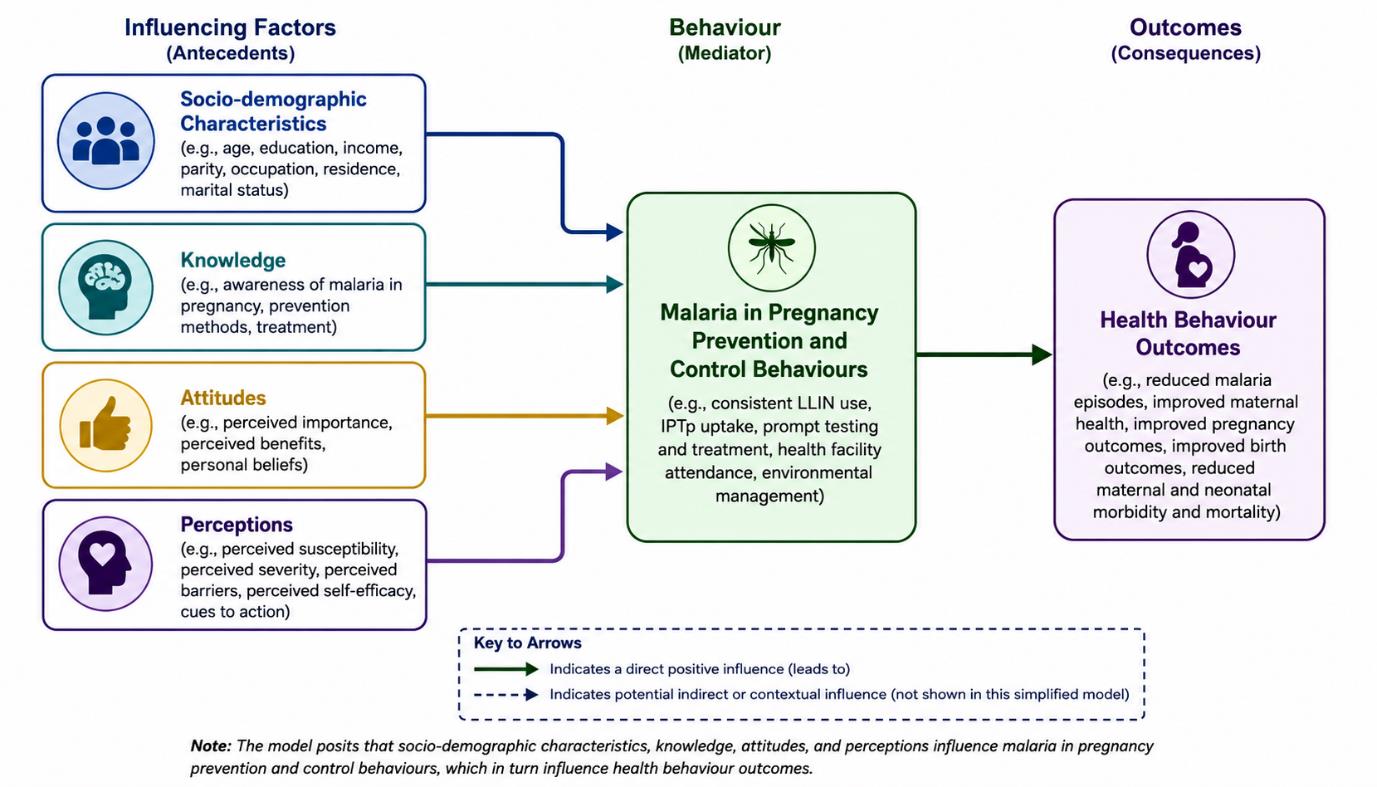
This study was guided by a conceptual framework that illustrates the relationship between socio-demographic characteristics, knowledge, attitudes, perceptions, and malaria preventive practices during pregnancy. Socio- demographic characteristics, including age, educational level, income, occupation, parity, trimester of pregnancy, and type of ANC facility attended, were considered contextual factors that may shape respondents' knowledge, attitudes, perceptions, and preventive practices regarding MiP. Knowledge encompassed awareness of malaria transmission, symptoms, prevention, and treatment during pregnancy. Attitudes reflected respondents' beliefs regarding susceptibility to malaria, perceived severity, perceived benefits of preventive measures, and perceived barriers. Perceptions included cultural beliefs about malaria, trust in modern healthcare, and perceived accessibility of malaria prevention services. These domains collectively influence preventive behaviours such as insecticide-treated net (ITN) use, uptake of intermittent preventive treatment in pregnancy (IPTp), and timely healthcare-seeking. The framework was used to
organise the descriptive analysis of respondents' KAP and should not be interpreted as implying causal relationships. Study Objectives The general objective of this study was to assess KAP and preventive practices regarding MiP among pregnant women attending antenatal clinics in Okitipupa, Ondo State, Nigeria. The specific objectives were to:
1. Assess the level of knowledge of MiP among these women. 2. Examine pregnant women's attitudes towards the prevention and management of MiP. 3. Assess pregnant women's perceptions regarding MiP and its prevention. 4. Describe the preventive and care-seeking practices adopted by pregnant women for MiP.
Study Location
The study was conducted in the local government area (LGA) of Okitipupa, Ondo State, southwestern Nigeria. Okitipupa was selected because malaria remains highly endemic in the
area owing to its tropical climate, numerous rivers, and environmental conditions that favour breeding of Anopheles mosquitoes. The LGA is served by several health facilities providing antenatal care (ANC) services, including the State Specialist Hospital and the Comprehensive Health Centre, which receive a large number of pregnant women from both urban and surrounding rural communities. These facilities provided an appropriate setting for assessing the knowledge, attitudes, practices and perceptions of pregnant women regarding MiP. Study Population The study population comprised pregnant women attending antenatal clinics at the State Specialist Hospital and the Comprehensive Health Centre in Okitipupa. These facilities provide routine maternal healthcare services to a diverse population of pregnant women across different socio-demographic backgrounds. Study Design This study employed a descriptive cross-sectional survey design, with a multistage sampling approach used to recruit participants. In the first stage, two major ANC facilities in Okitipupa were purposively selected for their high patient attendance and wide service coverage. In the second stage, proportionate allocation was applied based on average monthly ANC attendance records. Approximately 60% of respondents (n = 99) were recruited from the State Specialist Hospital and 40% (n = 66) from the Comprehensive Health Centre. In the final stage, systematic random sampling was used within each facility. Based on the average clinic attendance, every third eligible woman attending ANC during the study period (December 2018 – January 2019) was invited to participate until the required sample size of 165 respondents was achieved. This sampling strategy ensured representation of pregnant women attending both facilities while minimising selection bias. Sample Size Determination
The sample size was calculated using the Leslie Kish formula for single population proportion:
n= Z 2 x p x q
d 2
n = Minimum sample size Z = Standard normal deviate at 95% confidence interval (1.96) p = Proportion in the target population with specific characteristic q=1-p d = Absolute precision (error margin) (0.05) (Where; Z2 = 1.962, p = 11% (World Malaria Report), q = 1-p, d2 = 0.052)
n= 1.96 2 x 0.11 x 0.89
0.05 2
n= 3.8416 x 0.11 x 0.89
0.0025
n= 0.37609264
0.0025
n= 150.44 = 150
As demonstrated in the calculation above, the minimum sample size was 150 participants. An additional 10% (15 participants) was added to compensate for incomplete or non-response questionnaires, resulting in a final sample size of 165 pregnant women. Data Collection Methods Data were collected using a semi-structured questionnaire consisting of four sections: socio- demographic characteristics; knowledge of MiP; attitudes towards malaria prevention; and perceptions of malaria prevention and treatment. Content validity was assessed independently by two experts in public health and maternal health. The instrument was pretested among 15 pregnant women attending the ANC clinic of a neighbouring health facility that was not included in the study, after which minor revisions were made for clarity before the main survey. The questionnaire demonstrated acceptable internal consistency: Knowledge: Cronbach's α = 0.74; Attitude: Cronbach's α = 0.78; Perception:
Cronbach's α = 0.71. The questionnaires were self- administered, with assistance provided to respondents who required clarification.
Data Analysis Data were coded and analysed using the Statistical Package for the Social Sciences (SPSS) version 23. Descriptive statistics, including frequencies, percentages, means, and standard deviations, were used to summarise respondents' socio- demographic characteristics and their knowledge, attitudes, and perceptions (KAP) regarding MiP. Inclusion Criteria The study included pregnant women in the first, second, or third trimester of pregnancy, attending ANC clinics at the selected health facilities during the study period, who provided informed consent to participate. Any women who did not meet these criteria were excluded.
Ethical Approval Ethical approval (AU/FMBSREC/19/0199) was obtained from the Faculty of Basic Medical Sciences Research and Ethics Committee, Adeleke University, Ede. Approval to conduct the research in the community was also sought from the Chief Medical Director of the State Specialist Hospital, Okitipupa and the Primary Health Care Coordinator, Okitipupa.
A total of 165 pregnant women participated in the study. The mean age of respondents was 28.6 ± 5.1 years, with the majority aged 26–35 years (n = 109, 66.1%). All participants were female and married. Most were Yoruba (n = 139, 84.2%) and practiced Christianity (n = 157, 95.2%). The majority had experienced one to three pregnancies (n = 135, 81.8%); 67 (40.6%) were in their third trimester and 66 (40.0%) in their second trimester. Regarding place of clinic attendance, 95 (57.6%) respondents attended the ANC clinic at the State Specialist Hospital, while 70 (42.4%) attended the Comprehensive Health Centre (Table 1).
Knowledge of MiP was generally high among the respondents (Table 2). Most had heard of malaria in pregnancy (n = 157, 95.2%), and 153 (92.7%) correctly identified mosquito bites as the primary mode of malaria transmission. A large proportion of respondents recognised the potential complications of MiP, including spontaneous abortion (n = 127, 77.0%), premature delivery (n = 135, 81.8%), low birth weight (n = 137, 83.0%), and maternal death or anaemia (n = 133, 80.6%). Furthermore, 151 (91.5%) respondents acknowledged that insecticide-treated-nets (ITNs) prevent malaria during and after pregnancy, while 137 (83.0%) recognised intermittent preventive treatment with sulfadoxine-pyrimethamine (IPTp- SP) as a strategy for reducing malaria-related complications. However, despite this high level of knowledge, 105 (63.6%) respondents reported contracting malaria during their current pregnancy. Attitudes towards malaria prevention were generally positive among the respondents (Table 3). Most perceived malaria as a serious and life- threatening disease (n = 157, 95.2%) and agreed that sleeping under mosquito nets could prevent malaria during pregnancy (n = 155, 93.9%). Additionally, 145 (87.9%) respondents believed that avoiding mosquito bites was an effective preventive measure, while 159 (96.4%) indicated that they would seek blood tests at a health facility if they suspected malaria during pregnancy. However, some misconceptions were observed. About 101 (61.2%) respondents believed that malaria could be transmitted from person to person like the common cold, while 134 (81.2%) expressed confidence in their ability to self-treat malaria during pregnancy. Furthermore, 86 (52.1%) believed that malaria could resolve spontaneously without treatment. Perceptions regarding malaria prevention were largely favourable (Table 4). Most respondents agreed that environmental sanitation reduces malaria risk during pregnancy (n = 156, 94.5%), ANC clinics facilitate early detection of malaria (n
= 159, 96.4%), and malaria testing during pregnancy is essential (n = 157, 95.2%). Similarly, 145 (87.9%) participants believed that receiving IPTp-SP during pregnancy helps prevent malaria complications, while 146 (88.5%) agreed that malaria counselling reduces malaria occurrence during pregnancy. However, traditional beliefs remained prevalent, as 115 (69.7%) respondents
believed that herbal medicines (agbo) could prevent malaria during pregnancy. Most respondents also supported environmental control measures, including clearing bushes (n = 152, 92.1%), proper waste disposal (n = 158, 95.8%), and draining stagnant water (n = 150, 90.9%) as malaria prevention strategies.
This study assessed the knowledge, attitudes, perceptions, and preventive practices related to malaria in pregnancy (MiP) among pregnant women attending antenatal clinics in Okitipupa, Ondo State, Nigeria. Overall, the respondents demonstrated relatively high knowledge of MiP, recognised its seriousness, and generally reported positive attitudes towards recommended preventive measures. Nevertheless, important misconceptions persisted regarding malaria transmission, confidence in self-medication, and the use of herbal remedies. The study also found that socio-demographic characteristics, particularly age and pregnancy trimester, were
associated with differences in outcomes, while other characteristics showed no statistically significant associations in the regression analysis. These findings suggest that although awareness of MiP is relatively high, gaps remain between knowledge and appropriate preventive practices. The high level of knowledge observed among respondents is consistent with previous studies conducted in Nigeria and other sub-Saharan African countries, which reported that pregnant women who attend antenatal clinics generally possess good knowledge of malaria transmission, symptoms, and adverse pregnancy outcomes following repeated health education during ANC visits. Similar findings have been reported by Oladimeji et al. [11] and Dwumfour et al. [12].
The high awareness observed in the present study may reflect the continuous health education provided during routine ANC as well as national malaria control campaigns. However, despite this encouraging level of knowledge, misconceptions persisted among a considerable proportion of respondents, particularly regarding person-to- person transmission of malaria and confidence in self-managing malaria during pregnancy. Comparable misconceptions have been documented by Obol et al. [13], indicating that knowledge acquired during routine ANC may not completely eliminate culturally rooted beliefs and misinformation. Although respondents generally demonstrated positive attitudes towards malaria prevention and recognised malaria as a serious illness during pregnancy, behavioural inconsistencies remained evident. Most women acknowledged the benefits of insecticide-treated nets (ITNs), intermittent preventive treatment with sulfadoxine- pyrimethamine (IPTp-SP), environmental sanitation, and regular antenatal attendance. However, many respondents also expressed confidence in self-medication and reported reliance on herbal medicines for malaria treatment. Similar findings have been reported by Auta [14], Bello et al. [15], and El Hajj et al. [16], who observed that financial constraints, accessibility of healthcare services, cultural beliefs, and previous treatment experiences often influence treatment-seeking behaviours during pregnancy. These findings demonstrate that improving knowledge alone may not necessarily translate into appropriate health behaviours without addressing underlying cultural and behavioural determinants. The study further demonstrated that respondents generally held favourable perceptions regarding malaria prevention, particularly the importance of environmental sanitation, routine malaria testing, and early antenatal registration. Nevertheless, the widespread belief that herbal medicines are effective for malaria treatment highlights the
continued coexistence of traditional beliefs with evidence-based medical practices. Similar observations have been reported across several African settings, where traditional medicine remains an important component of health care despite increased awareness of recommended malaria prevention strategies [4,6,7,10,11,16‒25]. These findings underscore the need for culturally appropriate behavioural change communication that respectfully addresses misconceptions while reinforcing evidence-based preventive practices. Taken together, these findings indicate that antenatal clinics remain an effective platform for disseminating malaria prevention information. However, persistent misconceptions, inappropriate treatment practices, and behavioural gaps suggest that conventional health education alone may be insufficient. Strengthening individualised counselling, culturally sensitive health communication, community engagement, and consistent availability of recommended malaria prevention commodities will be essential for translating knowledge into sustained preventive behaviours and improving maternal and neonatal health outcomes. Strengths and Limitations This study provides recent insight into the knowledge, attitudes, perceptions, and preventive practices regarding MiP among pregnant women in a semi-rural area of southwestern Nigeria, where such data remain limited. The study employed a validated questionnaire with acceptable reliability, recruited participants using a multistage sampling technique, and included respondents from two major antenatal care facilities, thereby improving the representativeness of the study population. Nonetheless, some limitations are worth mentioning. The cross-sectional design limits the ability to establish causal relationships between respondents' characteristics and their knowledge, attitudes, perceptions, or practices. Moreover, information was obtained through self-reported
responses and may therefore be affected by recall and social desirability bias. Participants were recruited only from women attending antenatal clinics; consequently, pregnant women who did not utilise antenatal services were not represented, which may limit the generalisability of the findings. Furthermore, the study assessed reported knowledge, attitudes, perceptions, and practices rather than objectively measuring actual preventive behaviours or malaria outcomes. Future Directions Future studies should employ analytical designs capable of identifying determinants of knowledge, attitudes, perceptions, and preventive practices using appropriately constructed composite outcome measures and multivariable regression analyses. Longitudinal studies are also needed to evaluate changes in malaria-related knowledge and behaviours throughout pregnancy and following health education interventions. Qualitative research exploring cultural beliefs, self-medication practices, and the continued use of herbal remedies would provide deeper insights into behavioural barriers to effective malaria prevention. In addition, intervention studies evaluating the effectiveness of community-based health education, digital health approaches, and behaviour change communication strategies could inform evidence-based policies for reducing the burden of MiP in Nigeria. Public Health Implications The findings highlight the continued importance of strengthening health education during antenatal care. Educational interventions should extend beyond providing information and should directly address misconceptions regarding malaria transmission, self-medication, and the use of herbal remedies during pregnancy. Health education should also emphasise the importance of completing recommended doses of IPTp-SP, and consistent use of ITNs. Community-based health promotion involving religious leaders, traditional leaders, and other community
stakeholders may further improve acceptance of recommended malaria prevention practices. Strengthening communication between healthcare providers and pregnant women may also enhance confidence in evidence-based malaria prevention and treatment. CONCLUSION This study found that pregnant women attending antenatal clinics in Okitipupa possessed generally good knowledge of MiP and recognised its potential consequences for both mothers and babies. Positive attitudes towards preventive measures, including the use of ITNs, intermittent preventive treatment, and antenatal care, were also observed. However, important misconceptions persisted regarding malaria transmission and treatment, particularly the continued reliance on self-medication and herbal remedies. These findings suggest that adequate knowledge does not necessarily translate into appropriate preventive and treatment behaviours. Strengthening antenatal health education through culturally appropriate behaviour change communication is therefore essential. Interventions should focus on correcting misconceptions, improving adherence to recommended malaria prevention strategies, and promoting timely healthcare-seeking behaviour to reduce the burden of malaria during pregnancy and improve maternal and neonatal outcomes.
Based on the findings of this study, the following recommendations are proposed:
1. Strengthen antenatal health education by providing regular evidence-based education on malaria transmission, prevention, and appropriate treatment during every antenatal visit. 2. Intensify behaviour change communication programmes that specifically address misconceptions regarding self-medication, herbal treatment, and malaria transmission.
3. Improve the consistent availability and utilisation of insecticide-treated nets (ITNs) and intermittent preventive treatment with sulfadoxine-pyrimethamine (IPTp-SP) across antenatal clinics. 4. Engage community, religious, and traditional leaders in culturally appropriate health promotion activities to improve acceptance of recommended malaria prevention practices. 5. Provide regular training for healthcare workers on effective counselling techniques that encourage adherence to recommended malaria prevention and treatment guidelines. 6. Strengthen community outreach programmes targeting pregnant women who initiate antenatal care late or have limited access to healthcare facilities. 7. Enhance monitoring and evaluation of malaria prevention programmes to assess programme effectiveness and identify areas requiring improvement.
AI/LLM tools (ChatGPT version 1.2026.188 and Quillbot version 4.1.0) were used for language editing, grammar improvement, and reference formatting). All conceptual development, analysis, and interpretation were conducted solely by the authors. The authors reviewed and took full responsibility for the content.
| 36 – 45 | 15 (9.1%) | |
|---|---|---|
| Mean ± Std Deviation (28.6 ± 5.1) | ||
| Gender | Female | 165 (100%) |
| Marital status | Married | 165 (100%) |
| Christianity | 157 (95.2%) | |
| Religion | Islam | 7 (4.2%) |
| Traditional | 1 (0.6%) | |
| Yoruba | 139 (84.2%) | |
| Hausa | 3 (1.8%) | |
| Ethnicity | Igbo | 10 (6.1%) |
| Others | 13 (7.9%) | |
| Number births ever of had pregnancies | and 1 4 – – 3 5 | 135 16 (9.7%) (81.8%) |
| 6 and more | 14 (8.5%) | |
| First (1 – 3 months) | 32 (19.4%) | |
| Gestational age (trimester) | Second (4 – 6 months) | 66 (40.0%) |
| Third (7 – 9 months) | 67 (40.6%) | |
| < 10,000 | 51 (30.9%) | |
| Income level per month | (₦) 10,000 31,000 – – 30,000 50,000 | 79 25 (47.9%) (15.2%) |
| 51,000 and above | 10 (6.1%) | |
| Primary | 5 (3.0%) | |
| Educational level | Secondary | 87 (52.7%) |
| Tertiary | 73 (44.2%) | |
| Trader | 59 (35.8%) | |
| Teacher | 27 (16.4%) | |
| Occupation | Civil Servant | 19 (11.5%) |
| Self-employed | 42 (25.5%) | |
| Unemployed | 18 (10.9%) | |
| Hospital/health centre | State Specialist Hospital | 95 (57.6%) |
| attended | Comprehensive Health Centre | 70 (42.4%) |
| Variables | Yes (%) | No (%) |
|---|---|---|
| DOI: 10 52609/jmlph v6i4 300 | | E-mail: omogeadeyemi@gmail | com |
| Have you ever heard about malaria in pregnancy? | 157 (95.2%) | 8 (4.8%) |
| Malaria in pregnancy is transmitted by mosquito | 153 (92.7%) | 12 (7.3%) |
| Malaria can kill if it is not treated | 141 (85.5%) | 24 (14.5%) |
| Have you ever experienced malaria in pregnancy? | 105 (63.6%) | 60 (36.4%) |
| Malaria in pregnancy can be prevented | 149 (90.3%) | 16 (9.7%) |
| Malaria in pregnancy can lead to spontaneous abortion | 127 (77.0%) | 38 (23.0%) |
| Malaria in pregnancy can lead to premature delivery | 135 (81.8%) | 30 (18.2%) |
| Malaria in pregnancy can lead to low birth weight of a | 137 (83.0%) | 28 (17.0%) |
| baby | ||
| Malaria in pregnancy can lead to maternal death or | 133 (80.6%) | 32 (19.4%) |
| anaemia | ||
| The use of insecticide treated nets (ITNs) prevents | 151 (91.5%) | 14 (8.5%) |
| malaria during and after pregnancy | ||
| The use of IPTp-SP malaria drugs during pregnancy | 137 (83.0%) | 28 (17.0%) |
| reduces the incidence of low birth weight | ||
| The use of IPTp-SP malaria drugs during pregnancy | 137 (83.0%) | 28 (17.0%) |
| reduces maternal anaemia | ||
| The use of IPTp-SP malaria drugs during pregnancy | 134 (81.2%) | 31 (18.8%) |
| prevents spontaneous abortion |
| Variables | Yes (%) | No (%) |
|---|---|---|
| Malaria is a serious and life-threatening disease | 157 (95.2%) | 8 (4.8%) |
| Malaria can be transmitted from one person to another like | ||
| the common cold | 101 (61.2%) | 64 (38.8%) |
| The best way to avoid getting malaria is to avoid getting | ||
| mosquito bites | 145 (87.9%) | 20 (12.1%) |
| Sleeping under a mosquito net during the night is one way | ||
| to avoid getting malaria during pregnancy | 155 (93.9%) | 10 (6.1%) |
| Belief that malaria can be self-treated during pregnancy | 134 (81.2%) | 31 (18.8%) |
| Only children and pregnant women are at risk of malaria | 111 (67.3%) | 54 (32.7%) |
| One can recover spontaneously from malaria in pregnancy | 86 (52.1%) | 79 (47.9%) |
| without any treatment | ||
| If someone has malaria, people should avoid having close | 80 (48.5%) | 85 (51.5%) |
| contact with them | ||
| It is dangerous when malaria medicine is not taken | 146 (88.5%) | 19 (11.5%) |
| completely during pregnancy | ||
| I can’t buy anti-malarial drugs from the drug shop/pharmacy | ||
| to treat myself when I get malaria during pregnancy | 101 (61.2%) | 64 (38.8%) |
| I should go to the health centre/clinic to have my blood | ||
| tested as soon as I suspect that I have malaria while | 159 (96.4%) | 6 (3.6%) |
| pregnant | ||
| I will seek advice or treatment if I get malaria | 157 (95.2%) | 8 (4.8%) |
| DOI: 10 52609/jmlph v6i4 300 | | E-mail: omogeadeyemi@gmail | com |
| Variables | Yes (%) | No (%) |
|---|---|---|
| Environmental sanitation reduces malaria in pregnancy | 156 (94.5%) | 9 (5.5%) |
| Antenatal clinics help in early detection of malaria in | 159 (96.4%) | 6 (3.6%) |
| pregnancy | ||
| Malaria testing during pregnancy is essential for | 157 (95.2%) | 8 (4.8%) |
| detecting malaria in pregnancy | ||
| The use of herbs (agbo) can prevent malaria during | 115 (69.7%) | 50 (30.3%) |
| pregnancy | ||
| Receiving IPTp-SP drugs during the three trimesters of | 145 (87.9%) | 20 (12.1%) |
| pregnancy helps to prevent complications of malaria in | ||
| pregnancy | ||
| Counselling on malaria in pregnancy is one of the ways | 146 (88.5%) | 19 (11.5%) |
| to reduce malaria in pregnancy | ||
| Regularly clearing bushes around the house reduces | 152 (92.1%) | 13 (7.9%) |
| the incidence of malaria in pregnancy | ||
| Timely antenatal registration is important in preventing | 149 (90.3%) | 16 (9.7%) |
| complications of malaria in pregnancy | ||
| It is very important to check for an expiry date on a | 157 (95.2%) | 8 (4.8%) |
| drug before taking it | ||
| Clearing of rubbish around your house helps to | 158 (95.8%) | 7 (4.2%) |
| prevents malaria in pregnancy | ||
| Draining stagnant water around your house helps to | 150 (90.9%) | 15 (9.1%) |
| prevents malaria in pregnancy | ||
| Use of insecticidal treated nets (ITNs) helps prevents | 149 (90.3%) | 16 (9.7%) |
| malaria in pregnancy | ||
| Using indoor residual spray (IRS) such as Raid or | 133 (80.6%) | 32 (19.4%) |
| Baygon to prevent malaria during pregnancy is | ||
| harmful to health? |