Full text rendered from the published PDF. The PDF is the version of record; if the two differ, the PDF governs.
BACKGROUND : Severe asthma mandates careful attention and timely management, and the benefit of ketamine in severe asthma exacerbations in adult patients require further exploration.
METHODS : We conducted a systematic review and meta-analysis of the use of ketamine in cases of acute asthma exacerbation in adults. We searched PubMed, Google Scholar, Cochrane databases, and gray literature (ClinicalTrials.gov and World Health Organization International Clinical Trials Registry Platform); we also searched the reference lists of included articles and any systematic reviews and meta-analyses identified therein. Our search covered the period from 1963 to August 20, 2021. Search terms were “ketamine” AND “asthma”.
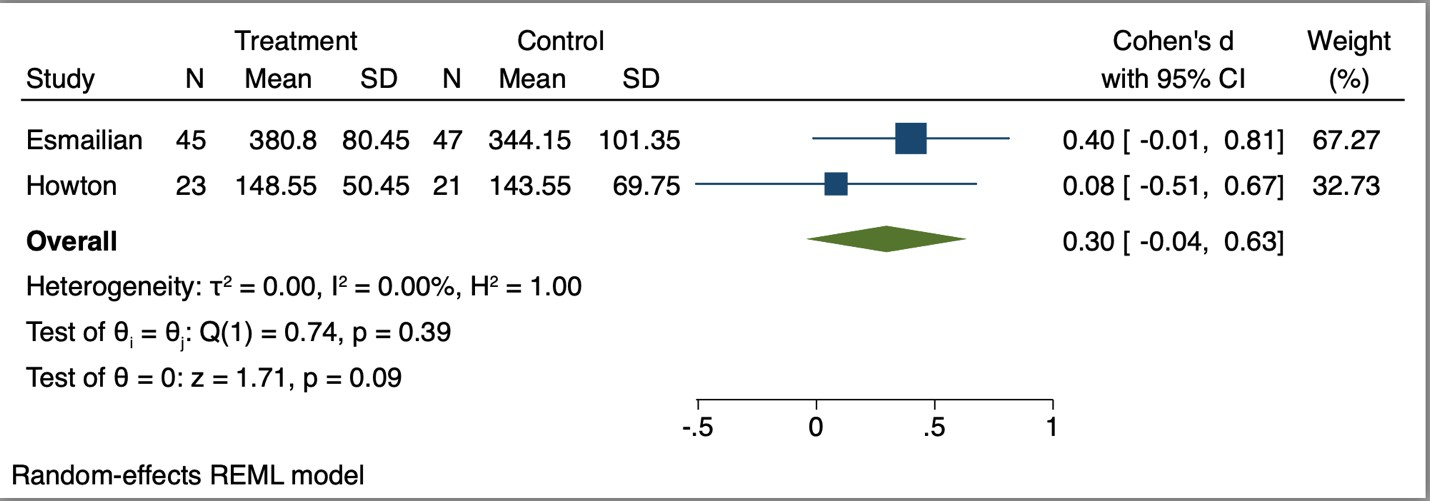
RESULTS : Of 25 540 articles, two studies were included in the analysis. The total number of patients included in the studies was 136 (68 in the ketamine groups and 68 in the placebo group). The pooled effect size was 0.30 (95% CI: -0.04, 0.63) favouring ketamine over placebo, p=0.08, (I2=0%, p=0.39). A paired t-test revealed that ketamine improved the mean peak expiratory flow rate (PEFR) from 242.4 (SD=146.23) to 286.95 (SD=182.22), p=0.33, representing an 18.38% improvement.
CONCLUSION : Ketamine can induce a 30% improvement in PEFR, representing a small positive effect in the treatment of acute severe asthma exacerbation in the emergency department (ED). The improvement was not statistically significant; nonetheless, since the improvement could be as great as 63% versus only a 4% possibility of no benefit/harm, the benefit appears to considerably outweigh any harm.
Keywords: Ketamine and asthma, severe asthma, asthma exacerbation
Severe asthma exacerbation is an everyday en- counter in the ED. Once the patient has reached a severe stage, it is often a life-threatening condition in which response to therapy is variable with a propensity to disease morbidity and mortality [1,2]. Although most cases respond promptly to various therapies, some patients deteriorate rapidly, making timely and appropriate management crucial to their survival. To this end, several attempts have been made to classify patients based on their current clinical condition, response to initial management, and previous history of exacerbations.
It is now a standard of care to manage severe ex- acerbations using nebulised salbutamol, ipratropium and corticosteroids, with some role for theophylline, leukotriene receptor antagonists and epinephrine [3,4]. In addition, ketamine has gained attention for improving outcomes and mitigating the need for mechanical ventilation [5]. However, the use of ketamine in severe asthma requires additional evidentiary exploration.
The first report of ketamine used for asthma was probably in the late 1970s [6]. In various experimental studies, ketamine was found to have a bronchodilatory effect by relaxing the smooth muscles of the airway and suppressing various in- flammatory cascades. This was believed to be via its inhibitory effect on the vagal system [7]. However, it is now accepted that ketamine’s primary mechanism of action is bronchodilation through the activation of
adrenaline receptors, hampering histamine-induced bronchoconstriction [8]. Nevertheless, emergence phenomena and the high profile of side effects and contraindications might have delayed its use as a standard of care in patients with severe exacerba- tions. Therefore, ketamine for asthma is given in a sub-dissociative dose, resulting in more negligible side effects, particularly the emergence phenomena [9].
Several attempts have been made to explore the evidence behind the use of ketamine in asthma. A well-known meta-analysis was conducted of severe exacerbations, but did not demonstrate a measur- able benefit [10]. However, this was outdated and was conducted among paediatric patients. No other meta-analysis was found at the time of this writing, particularly among adult patients with severe exac- erbation. Randomised controlled trials are available, but with conflicting results. Our aim in this system- atic review is to investigate the effect of ketamine on the peak expiratory flow rate (PEFR) test in adult patients with severe asthma exacerbation.
Review question: Is ketamine effective in treat- ing severe acute asthma exacerbations in adult pa- tients?
We conducted a systematic review and meta-analysis on the use of ketamine in cases of acute asthma exacerbation in adults.
Types of studies included: Randomised con- trolled trials.
Study population: Non-intubated adult patients with severe acute asthma exacerbations.
Search Strategy: We searched PubMed, Google Scholar, Cochrane databases, and gray literature (ClinicalTrials.gov and World Health Organization International Clinical Trials Registry Platform); we also searched the reference lists of included articles and any systematic reviews and meta-analyses iden- tified therein. Our search covered the period from 1963 to August 20, 2021. The search was limited to published articles in the English language, or non- English articles which had been scientifically trans- lated into English. We searched for meta-analyses and systematic reviews on the use of ketamine for asthma exacerbations in adults. Search terms were “ketamine” AND “asthma”.
Data Extraction and Management: We screened titles and abstracts, looked for published articles, and extracted data for the analysis of this systematic review. Data retrieved included the studies’ time frames, populations, and outcomes. We excluded non-English studies, studies conducted on paediatric age groups, prehospital studies, and studies conducted on animals. The article adhered to the reporting guidelines of the Preferred Reporting Items for a Review and Meta-analysis of Individual Participant Data [11].
Data Synthesis and Summary Measures: In our systematic review, we focused on including studies that used ketamine as a bronchodilator in severe asthma exacerbations in adults.
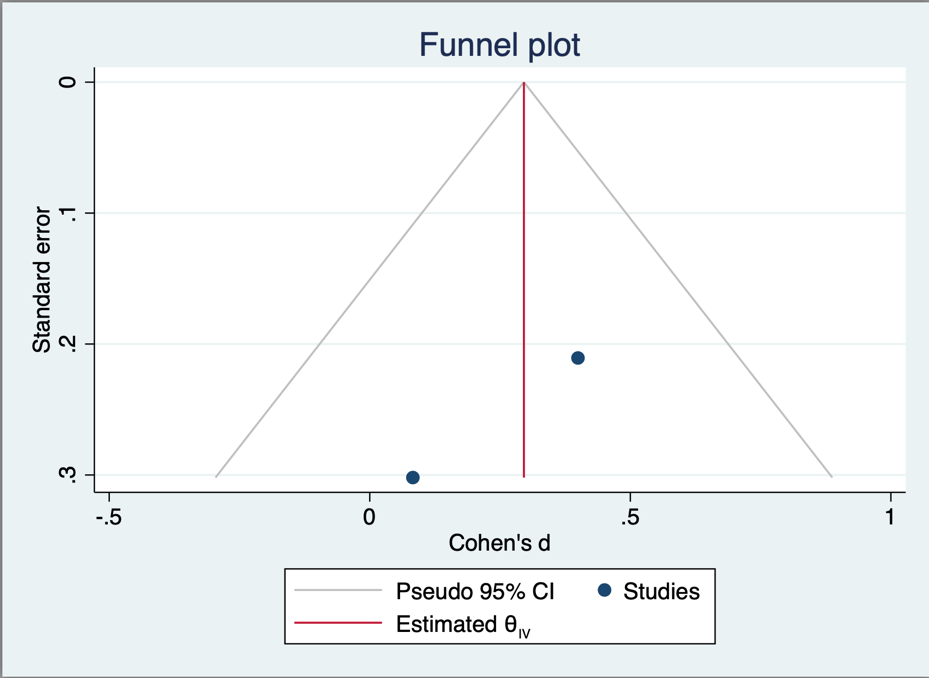
Data Analysis: We performed a meta-analysis of the included studies. On the assumption that the effect size may vary among the included studies, we used a random analysis. We also conducted a funnel plot to examine for possible publication bias. Sensitivity analyses were omitted, given the low number of included studies. We used a paired t- test to measure PEFR before and after the use of ketamine.
No funds, grants, or support were received.
The authors declare no conflict of interest.
This study was approved by the IRB board, with log number 21-417.
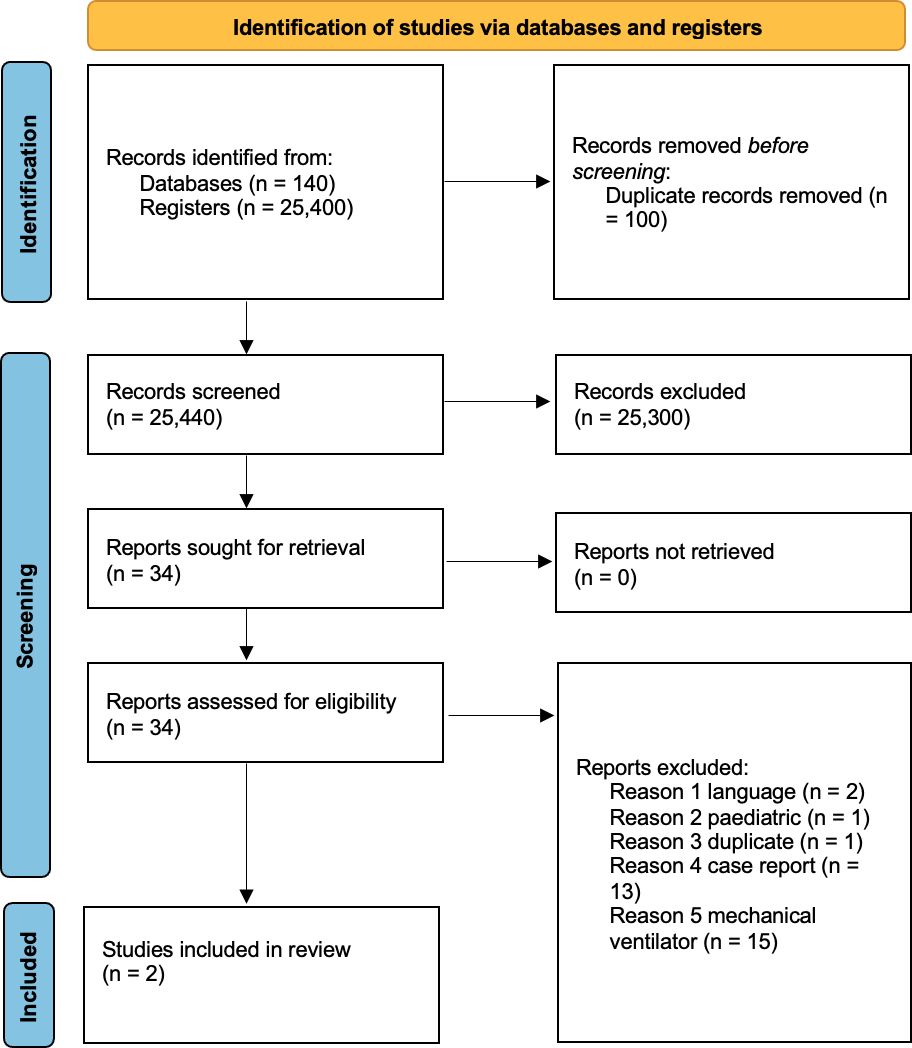
Of 25 540 articles, two studies were included in this analysis. The Prisma chart is illustrated in Figure 1. There was a total of 136 patients in the included studies (68 in the ketamine groups and 68 in the placebo group). The patients’ demographic details are illustrated in Table 1. The quality of the included studies was assessed for the risk of bias using the RoB 2 tool [12], illustrated in Table 2.
TABLE I Demographic details of patients in the included studies
ipratropium [13] and/or the delayed effect of steroid [14].
Ketamine appears to be an ideal drug for moderate to severe asthma exacerbations, given the weak evi- dence behind administering epinephrine for asthma patients and ketamine’s association with improve- ment in patients with hidden anaphylaxis [15,16]. In addition, the mortality and morbidity associated with intubating such patients might favour the use of every other method available before intubation [17,18]. The use of such drugs should be protocolised, and patients must be monitored for the development of any side effects. The side effects of ketamine that affect the respiratory system, including apnoea, laryngospasms, secretions and respiratory
depression, may be detrimental for non-monitored patients, especially those with exacerbations trig- gered by upper respiratory tract infection [19-21]. However, the latter is observed in paediatrics, and further studies are required in adults before making a recommendation against its use.
The number of studies included in this analysis is a weakness that might be overlooked, especially when there is no risk of publication bias, low risk of bias in the included articles, and improvement is observed using two methods of statistical analysis. However, further analysis, that unifies several out- come measures using mean change, for instance, is required to properly assess the influence of ketamine on patients with severe exacerbations. Furthermore,
the reverse physiology of intubated patients and the multiple medications used beyond acute manage- ment precluded our inclusion of such patients. It is probable that the inclusion of those patients, as well as pediatric patients, would provide a more comprehensive overview of ketamine for this illness.
This article uncovered a benevolent effect of ke- tamine (0.1-0.5 mg/kg over 1-5 minutes boluses, followed by 0.3-0.5 mg/kg/ hour infusion) in pa- tients with moderate to severe asthma exacerbations in the ED, and it is our belief that the benefit might outweigh the risk. However, close monitoring of such patients is imperative for the early detection and management of any possible adverse events.
| Inclusion Sequence Allocation Blinding of | Blinding of Incomplete Selective | Other |
|---|---|---|
| generation concealment participants and | outcome outcome outcome | sources |
| trial personnel | assessor data reporting | of bias |
| Howton + + + | + + – | ? |
| et al., | ||
| 1996 | ||
| Esmailian + + + | + + – | ? |
| et al., | ||
| 2018 | ||
| The pooled effect size (standardised mean differ- | 11.95 % improvement. | |
| ence between ketamine vs placebo group means) | ||
| from a random-effects model was 0.30 (95% confi- | VII. DISCUSSION | |
| dence ing exceeded The no Q=0.74; making Figure the paired PEFR (SD=182.22), provement. improvement evidence ketamine forest interval: t-test, 3. from publication p= We the plot 0.39). and Likewise, 242.4 investigated of arbitrary p=0.33, over -0.04, is noted heterogeneity (or illustrated The bias placebo. (SD=146.23) deterioration) 0.63) that funnel level representing using less the ketamine using of in likely, However, plot effect normal Figure 5% (I2=0%; Cohen’s was to in to as an of improved PEFR 286.95 8% 2. symmetrical, illustrated ketamine saline 18.38% the Cochrane’s There d, (p=0.08). p-value using favour- mean as was im- on in a a | PEFR, treatment ED. nificant; be no outweigh change compared supports patients. Ketamine as benefit/harm, This great representing in nonetheless, However, of the with any as improvement PEFR acute can 63% superiority placebo, harm. the induce revealed severe versus benefit further a since small Moreover, using asthma was only a of a the appears 30% studies positive 42.40% a a not ketamine improvement t-test. 4% exacerbation improvement statistically the possibility to are improvement effect considerably This | percentage needed for further in in could such sig- the the of in to |
| placebo, PEFR improved from 230.1 (SD=150.04) | ascertain l t d whether l l t the k benevolent t i effect lt on | PEFR f th is |