Full text rendered from the published PDF. The PDF is the version of record; if the two differ, the PDF governs.
Background
No review consolidating available evidence of the various interventions for preventing MERS-CoV transmission in healthcare settings has been published to inform practice. The MERS-CoV outbreak in Saudi Arabia led to wide-scale hospitalisations and, among other individuals at risk, healthcare workers (HCW) were one of the most affected groups. This study evaluates the effectiveness of various interventions implemented to prevent MERS-CoV transmission to HCW and MERS-negative patients in Saudi Arabian healthcare settings.
Methods
This review summarises and evaluates the effectiveness of MERS-CoV infection prevention and control (IPC) measures in Saudi Arabian hospital settings. Instead of using ‘best quality/evidence’ studies, the review has included as many relevant studies as possible.
Results
Various IPC measures were deemed effective. However, since no analysis of their effectiveness had been undertaken, it was not possible to determine the interventions’ level of effectiveness as applied in hospital settings. The studies appeared to rely on the assumption that the extent of MERS-CoV transmission control observed was a direct reflection of the implemented IPC measures.
Conclusions
Robust studies, using empirical methods, should be conducted to measure the effectiveness of the various IPC measures developed and implemented to control MERS-CoV transmission
Keywords: critical care, outbreak, personal protective equipment, severe acute respiratory infection, MERS-CoV
Throughout the world, viral infections are spread- ing faster and becoming less controllable [1], and healthcare systems must be prepared to address unexpected emergencies during infectious disease outbreaks. This review explores the effectiveness of the MERS-CoV infection prevention and control (IPC) interventions implemented in Saudi Arabian hospitals.
The Middle East respiratory syndrome (MERS), a viral respiratory infection caused by a coronavirus (MERS-CoV), was first diagnosed in Saudi Arabia in 2012 [2-4]. Although asymptomatic carriage has been observed, MERS-CoV infection can result in potentially fatal acute respiratory disease [2]. MERS- CoV is closely related to SARS-CoV (severe acute respiratory syndrome coronavirus), and the infection may be associated with acute hypoxaemic respiratory failure and multi-organ failure requiring Intensive Care Unit (ICU) admission [5].
The World Health Organization (WHO) estimated that, as of September 27, 2016, there were 1,806 MERS-CoV cases, including 643 deaths related to
the disease [5]. Saudi Arabia accounted for ap- proximately 80% of the MERS cases [3]; of those, approximately 45% infections occurred in hospitals or other healthcare facilities [5,6]. A possible cause of this high infection rate was unprotected care of MERS-CoV patients and a general failure of the healthcare system to implement control measures [7].
MERS-CoV is transmitted through respiratory droplets and mostly in nosocomial settings; as such, healthcare workers (HCW) in contact with MERS- positive patients are at high risk of infection [8]; other individuals at risk include patients without MERS who are hospitalised in wards treating MERS-CoV-infected patients. For instance, during the 2013 Al Hasa outbreak in Saudi Arabia, seven patients in the ICU and dialysis units were infected by one MERS-CoV-infected patient who shared the facility with them. Poor ventilation and over- crowding of the emergency department (ED) were also cited among the major factors contributing to healthcare-associated transmission and outbreaks [1,9-11].
Efforts to understand the aetiology of MERS and to map its transmission continue. Data from the MERS-CoV outbreaks highlighted the need to evaluate current infection control standards and practices and compliance with infection control standards in Saudi hospital settings. These standards included basic practices, such as personal protective equipment (PPE) and hand hygiene, as well as other interventions that address triage, flow, placement [12], and handling of patients within healthcare facilities. Other prevention measures include HCW training, patient isolation, patient/clinical triage, contact tracing, surveillance/monitoring of suspected MERS cases, visitor restrictions, suspension of elective surgeries, distribution of IPC guidelines, use of an Infectious Disease Epidemic Plan (IDEP), establishment of a control centre, ED closure, equipment and environmental cleanliness, having an ED contingency plan, and rapid response team visits.
Infection control guidelines designed to prevent the transmission of MERS-CoV were in place; how- ever, they were developed mostly based on the expe- rience of controlling a similar virus, namely severe acute respiratory syndrome coronavirus (SARS-
CoV) [13].
The present review is particularly important as we did not find any study undertaken to provide health- care professionals and health service managers with an overview of measures implemented to control MERS-CoV in Saudi Arabia’s healthcare facilities. Therefore, this scoping review aims to summarise the available evidence regarding the effectiveness of measures to prevent MERS-CoV transmission in Saudi Arabian hospital settings. The review adheres to the methodological framework for conducting scoping reviews, according to Arksey and O’Malley (2005), which consists of five stages: 1) identifying the research question, 2) finding related studies, 3) study selection, 4) charting the data, and 5) collecting, making summaries, and reporting results [14].
A. Research Question
What measures have been identified in the scien- tific literature that effectively reduce the transmis- sion of MERS-CoV to HCW and MERS-negative patients in Saudi Arabian healthcare settings?
B. Research Objective
The aim of this study was to summarise and eval- uate available data on the effectiveness of MERS- CoV IPC measures in Saudi Arabian hospital set- tings.
C. Definition of Key Terms
To better understand the research question and the parameters of this review, it is important to define and clarify some of the terms used in the research question. ‘Healthcare workers’, as used in the research question, is a broad term referring to all those working in healthcare settings. However, for the purpose of this review, the term will be used to refer to those directly in contact with and involved in providing healthcare to MERS-CoV patients in healthcare settings, including nurses, doctors, those involved in specimen sampling from patients for laboratory testing, and those otherwise involved in patient management. The term ‘patients’, as used in the research question, refers to MERS-negative patients who are hospitalised alongside MERS- positive patients and share the same healthcare
facility and services. Lastly, the term ‘healthcare settings’ refers to hospitals to which MERS-CoV patients have been admitted.
This section describes the literature search to identify empirical studies relevant to answering the research question. There is no definitive way to un- dertake a scoping study, although its main purpose is to identify existing literature rather than address the quality of individual studies [15]. As such, this review sought to be as comprehensive as possible. Indeed, Arksey and O’Malley (2005) observed that the scoping field’s purpose is to identify studies and reviews relevant to answering the research question comprehensively [14].
A. Identifying Relevant Studies
Relevant study identification begins with the search for studies through different sources, in- cluding electronic databases, relevant organisations, manual searching in key journals, and reference lists [14]. For the present scoping review, relevant study identification was limited to searching electronic databases, websites of relevant organisations, and the reference lists of relevant research articles.
1) Electronic Search: The specific electronic journal databases searched included PubMed, BioMed Central, ScienceDirect, Sage, and Taylor & Francis Online. For this scoping review, research studies undertaken in the last five years (2017- 2021) were considered for inclusion because the first MERS case was identified in Saudi Arabia in 2012 [16]. Studies not written in English were not considered for inclusion because of the time and cost of translation. Organisations whose websites were searched included Centers for Disease Control and Prevention (CDC), World Health Organization (WHO), and Saudi Arabia’s Ministry of Health. The following key terms and search terms (and any relevant alternative terms) were used in isolation and/or in combination to perform the electronic search and identify relevant studies; the search terms were developed from the research question.
Key Terms and Search Terms: • MERS-CoV • MERS-CoV transmission prevention
MERS- Saudi Arabia CoV Healthcare workers/patients Infectious Disease Epidemic Plan MERS-CoV infection control measures Patient isolation Hand hygiene Personal protective equipment Infection prevention and control Saudi Arabia Outbreak Response/management Severe acute respiratory infection Middle East respiratory syndrome Critical care Disease outbreak Disaster planning The search strategy was developed to maximise the number of relevant studies obtained for inclu- sion, while minimising the number of irrelevant studies. Appendix 1 describes the search process, including the search terms used, the total number of articles produced by the search, and the number of relevant studies retrieved.
2) Reference Checking: Apart from searching electronic databases and websites of key organi- sations, reference lists of relevant studies obtained from the electronic search were checked for related studies to be included in the review. This was im- portant to limit the risk of omitting relevant studies, thereby ensuring that the literature search was as comprehensive as possible. This process led to the generation of additional data sources.
B. Outcome Measures
The outcome measures for this review included prevention of transmission, control of transmission, or reduction of transmission of MERS-CoV in hos- pital settings (as a result of implemented IPC mea- sures); these were critical to determining whether specific infection control measures implemented in each hospital setting were effective in preventing or reducing MERS-CoV transmission.
C. Study Selection
The search strategy produced a large number of irrelevant studies. The inclusion/exclusion criteria, outlined below, enabled the researcher to exclude a
vast number of irrelevant studies. All studies meet- ing the below-listed inclusion criteria were included in the review, regardless of methodology.
1) Inclusion and Exclusion Criteria: The inclusion/exclusion criteria for this study were de- veloped ad hoc to facilitate the identification of studies to include in the review [17]. Generally, the criteria for inclusion were studies carried out in healthcare/hospital settings, studies that addressed MERS-CoV transmission, and studies addressing MERS-CoV transmission control.
Although the main focus of this review was the control of transmission of MERS-CoV in Saudi Arabia’s healthcare settings, the studies selected for review were not limited to Saudi Arabia. There were two reasons for this: one was to allow for the inclusion of as many studies as possible in case there were few relevant studies performed in Saudi Arabia. The second reason was the assumption that control measures applied elsewhere could also be applied in Saudi Arabia; as such, the study locations were irrelevant. The following inclusion and exclusion criteria were developed ad hoc and informed by the research question.
Inclusion Criteria:
Studies addressing infection con- trol/transmission of MERS-CoV
Studies conducted in healthcare/hospitals set- tings
Studies whose target population (participants) was HCW and MERS-negative patients who are at risk
Reports authored by government departments (public health authority) and both local and interna- tional non-governmental organisations such as the World Health Organization
• Other studies Exclusion Criteria: • Editorials • Commentaries/opinions Studies not addressing MERS-CoV infection control/transmission
Studies conducted outside hospital/healthcare settings
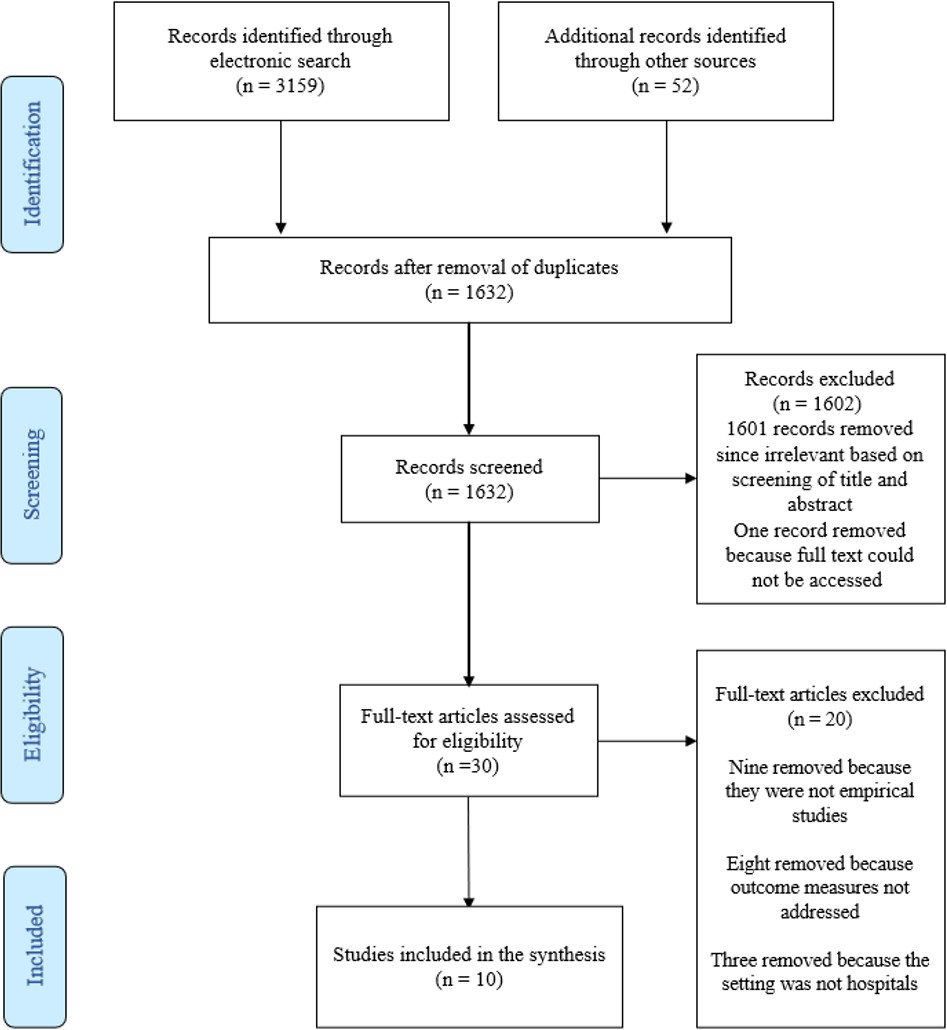
The search strategy returned 3,211 articles (Figure 1). Many of them were duplicates, the removal of which left 1,632 articles for review. The titles and abstracts of the remaining articles were screened according to the above inclusion/exclusion criteria. 1,601 articles were subsequently excluded as they did not meet the inclusion criteria. Full-text versions of the remaining 30 articles were retrieved to further assess whether they fully met the inclusion criteria. This led to the exclusion of a further 20 articles; nine because they were not empirical studies, eight because they did not address the outcome measures, and three because the studies were not conducted in hospital settings. Table 1. lists the number of studies identified through each bibliographic source.
A. Charting the Data
Data were extracted from all 10 studies selected for inclusion. The following information was extracted from the studies: title of the study, name of the author(s) and year of publication, target population and country, study objective, research methods employed, ICP interventions used and for how long, and outcomes (Table 2). Table 3 lists the appraisal of the evidence presented in the various studies.
B. Collating, Summarising, and Reporting the Re- sults
This section maps the distribution, nature, and extent of the studies incorporated in the review, in terms of the intervention group, range of in- terventions, research methods, outcome measures, and comparison of control outcomes for HCW and patients.
1) Distribution of Studies According to Interven- tion Group: Studies were categorised according to the care group being targeted by interventions to control MERS-CoV transmission. Studies were subsequently categorised into three categories: those targeting both HCW and patients; those targeting HCW only; and those targeting patients only. The majority (50%) of the studies targeted both HCW and patients. Forty percent targeted HCW, while the remainder of the studies (10%) targeted patients
Figure. 1. PRISMA Flow Chart
40%
1 4 5
Number
Percentage
10%
only. Figure 2 shows the proportion and number of studies targeting the above three groups.
Evaluation Based on Level of Effectiveness: Interventions targeting both patients and HCW were three times more effective than those targeting only patients or only HCW. The combination of the two sets of measures yielded better results than those applied to patients or HCW only, because the infection was being tackled from two fronts. Infected patients can pass the infection to HCW and vice versa [1]. Therefore, if only patients are tar- geted, then HCW who may be infected via contact with patients upon arrival will still spread the virus. Addressing the needs of both groups simultaneously helped, because none could pass infection to others.
Targeting Different Care Groups
2) Range of IPC Interventions: Several types of IPC interventions have been developed to stop MERS-CoV transmission in hospitals. The below categorisation of interventions (basic, administra- tive, and environmental) was adapted from WHO guidelines for the control of MERS-CoV infection transmission [25].
The most common IPC measures were the follow- ing (in hierarchical order):
Types of Interventions Identified in This Review (Table 4)
Basic Interventions These include: Hand hygiene
Patient isolation (in standard rooms and in negative pressure rooms)
Face masks Eye protection Gloves Gowns N95 respirators As seen, no studies applied any basic intervention in isolation; they all combined more than one inter- vention. There were overlaps, with different studies combining different interventions interchangeably.
Administrative Interventions These interventions also include administrative controls such as (Table 5):
• Contact tracing • Surveillance/monitoring • Suspension of elective surgeries • Education/training of HCW • Control/restriction of visitors • IPC guidelines • Suspension of outpatient services • Visits by a rapid response team • Establishment of a command control centre • Having an ED contingency plan Healthcare System Interventions Healthcare interventions included measures such as (Table 6):
• Taking nasopharyngeal swabs • Isolating MERS patients in negative pressure rooms • Maintaining environmental and equipment hy- giene • Closing the ED In summary, all studies included in this review ap- plied a combination of IPC interventions, with much overlap between studies in terms of interventions used. PPE-associated interventions were used in 90% of the studies, followed by MERS patient isolation in 80% of the studies (30% involving isolation in negative pressure rooms, and 50% in standard rooms). The third-most commonly used intervention was hand hygiene, which was applied in 50% of the studies. All studies included at least one basic IPC intervention in their investigations, making this category of intervention the most common. Most of the moderately used interventions fell into the cate- gory of administrative control measures, with education/training of HCW applied in 40% of the studies, clinical triage in 30% of the studies, as well as contact tracing and patient surveillance/monitoring. The least used interventions included suspension of outpatient services, which was applied in 10% of the studies; establishment of a command centre; and visits by a rapid response team.
Research Methods and Outcome Measures (Quality of Evidence: From the studies included in the review (n = 10), five (50%) adopted a descriptive design; another four (40%) used an observational design (essentially descriptive in nature); and the remaining study was a report (refer to the Joanna
Brigs critical appraisal checklist above). According to a system ranking the strength of evidence on the basis of study design, descriptive studies and reports have the lowest evidence strength [26]. Therefore, the strength of evidence of all the studies included in the review can be regarded as low. The evidence provided cannot be generalised to the rest of the population. Moreover, except for one study that which was conducted across 31 hospitals affected by MERS, all the other studies were single-centre studies.
Various outcomes were achieved by the IPC interventions implemented in the studies, including a 60% reduction of MERS-CoV transmission (in 50% of the studies); prevention of MERS-CoV transmission (in 30% of the studies); control of MERS-CoV transmission (in 10% of the studies); and a combination of reduction and prevention outcomes (in 10% of the studies).
No tools or methods were used to measure the interventions’ effectiveness in achieving these out- comes. As such, it was assumed that any reduction, control, or lack of transmission was associated with interventions. This assumption contributes to the weakness of the presented evidence regarding the effectiveness of infection control interventions, since the possible effects of other confounding factors were not considered. No studies evaluated the effectiveness of the applied interventions, but most of them provided descriptions. In order to evaluate any intervention, researchers should be able to measure how effective the intervention is by studying each intervention in isolation to un- derstand its individual contribution to the control and prevention of the disease. However, this could prove a difficult task given that, in practice, many interventions are applied in combination in order to control a disease.
3) Comparison of Control Outcomes for HCW and Patients: From the analysis of outcomes for HCW vs. for patients, it emerged that HCW had better MERS-CoV control and reduction outcomes compared with those for patients. In one study, for instance, only two nurses (out of 196) and one physician (out of 80) working in MERS ICU units acquired MERS-CoV, and none of them died from the virus. Of the 63 patients admitted to the ICU due to the hospital outbreak, only eight were HCW. The
mortality rate of the ICU patients was 63.4%, and none of those who died was a HCW [5]. In yet another study, 53 patients acquired MERS- CoV compared with 16 HCW [21]. The lower numbers of HCW acquiring MERS-CoV compared with patients is an interesting phenomenon that will be discussed further in the section below.
The four-level model of healthcare quality improvement, outlined by Ferlie and Shortell (2001), focuses on the individual patient, the care team, the organisation, and the political environment [27, 28]. This model was designed specifically to help improve the quality of healthcare delivered to patients. Quality improvement requires ongoing efforts to arrive at stable process results with no variations and to enhance these process results for the healthcare organisation and its users. The model is useful for helping to meet such needs. The organisation comprises a healthcare facility, such as a hospital, nursing home, or clinic, which supports the care team’s development and activities by pro- viding complementary infrastructure and resources. Finally, the economic and political environment, which includes payments, financial and regulatory regimes, and markets, makes up the conditions un- der which care teams, individual healthcare workers, organisations, and individual patients conduct their activities.
This review revealed that various interventions were used successfully to control, prevent, or re- duce transmission of MERS-CoV to patients and/or HCW in healthcare settings. Although some of these interventions were implemented in South Korea and Thailand rather than in Saudi Arabia, they would still be applicable for reduction of transmission of MERS-CoV in Saudi Arabia’s healthcare settings. Available guidelines informed the IPC measures for control and prevention of MERS-CoV transmission in healthcare settings, including guidelines from WHO (2015), CDC (2015), and Saudi Arabia’s Min- istry of Health (2015) [25, 29, 30]. With regard to the abovementioned four-level model of healthcare, most of the IPC interventions were implemented at the patient and care team levels.
A. IPC Measures Implemented at the Individual Patient Level
Patient-level IPC interventions were particularly effective in controlling MERS-CoV transmission. This effectiveness may be explained by the fact that the measures were applied directly to the affected patient. For example, isolation can easily stop the spread of the virus because the interaction between the affected patient and other people is strictly restricted [23]. Thus, the risk of contracting a viral infection from this particular person becomes negligible. Patient triage gives urgency to treatment, thereby solving the problem before it gets out of hand. Direct, patient-level control interventions have great potential for preventing and controlling MERS.
B. IPC Measures Implemented at the Healthcare Worker Level
At the HCW level, various interventions also appeared effective, because caregivers interact with patients more than anyone else. When caregivers are well protected, the risk of the virus spreading from patient to HCW is low; hence, it remains contained. Measures such as eye protection and face masks help keep HCW safe as they attend to infected individuals [22]. Having caregivers use PPE is a very effective way of controlling the spread of MERS at the HCW level.
C. IPC Measures Implemented at the Organisa- tional Level
Organisation-level measures were not as effective as the aforementioned measures. Their lower success rate could be because such measures are not applied directly to the patient or the caregiver. Measures such as visitor restrictions, elective surgery suspension, distribution of IPC guidelines, IDEP use, establishment of a control centre, ED closure, equipment and environmental cleanliness, and having an ED contingency plan are important. However, some of these are not immediately imple- mentable, thus leaving room for the virus to spread. Some measures at this level are also not easy to execute, since they require the allocation of time, planning, and resources, which may not be available within the time frame to prevent the infection from
spreading [31]. Interventions at this level are not very effective; therefore, they should be applied when measures at the first two levels are already in place.
D. IPC Measures Implemented at the Political Level
At the political level, a rapid response team visited a hospital in one of the studies to ensure compliance with the Ministry of Health’s (MOH) IPC guidelines [18]. Additionally, these guidelines were important for providing a standardised approach to the pre- vention of MERS-CoV transmission in hospitals. However, in the studies carried out in Saudi Arabia, none of the examined hospitals implemented the MOH’s IPC guidelines in full. This was also the case with studies conducted in South Korea and Thailand, which did not fully implement their respective countries’ IPC guidelines or those provided by WHO. Poor adherence to IPC guidelines has indeed been cited as among the major contributing factors to MERS-CoV transmission in healthcare settings [13].
Failure to implement guidelines, either in part or in full, may often be due to factors such as a shortage of trained health manpower to effectively implement the guidelines. Poor administrative and managerial skills in health facilities are also to blame for this situation. Furthermore, HCW may have failed to implement these guidelines due to the urgent need to control MERS-CoV and the feeling that following guidelines might slow down their efforts.
It is possible that better infection control outcomes could have been achieved if the IPC guidelines had been fully implemented in each of the examined hospitals. As such, hospitals in Saudi Arabia should consider fully implementing the interventions con- tained in the IPC guidelines, not only to achieve a standardised approach to infection control, but also to achieve better outcomes. As seen from the results, most of the studies used PPE; although this is the most used and most popular control intervention, it is the weakest and the last in a hierarchy of IPC interventions [25]. As such, it should not be relied upon as the main prevention strategy. Without other control measures (such as administrative control measures), PPE is of limited benefit [25]. In line with this, although PPE was the most commonly used intervention, most of the hospitals in the studies used PPE in combination with other control measures.
However, infection controls at the organisational level need to be used more to provide a robust control framework for the prevention of MERS- CoV. These should be supported by infection control at the political level, including the establishment of a robust surveillance system to monitor the strict implementation of IPC guidelines in hospitals. Although Saudi Arabia has a national surveillance system, in which all hospitals are required to enrol and report infectious agents according to the MOH guidelines, its implementation remains thus far unsuccessful, considering the fact that healthcare staff members across several hospitals were uncertain as to whether their hospitals were enrolled in the system [32]. Poor implementation has been blamed on inadequate resources allocated to public health facilities, lack of adequate training to ensure proper qualification and competence of healthcare providers, and an indifferent attitude in hospital staff with regard to adhering to guidelines [28]. There have also been examples of ineffective coordination of healthcare systems in various regions and towns, as well as across the entire Kingdom of Saudi Arabia.
E. Effectiveness of Interventions According to Tar- get Group
It appeared that IPC interventions tended to work better for HCW than for patients. Fewer HCW acquired MERS-CoV infection, and none of them died from the infection despite their prolonged and close contact with MERS patients. The low infection rate among HCW might be due to better awareness, knowledge, and infection-specific education, and stricter adherence than patients to infection control measures. More intensive ascertainment among HCW by being subjected to mass screenings that allowed for early detection of cases that could have been missed. Thus, leading to the immediate prac- tice of IPC measures such as isolation of confirmed or suspected cases to prevent further spread of the infection [6]. Additionally, lower transmission among HCW may be due to the possibility that, out of fear, they were careful about the outbreak [3, 28, 31, 33] and, therefore, closely monitored their symptoms and sought help before testing positive [12]; or detected the disease early and instigated the necessary control measures.
The lack of deaths among HCW might reflect this group’s increased awareness about MERS symptoms and their constant monitoring of such symptoms, facilitating early detection and treatment. Awareness of the MERS-CoV case definition is indeed important for enabling early detection [17]. Apart from early diagnosis, the lack of deaths among HCW might also be explained by the better health and younger age of HCW [6]. Research evidence indeed indicates that MERS patients who are not HCW are significantly older than HCW [34, 35], and older age was found to be a risk factor for adverse outcomes among MERS cases [34]. Mitigating the risk factors of age (both young and old) is necessary, and can be done through close monitoring upon arrival at the hospital, as well as conducting awareness exercises that target people in these population brackets during potential outbreaks. Education on how to avoid and manage infections is also important, and such individuals should be given information on all the available ways of keeping safe, avoiding contacts, and seeking medical assistance in case of symptoms. Comorbidity among non-HCW patients was also found to be a risk factor for adverse outcomes as compared with HCW [34]. Co-morbid conditions leave non-HCW more vulnerable to MERS, and these risk factors must also be reduced or elimi- nated. Co-morbidity risk factors could be reduced through interventions such as public health vacci- nation strategies and awareness and public educa- tion campaigns. Patients should also be screened and treated for any other disease before receiving treatment for MERS-CoV.
To prevent MERS transmission between HCW and patients, the improvement of healthcare quality (in line with the four-level model) should include efforts directed towards preventing transmission to patients. Early identification and diagnosis of MERS patients is key to controlling the spread of MERS-CoV to other patients. To ensure early detection and, consequently, better patient outcomes, effective triage should be undertaken upon hospital admis- sion, with subsequent quarantine of patients with respiratory tract infections [7]. A study found that visual triage was effective in the early identification of MERS-CoV cases [36]. Another study revealed
that early identification of a MERS-CoV patient ensured a zero-transmission level of MERS-CoV in the healthcare facility involved [20]. Early identifi- cation is important because it allows for suspected or confirmed MERS cases to be subjected to IPC measures, such as contact and airborne isolation, before coming into contact with other patients (and unsuspecting HCW).
From an organisational point of view, although the hospitals investigated in the studies implemented IPC measures to control a MERS outbreak, it appears that most of the hospitals evaluated were caught unaware and unprepared for the outbreak. Only one hospital had an IDEP, while another one had an ED contingency plan [1,5]. For better response to and control of hospital outbreaks of infectious diseases, such as MERS-CoV, all hospitals should have response plans, exercises, and training modules well in advance as part of their preparedness [37]. Once the outbreak strikes, the response plan should be implemented to address the disaster effects and mitigate the impact on the population [37]. The infectious disease disaster plan should include elements specific to a particular disease, depending on the pathogen’s characteristics, its transmission, and mitigation measures [12]. For novel contagious infections, such as the MERS-CoV virus, standard infectious disease control measures can be used until measures for the novel disease have been developed. However, based on the studies reviewed here, the performance of standard measures falls below that of other measures specifically developed for MERS- CoV. With time, there is always a need for standards that can address specific issues. Saudi Arabia did not have national infection prevention and control guidelines in place before the MERS-CoV outbreak, a situation that left hospitals to develop individual guidelines. Thus, various hospitals came up with their own guidelines for infection control, and the studies indicate that not all hospitals applied the same infection control methods. However, the Minister of Health later formed a Scientific Advisory Council, which revised previous World Health Organization (WHO) and Centers for Disease Control and Prevention (CDC) guidelines and developed a revised version for use when caring for patients with suspected or possible MERS-CoV infection.
From the data extraction table (Table 2) it is clear that, in most of the studies (90%), using PPE such as masks, gloves, and gowns is among the most essential and effective interventions for controlling MERS. Most studies have cited PPE as being among the first interventions to apply in case of an out- break. Other interventions, such as isolation, triage, and quarantine, were found to be very effective in curbing viral transmission; therefore, they join the list of essential measures. Some interventions may not be very effective in controlling an outbreak, but are necessary for long-term disease management. These fall under the non-essential but useful mea- sures. In some of the studies, this category contains interventions such as having security measures in place to control patients, continued vigilance, ad- ministrative controls, and workplace safety, among others.
This study has a number of limitations. The evidence presented here should be applied with cau- tion, considering that none of the included studies measured the effectiveness of the IPC interventions implemented to control MERS-CoV transmission. Hence, the relative effectiveness of specific inter- ventions could not be identified. The studies were largely descriptive and based on the assumption that the level of MERS-CoV transmission control observed was a direct reflection of the IPC mea- sures applied. For more useful results, future studies should include evaluations of current practices and interventions.
Another limitation of this study is that it focused mainly on presenting a summary of the available evidence regarding the effectiveness of IPC inter- ventions for controlling the spread of MERS-CoV, rather than an in-depth analysis of the quality of available evidence, as would be the case in a sys- tematic review. As such, the evidence presented is inadequate for hospital and policy decision-making. Additionally, most of the studies were single-centre, so their findings cannot necessarily be generalised. Nonetheless, the evidence presented provides some insight into what could work for the control of this and potentially other respiratory viruses in Saudi Arabia.
This review found that IPC interventions im- plemented at patient and HCW level, organisation level, and political level, across various hospital settings, were considered crucial in preventing, con- trolling, and/or reducing the transmission of MERS- CoV. Although PPE and hand hygiene were the most commonly used interventions, these are of limited effectiveness if not used in conjunction with administrative control measures.
A. Recommendation
Considering the above, PPE, hand hygiene, and other basic infection control measures should be used within a larger framework of organisational and political control. Additionally, as is evident from most studies, hospitals should implement these controls in full, rather than piecemeal, for more effective control. To limit transmission between HCW and patients, it is important to promote early detection through triage and surveillance, and to subject suspected and confirmed cases to the rele- vant controls, such as isolation. It is also important for hospitals to be prepared for MERS-CoV-like outbreaks by developing response plans to be fol- lowed when disaster strikes. Although the infection control measures applied in the included studies were considered effective in controlling MERS-CoV transmission, the presented evidence should be in- terpreted with caution since these were single-centre studies, mostly descriptive, and did not measure the effectiveness of the implemented interventions. Therefore, it was impossible to determine the level of effectiveness of specific MERS-CoV infection control interventions.
B. Future Outlook
In the future, more robust studies, using empirical methods, should be adopted to measure the effec- tiveness of the various IPC measures in controlling the transmission of MERS-CoV. Researchers should also focus on multi-centre studies to investigate the effectiveness of the various in preventing and con- trolling of MERS-CoV. Multi-centre trials typically produce more generalisable data, since they reflect a wider range of geographical locations, include a larger number of participants, may include a
broader range of population groups, and can afford researchers the ability to make comparisons between different centres.
| Bibliographic Sources | N | % |
|---|---|---|
| PubMed | 272 | 8.47 |
| ScienceDirect | 1,848 | 57.55 |
| BioMed Central | 330 | 10.28 |
| Taylor & Francis Online | 70 | 2.18 |
| Sage | 87 | 2.71 |
| CDC | 460 | 14.32 |
| WHO | 3 | 0.09 |
| Ministry of Health | 90 | 2.80 |
| Reference checking | 52 | 1.62 |
| Law & Public Health Vol 3, No 1. 2023 | p176 |
| & Population & | Study Objective Research | IPC Intervention | Outcomes |
|---|---|---|---|
| Geographical | Methods | & Period | |
| setting | |||
| et al. Healthcare | To describe how Observational | Study period was | Although ICU staff |
| workers (HCW) | the ICU study | approx. three | was significantly |
| (n = 8) and | department at employing | both months (July 1 to | exposed to the risk of |
| patients (n = | King Abdulaziz qualitative | and October 21, 2015). | acquiring MERS- |
| 55). | Medical City quantitative | There was a 19- | CoV, only a small |
| Study | responded to the methods. | month intervention | number actually |
| conducted in a | MERS outbreak | period. | acquired the infection. |
| hospital (King | that occurred in | Essential effective | For example, two |
| Abdulaziz | the hospital, the | measures: | nurses (out of 196) |
| Medical City) | impact on its | ● Activation of | and one physician |
| setting in Saudi | HCW, and the | Infectious | (out of 80) working in |
| Arabia | related changes in | Disease Epidemic | MERS ICU units |
| following | the hospital’s | Plan (IDEP) | acquired MERS-CoV. |
| MERS outbreak | workflow. | ● Closure of ED | Essential effective |
| in the hospital. | ● Cancellation of | measures: | |
| elective surgeries | ● Hand hygiene | ||
| ● Suspension of | ● Imparting of | ||
| outpatient clinic | knowledge to HCW | ||
| ● Establishment of | about MERS | ||
| a command | infection | ||
| centre and MERS | ● Proper and early | ||
| unit | diagnosis of the | ||
| ● Restriction of | virus | ||
| family visits | ● Early and effective | ||
| ● Isolation of | diagnosis and | ||
| patients | treatment of the | ||
| ● Training of ICU | virus in HCW. Non- | ||
| staff on the use of | HCW may not have | ||
| PPE | such timely | ||
| Law & Public Health Vol | 3, No 1. 2023 | p177 | |
| ● Sufficient supply | diagnosis, thus | ||
| of PPE | allowing the spread | ||
| ● Saudi Ministry of | of MERS-CoV | ||
| Health & WHO | amongst them. | ||
| guidelines for | ● Early diagnosis and | ||
| management of | treatment of HCW | ||
| MERS given to | can also be cited as | ||
| ICU staff | the reason there | ||
| were no HCW | |||
| deaths reported, | |||
| despite the virus’s | |||
| 63% mortality rate. | |||
| Mean age of | Non-essential but | Non-essential useful | |
| patients who | useful measures: | measures: | |
| acquired MERS | ● Implementation | Creation of a | |
| was 57.9 ± 18.6 | of airborne | multidisciplinary | |
| years; most of | precautions for | team using a | |
| them male | MERS cases | multifaceted approach | |
| (69.8%). | ● Fit testing staff | ||
| for N95 | |||
| respirators | |||
| ● Development and | |||
| updating of | |||
| specific policies | |||
| for doffing and | |||
| donning personal | |||
| protective | |||
| equipment (PPE) | |||
| ● Provision of | |||
| visual instructions | |||
| in ICU rooms | |||
| ● Setup of carts | |||
| with PPE outside | |||
| patients’ rooms | |||
| with PPE for | |||
| Law & Public Health Vol | 3, No 1. 2023 | p178 | |
| proper sequential | |||
| donning | |||
| ● More training in | |||
| hand hygiene and | |||
| use of PPE for | |||
| HCW and | |||
| housekeepers | |||
| Collaboration | |||
| between intensive | |||
| care department | |||
| and the infection | |||
| prevention and | |||
| control department | |||
| et al. HCW and | To demonstrate Observational | The interventions | In phase I, six |
| inpatients | the outcome of study | were conducted for | primary cases led to |
| without MERS | infection | approx. two | 48 secondary cases. |
| (n = 1,310). | prevention and | months. | In phase II, secondary |
| Study | control (IPC) | Essential effective | cases fell sharply to |
| conducted in a | interventions | measures: | 18, while in phase III, |
| hospital in | implemented | ● Taking | secondary cases fell |
| Saudi Arabia | during the MERS | nasopharyngeal | further to just one. |
| following an | outbreak. | swabs inside the | The outcome indicates |
| outbreak in the | rooms that are | a pattern of reduction | |
| hospital. | lacking negative | in infection, from 18 | |
| pressure | cases in phase II to | ||
| ● Training on | one case in phase III | ||
| proper PPE use, | (a difference of 17 | ||
| proper hand | cases). This reduction | ||
| hygiene, and IPC | may be attributed to | ||
| measures | the tightening of the | ||
| ● Conducting | IPC measures. | ||
| drills | Essential effective | ||
| ● Implementing a | measures: | ||
| standardised | ● Increased | ||
| checklist for | awareness of the | ||
| patient triage | importance of |
| Critical Appraisal | |
|---|---|
| Appraisal Tool (Briggs, 2013)24 | Quality of Evidence |
| Descriptive design | Weak |
| Descriptive design | Weak |
| Descriptive design | Weak |
| Descriptive design | Weak |
| Descriptive design | Weak |
| Observational design | Weak |
| Observational design | Weak |
| Observational design | Weak |
| Observational design | Weak |
| Report | Weak |
| Intervention Type Alone | No. of Studies Using It | Effectiveness |
|---|---|---|
| Hand hygiene | Nil | N/A |
| Patient isolation (in standard rooms and in negative pressure rooms) | Nil | N/A |
| Personal protective equipment (PPE) such as face masks | Nil | N/A |
| Intervention Type Combined | % of Studies Using It | Effectiveness |
| Hand hygiene (combined with other measures) | 50% | Moderate |
| Patient isolation (combined with other measures) | 80% | High |
| of Medicine, Law & Public Health Vol 3, No 1. 2023 | p190 | |
| PPE (combined with other measures) | 90% | High |
| Intervention Type Alone % of Studies Using It | Effectiveness | ||
|---|---|---|---|
| All 0% | N/A | ||
| Intervention Type Combined % of Studies Using It | Effectiveness | ||
| HCW training 40% | High | ||
| Clinical triage 30% | Moderate | ||
| Contact tracing 30% | Moderate | ||
| Surveillance 30% | Moderate | ||
| Visitor control 30% | Moderate | ||
| IPC guidelines 30% | Moderate | ||
| IDEP 20% | Low | ||
| Suspension of surgeries 20% | Low | ||
| ED closure 20% | Low | ||
| Cleanliness 20% | Low | ||
| Outpatient service 10% | Low | ||
| Establishment of command centre 10% | Low | ||
| ED contingency plan 10% | Low | ||
| RRT visits 10% | Low | ||
| Table 6. Appraisal of the Effectiveness of Healthcare Interventions | |||
| Intervention Type Alone | % of Studies | Using | It Effectiveness |
| Taking nasopharyngeal swabs | 20% | Low | |
| Isolating MERS patients in negative pressure rooms | 20% | Low | |
| The Journal of Medicine, Law & Public Health Vol 3, No 1. 2023 | p191 | ||
| Environmental and quipment hygiene | 10% | Low | |
| Closing the ED | 10% | Low | |
| Intervention Type Combined | % of | Studies Using | Effectiveness |
| Taking nasopharyngeal swabs combined with isolating MERS patients in negative pressure rooms | 60% | Moderate | |
| Environmental and equipment hygiene combined with closing the ED | 50% | Moderate | |
| All interventions combined | 90% | High | |
| Appendix 1. Search Strategy and Results | |||
| PubMed Database Search | |||
| Date Search Terms | Search | Results | Retrieved |
| (Hits) | Articles | ||
| 14/01/2018 "MERS-CoV" AND "control" AND "hospital" | 127 | 2 | |
| 14/01/2018 "response" AND "MERS" AND "outbreak" AND "hospital" | 18 | 5 | |
| 14/01/2018 Middle east respiratory syndrome exposed hospital Saudi Arabia | 8 | 2 | |
| 14/01/2018 "health care workers" AND "hospital" AND "MERS" AND "outbreaks" AND "Saudi | 5 | 4 | |
| Arabia" | |||
| 14/01/2018 "effectiveness" AND "control" AND "Middle East respiratory syndrome-coronavirus" | 12 | 6 | |
| 14/01/2018 "nursing" AND "response" AND "MERS-CoV" AND "infection" | 1 | 1 | |
| 14/01/2018 "MERS" AND "hospital" AND "outbreak" AND "prevention and control" | 33 | 7 | |
| 15/01/2018 "prevention" AND "MERS" AND "transmission" AND "outbreak" | 49 | 9 | |
| 15/01/2018 "critical care" AND "MERS" AND "infection control" | 9 | 3 | |
| 15/01/2018 "critical response" AND "MERS" | 0 | 0 | |
| 15/01/2018 "hand hygiene" AND "Middle east respiratory syndrome" | 9 | 4 | |
| Total | 271 | 43 | |
| The Journal of Medicine, Law & Public Health Vol 3, No 1. 2023 | p192 | ||
| ScienceDirect Database Search | |||
| Date Search Terms | Search | Results | Retrieved |
| (Hits) | Articles | ||
| 15/01/2018 "infection control and prevention" AND "Middle East respiratory syndrome" | 24 | 8 | |
| 15/01/2018 "infection prevention and control" AND "Middle East respiratory syndrome" | 79 | 16 | |
| 15/01/2018 "outbreak" AND "Middle East respiratory syndrome corona virus" AND "Saudi | 254 | 17 | |
| Arabia" | |||
| 15/01/2018 "hand hygiene" AND "MERS" AND "outbreak" | 132 | 12 | |
| 15/01/2018 "patient isolation" AND "MERS" AND "outbreak" | 24 | 1 | |
| 15/01/2018 "disaster planning" AND "MERS" | 43 | 1 | |
| 15/01/2018 "critical care" AND "MERS" | 631 | 2 | |
| 16/01/2018 Infectious Disease Epidemic Plan hospital MERS | 545 | 3 | |
| 16/01/2018 "personal protective equipment" AND "Middle East respiratory syndrome" AND | 116 | 15 | |
| "hospital" | |||
| Total | 1848 | 75 | |
| BioMed Central Database Search | |||
| Date Search Terms | Search Results | (Hits) Retrieved | Articles |
| 16/01/2018 "control" AND "Middle East respiratory syndrome" | 123 | 8 | |
| 16/01/2018 "infection prevention and control" AND "Middle East respiratory syndrome" | 14 | 4 | |
| 16/01/2018 "management" AND "Middle East respiratory syndrome" AND "outbreak" | 53 | 5 | |
| 16/01/2018 "critical care" AND "Middle East respiratory syndrome" AND "outbreak" | 10 | 3 | |
| 16/01/2018 "prevention" AND "transmission" AND "Middle East respiratory syndrome" | 56 | 5 | |
| 16/01/2018 "response" AND "hospital" AND "Middle East respiratory syndrome" | 51 | 4 | |
| 16/01/2018 "hygiene protective equipment MERS" | 12 | 3 | |
| 16/01/2018 disaster planning MERS | 11 | 1 | |
| 16/01/2018 Total | 330 | 33 |
| Intervention Type Alone | % of Studies | Using | It Effectiveness |
|---|---|---|---|
| Taking nasopharyngeal swabs | 20% | Low | |
| Isolating MERS patients in negative pressure rooms | 20% | Low | |
| The Journal of Medicine, Law & Public Health Vol 3, No 1. 2023 | p191 | ||
| Environmental and quipment hygiene | 10% | Low | |
| Closing the ED | 10% | Low | |
| Intervention Type Combined | % of | Studies Using | Effectiveness |
| Taking nasopharyngeal swabs combined with isolating MERS patients in negative pressure rooms | 60% | Moderate | |
| Environmental and equipment hygiene combined with closing the ED | 50% | Moderate | |
| All interventions combined | 90% | High | |
| Appendix 1. Search Strategy and Results | |||
| PubMed Database Search | |||
| Date Search Terms | Search | Results | Retrieved |
| (Hits) | Articles | ||
| 14/01/2018 "MERS-CoV" AND "control" AND "hospital" | 127 | 2 | |
| 14/01/2018 "response" AND "MERS" AND "outbreak" AND "hospital" | 18 | 5 | |
| 14/01/2018 Middle east respiratory syndrome exposed hospital Saudi Arabia | 8 | 2 | |
| 14/01/2018 "health care workers" AND "hospital" AND "MERS" AND "outbreaks" AND "Saudi | 5 | 4 | |
| Arabia" | |||
| 14/01/2018 "effectiveness" AND "control" AND "Middle East respiratory syndrome-coronavirus" | 12 | 6 | |
| 14/01/2018 "nursing" AND "response" AND "MERS-CoV" AND "infection" | 1 | 1 | |
| 14/01/2018 "MERS" AND "hospital" AND "outbreak" AND "prevention and control" | 33 | 7 | |
| 15/01/2018 "prevention" AND "MERS" AND "transmission" AND "outbreak" | 49 | 9 | |
| 15/01/2018 "critical care" AND "MERS" AND "infection control" | 9 | 3 | |
| 15/01/2018 "critical response" AND "MERS" | 0 | 0 | |
| 15/01/2018 "hand hygiene" AND "Middle east respiratory syndrome" | 9 | 4 | |
| Total | 271 | 43 | |
| The Journal of Medicine, Law & Public Health Vol 3, No 1. 2023 | p192 | ||
| ScienceDirect Database Search | |||
| Date Search Terms | Search | Results | Retrieved |
| (Hits) | Articles | ||
| 15/01/2018 "infection control and prevention" AND "Middle East respiratory syndrome" | 24 | 8 | |
| 15/01/2018 "infection prevention and control" AND "Middle East respiratory syndrome" | 79 | 16 | |
| 15/01/2018 "outbreak" AND "Middle East respiratory syndrome corona virus" AND "Saudi | 254 | 17 | |
| Arabia" | |||
| 15/01/2018 "hand hygiene" AND "MERS" AND "outbreak" | 132 | 12 | |
| 15/01/2018 "patient isolation" AND "MERS" AND "outbreak" | 24 | 1 | |
| 15/01/2018 "disaster planning" AND "MERS" | 43 | 1 | |
| 15/01/2018 "critical care" AND "MERS" | 631 | 2 | |
| 16/01/2018 Infectious Disease Epidemic Plan hospital MERS | 545 | 3 | |
| 16/01/2018 "personal protective equipment" AND "Middle East respiratory syndrome" AND | 116 | 15 | |
| "hospital" | |||
| Total | 1848 | 75 | |
| BioMed Central Database Search | |||
| Date Search Terms Search | Results | (Hits) Retrieved | Articles |
| 16/01/2018 "control" AND "Middle East respiratory syndrome" | 123 | 8 | |
| 16/01/2018 "infection prevention and control" AND "Middle East respiratory syndrome" | 14 | 4 | |
| 16/01/2018 "management" AND "Middle East respiratory syndrome" AND "outbreak" | 53 | 5 | |
| 16/01/2018 "critical care" AND "Middle East respiratory syndrome" AND "outbreak" | 10 | 3 | |
| 16/01/2018 "prevention" AND "transmission" AND "Middle East respiratory syndrome" | 56 | 5 | |
| 16/01/2018 "response" AND "hospital" AND "Middle East respiratory syndrome" | 51 | 4 | |
| 16/01/2018 "hygiene protective equipment MERS" | 12 | 3 | |
| 16/01/2018 disaster planning MERS | 11 | 1 | |
| 16/01/2018 Total | 330 | 33 |