Full text rendered from the published PDF. The PDF is the version of record; if the two differ, the PDF governs.
INTRODUCTION The aim of this study is to provide a comprehensive review of snake bites in the Arabian Peninsula.
METHODS A scoping review was conducted from October to December 2022, and included sources from PubMed, Ovid, the Cochrane Database, reference lists of relevant articles, and grey literature sources such as ClinicalTrials.gov and the World Health Organization’s International Clinical Trials Registry Platform. The keywords used were “Arabian Peninsula”, “Saudi Arabia”, “Qatar”, “Kuwait”, “Oman”, “United Arab Emirates”, “Bahrain”, “Yemen”, “snake venom”, “snake bite”, and “envenomation”. The inclusion criteria for selecting studies were those that explored snake bites in various regions of the Arabian Peninsula.
RESULTS 28 studies were included, with a total of 16,602 snake bite cases. In 78.57% of cases, the initial presentation was a local injury. Haematological manifestations were seen in several of the reported cases, while some cases showed neurological symptoms and cardiac manifestation. Leucocytosis, thrombocytopenia/thrombocytosis, and acute kidney injury and proteinuria were also observed. The administered dose of antivenom varied, and post-antivenom complications were seen in less than one third of the reported cases.
CONCLUSION The current body of literature does not provide a concise management plan for snake bite in the Arabian Peninsula. We provide a proposed plan for treating and monitoring such cases.
Keywords: Arabian Peninsula, Saudi Arabia, Qatar, Kuwait, Oman, United Arab Emirates, Bahrain, Yemen, Envenomation, Snake Bite, Snake Venom
Snake venom poses a significant risk to human health, with the potential for both mortality and morbidity [1-3]. While not all snakes are venomous, approximately 15% of the 3,000 species worldwide are known to be venomous and dangerous to hu- mans, and are responsible for more than 2.5 million cases of envenomation and over 135,000 deaths per year [4,5]. The effects of snake venom can lead to various complications, including haematological disorders, neurotoxicity, respiratory problems, and acute kidney injury (AKI), depending on the specific snake species [4-6]. Thus, immediate assessment is necessary for every snake bite, even if the patient initially appears to be in good health.
The treatment of snake bite patients has been approached in a number of ways, and has placed a burden on healthcare systems. We believe that factors such as rural presentation, delayed presentation, and limited access to antivenom may contribute to this burden. Moreover, the average treatment cost per snake bite patient exceeds that of treating bites from other dangerous animals. For instance, in Saudi Arabia, the cost per patient ranges from 26,460 SR to 46,143 SR in severe cases [7, 8].
The geographical distribution of venomous snakes is a crucial determinant of envenomation risk. Given the variation in venomous snake populations across different regions, it is essential to conduct further research on local snake species in order to develop appropriate protocols. This necessitates efforts to overcome challenges in snake identification, as well as the application of guidelines [7].
The Arabian Peninsula, known for its largely desert environment, has reported a significant num- ber of snake bites over the last few years [9-11]. While several snake species have been identified in certain regions [7,12], there is still a lack of comprehensive information on the evaluation and
treatment of snake bite patients throughout the peninsula. Therefore, this study aims to provide a comprehensive review of snake bites in the Arabian Peninsula, and to explore complications, treatment regimens (including antivenom dosage and hyper- sensitivity reactions to antivenom), and the chal- lenges associated with treating such cases.
We conducted a scoping review, following the methodological framework proposed by Arksey and O’Malley [13].
Search strategy: The information sources used for this review included PubMed, Ovid, the Cochrane Database, reference lists of relevant articles, and grey liter- ature sources such as ClinicalTrials.gov and the World Health Organization’s International Clinical Trials Registry Platform. The search was conducted from October to December 2022, using the keywords “Arabian Peninsula”, “Saudi Arabia”, “Qatar”, “Kuwait”, “Oman”, “United Arab Emi- rates”, “Bahrain”, “Yemen”, “snake venom”, “snake bite”, and “envenomation”. Our search was limited to countries within the Arabian Peninsula, and the time frame for the search was from 1804 to 2023.
Study selection: The inclusion criteria were studies that explored snake bites in various regions of the Arabian Penin- sula. Any articles that focused solely on the phar- macology of antivenom or on snake bites outside the peninsula were excluded, regardless of their publication date.
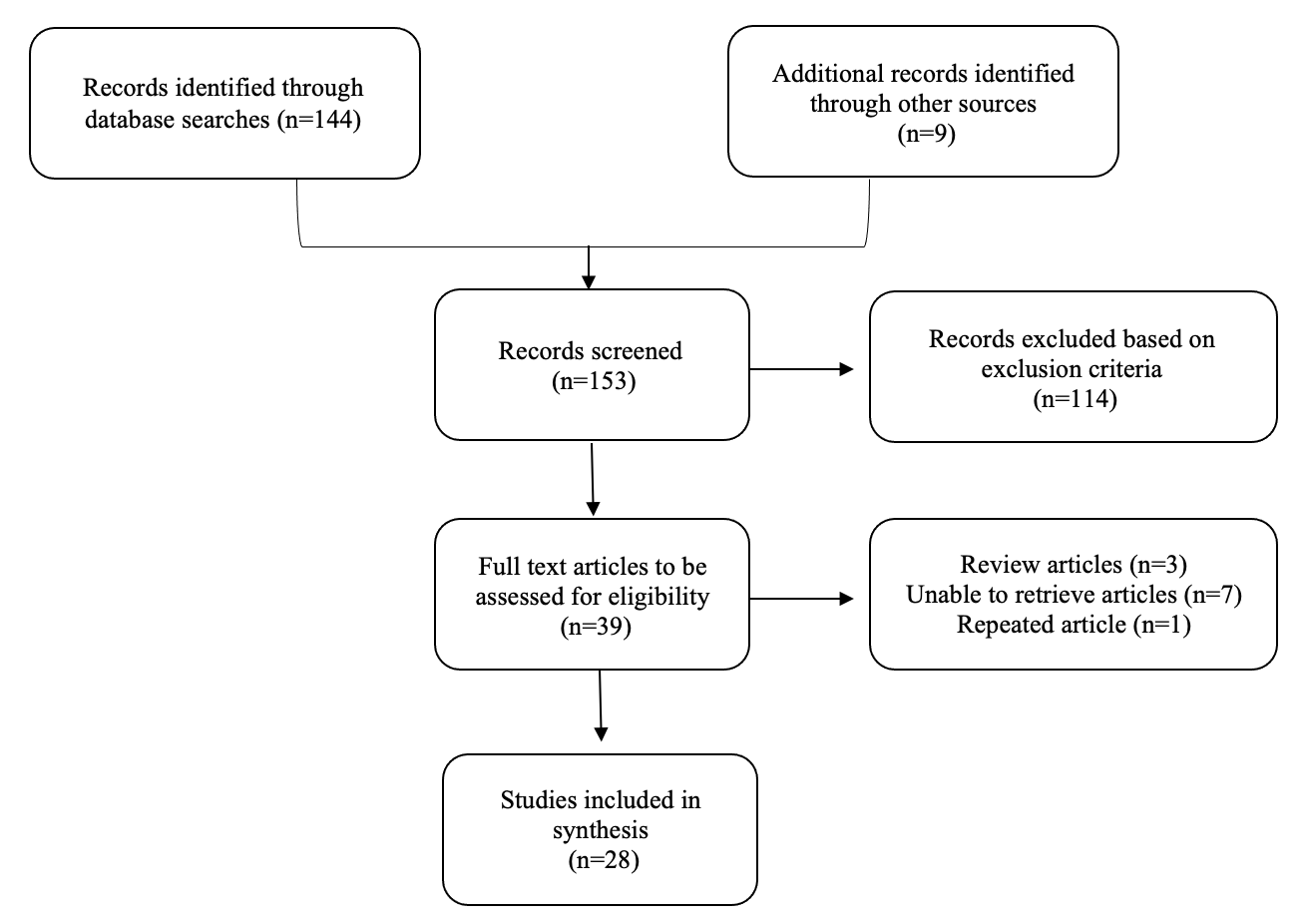
Data extraction: Two researchers searched the information sources independently and extracted the relevant data; arti- cles were screened on the basis of their abstracts before inclusion. In the event of disputes regarding the inclusion or exclusion of articles, a third and fourth researcher were consulted to reach a reso- lution. The reference lists of the articles were also used to conduct a more comprehensive search. To illustrate the included and excluded articles, as well as the reasons for exclusion, we used the Preferred Reporting Items for Systematic reviews and Meta- Analyses extension for Scoping Reviews (PRISMA- ScR) chart. PRISMA-ScR was also used to report the findings of our analysis [14].
Initially, a total of 153 studies were identified. Of these, 35 articles met our inclusion criteria; however, 7 of them were unavailable. Therefore, the final data extraction included a total of 28 studies (Figure 1), as depicted in the PRISMA chart a total of 16,602 snake bite cases.
Presentation: Of the 28 studies analysed, 22 (78.57%) reported initial local injuries characterised by pain, swelling, erythema, and bite marks. Compartment syndrome [15, 16, 17, 18] and rhabdomyolysis were also documented [17, 19].
Haematological manifestations, such as bleeding, haematoma at the bite site, and disseminated in- travascular coagulopathy (DIC), were documented in 12 studies [7, 11, 16, 17, 18, 19, 20, 21, 22, 23, 24, 25]. Neurological symptoms included haemorrhagic stroke [15] and intracranial haemor- rhage (ICH) [20, 23]. Additionally, bulbar palsy [24], cerebral infarction [26], various neurological manifestations [27], and paralysis [28] were noted. Cardiac manifestations included myocardial infarction and arrhythmia [15, 29], and different types of shock were also documented (haemorrhagic [20, 23], either haemorrhagic or anaphylactic [24], and unspecified [27]). Other manifestations included vomiting [16, 19, 30, 31], septic arthritis [32], and respiratory arrest [26].
Laboratory analysis: Seven studies (25%) did not document initial laboratory results, while 3 studies reported normal laboratory results (10.7%). Leucocytosis was ob- served in 10 out of 18 studies (55.5%) when initial labs were taken at presentation [16, 17, 19, 23, 24, 27, 29, 31, 33, 34]. Thrombocytopenia was reported in 8 studies (50%) [15, 16, 20, 21, 22, 24, 27, 33], while thrombocytosis was also observed [20]. Furthermore, low haemoglobin levels were found in 7 studies (33%) [16, 17, 20, 21, 24, 27, 30], and acute kidney injury (AKI) and proteinuria were documented in 9 studies (50%) [15, 16, 21, 23, 27, 30, 31, 33, 34]. Coagulopathy was documented in all of the studies (100%), and high troponin levels were also reported [29].
Antivenom: Antivenom administration was documented in 24 studies (85.7%). In 8 of these, the exact doses were
not mentioned [19, 20, 21, 32, 33, 35, 36, 37], while varying doses were reported in the remaining 16 studies. Three studies administered 40 ml (4 vials) [22, 29, 38], one study reported giving 20-50 ml (2 - 5 vials) [15], and another study administered 50 ml diluted in 200 ml normal saline (NS) [30]. Four other studies gave 20-80 ml [24], 30 ml [26], 20- 40 ml [27], and 20-60 ml [34], respectively. Larger doses were given in 6 studies: 40-120 ml [16], 1-61 vials [23], 10 vials [17], 1-25 vials [18], 30-110 ml [25], and 140-260 ml [31].
Post-antivenom complications: Among the reported 808 cases that received antivenom, 13 (1.6%) patients experienced post- antivenom complications. These included anaphy- lactoid reactions in 3 patients (0.37%) [22, 23], skin manifestations such as swelling and urticaria in 8 patients (0.99%) [7, 19, 27, 31], hypotension and bradycardia in 1 patient (0.12%) [19], and lethargy in 1 patient (0.12%) [24]. Epinephrine was administered to manage these complications in 3 studies [7, 22, 23].
Steroids: The use of steroids varied among the studies. Four studies used steroids as a pre-antivenom treatment [7, 23, 25, 30], with one of them [25] conducting a skin test prior to antivenom administration. Three studies administered steroids to all patients who experienced post-dose complications [19, 22, 24], and one study administered steroids immediately after the snake bite [29].
The specific steroid agents also varied: One pa- tient received 120 mg methylprednisolone [7], while other studies reported the use of hydrocortisone [19, 22, 25, 29, 30]. Four studies did not mention the specific agents or doses used [18, 24, 33, 34].
Diphenhydramine: Diphenhydramine was administered in 50 mg doses [7, 22, 29], before the antivenom [7], after the antivenom [29], or as a treatment for anaphylactoid or anaphylactic reactions [22].
Antibiotics: Only 11 articles reported the use of antibiotics [7, 15, 18, 20, 21, 22, 23, 25, 29, 31, 32]. The specific antibiotic agents varied and included amoxicillin/clavulanate [22, 29, 31], piperacillin/tazobactam [7, 22], vancomycin, ce-
furoxime, amikacin, ceftriaxone, cloxacillin, and ampicillin and/or methicillin [7, 15, 20, 21, 25, 32].
Tetanus toxoid: Tetanus toxoid was administered in 11 studies [15, 17, 18, 19, 21, 22, 24, 31, 32, 34, 38].
Blood products: Packed red blood cells were administered to pa- tients with disseminated intravascular coagulation (DIC) [17, 20, 21, 33]. Fresh frozen plasma (FFP) was also used [7, 15, 17, 19, 20, 21, 22, 24, 27, 33] for DIC, bleeding, or laboratory result abnormali- ties. Some studies also used cryoprecipitate [7, 19, 24].
Haemodialysis: All patients with acute kidney injury received haemodialysis [15, 20, 21, 23, 31, 33]. In one study, a patient who had received a kidney transplant from a donor who had died from a snake bite also developed complications and died from DIC and AKI [20].
Admission: Of the 28 studies, 20 reported admitting the patients to the hospital [7, 8, 10, 17, 18, 20, 21, 22, 23, 25, 26, 27, 28, 29, 31, 33, 34, 35, 37, 38]. The total number of patients requiring admission was 3546, representing 23.3% of all reported cases.
Mortality: The overall mortality rate was 0.034%, involving 55 out of 16,602 patients [10, 11, 15, 20, 23, 24, 27, 34].
To our knowledge, this is the first comprehensive review in the Arabian Peninsula that aims to record the manifestations and subsequent management of snake bites. Similar to previous studies, we found that local presentation is often the first indication of a snake bite [39, 40], while compartment syndrome, rhabdomyolysis, and AKI are common sequelae, for which a high degree of suspicion should be present. In the Arabian Peninsula hematotoxin- producing snakes were widely spread. That’s why, the most commonly affected system is the haematological system, with DIC, bleeding, and coagulopathy be- ing common. A coagulation profile analysis should therefore be performed for all patients, and the use of blood products such as FFP and cryoprecipitate should be considered [39, 40]. Neurological and
cardiac manifestations should also be considered in snake bite cases.
Antivenom is considered the primary treatment for snake bites [41, 42, 43], although in our review the administration of antivenom was not uniform, with dosing varying from 20 ml to 260 ml. All of the antivenom used was manufactured by the National Antivenom & Vaccine Production Center (NAVPC), National Guard Health Affairs, Saudi Arabia. Antivenom is indicated in the event of any neurological signs or symptoms, spontaneous bleed- ing, swelling that covers half the bitten limb, an abnormal coagulation profile, shock, hypotension, or ECG abnormalities. The initial dose of antivenom should be 50 ml (5*10 ampules), diluted in 250 ml normal saline and infused intravenously over 30 to 60 minutes. The same dose can be repeated every 4 to 6 hours when necessary, until the symptoms re- solve and the coagulation profile returns to normal. It is crucial to administer the antivenom promptly and in sufficient quantity to neutralise the venom’s toxicity. There is no difference in dose between adults and children [44].
Although post-antivenom complications are not uncommon, their occurrence is relatively low when weighed against the importance of administering antivenom. In one review, complications were found to be related to the dose, route, and rate of adminis- tration, and affected only 5-10% of patients. Thus, physicians should not withhold antivenom, even if there is a risk of anaphylaxis or other complications [41]. The use of steroids for snake bites remains controversial and may be considered in cases where there is a history of antivenom-induced anaphylaxis [39, 42]. Similarly, the benefits of antihistamines for snake bites are still unknown. They can be used as a premedication, or for early anaphylactic reac- tions and mild late serum sickness-type reactions occurring 5-15 days after antivenom administration [41, 42]. Additionally, there is no proven benefit of prophylactic antibiotics for preventing secondary infections. Finally, for patients with a history of animal bite, the importance must be emphasised of tetanus toxoid administration immediately after evaluating the patient’s immunisation status [42,43]. Although the admission rate is 23.3% and the mortality rate appears low, at 0.034%, it is still justified to observe all patients and monitor them for
venom-related complications. Some patients may deteriorate rapidly, even if they are initially asymp- tomatic. Others may develop late serum sickness, requiring follow-up and comprehensive patient care. Therefore, all snake bite patients should be mon- itored for at least 4 to 6 hours, irrespective of whether or not they received antivenom [44].
The treatment of snake bites varies among dif- ferent providers and settings, resulting in differing doses of antivenom being administered to patients. Some patients require large and multiple doses, while others may only need a small, single dose. For physicians, determining the appropriate dose of antivenom can be challenging, particularly when the snake has not been positively identified. In the Arabian Peninsula, there is a clear need for a standardised guideline to effectively manage snake bite patients. Additionally, more data is required to accurately assess the prevalence of snake bites, es- pecially in rural areas where they are more common.